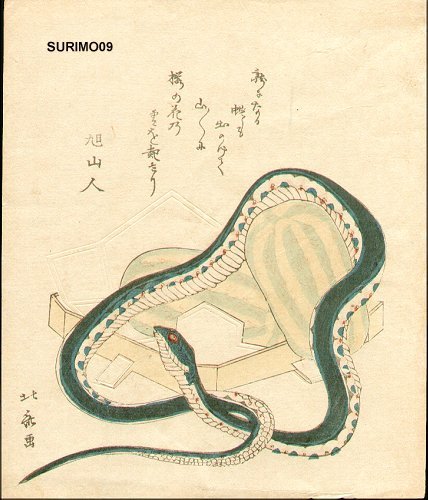
Katsushika Hokusai: A Vision of Turbulent Beauty
Katsushika Hokusai (1760–1849), arguably Japan’s most celebrated artist of the Edo period, transcends mere representation; he captures the essence of nature's grandeur and imbues it with profound psychological depth. His enduring fame rests primarily on *The Great Wave off Kanagawa*, a woodblock print that has become synonymous with Japanese art and continues to inspire awe in audiences worldwide.
Born into a family of mirror makers, Hokusai’s artistic journey was driven by an unwavering dedication to mastering various mediums—watercolor, ink wash painting, manga (comic strips), and landscapes—each reflecting his evolving understanding of the world. Unlike many artists of his time who adhered rigidly to established conventions, Hokusai embraced experimentation and innovation, constantly reinventing his style and challenging artistic boundaries.
The Iconography of Chaos and Calm
What distinguishes Hokusai’s work is not simply its subject matter but its masterful composition. He employed techniques borrowed from Western perspective—particularly aerial projection—to create an illusion of depth that was revolutionary for its time. The towering wave dominates the scene, dwarfing the boats below, conveying a sense of vulnerability and awe in the face of overwhelming natural forces.
This dramatic depiction isn’t merely aesthetically pleasing; it carries deep symbolic significance. The wave embodies chaos and instability—a palpable reflection of anxieties prevalent during Hokusai's lifetime—a period marked by political unrest and devastating earthquakes. Yet, amidst this turbulent backdrop, there exists a subtle counterpoint: the boats bravely navigating the perilous waters symbolize humanity’s resilience and determination to persevere despite adversity.
A Symphony of Color and Texture
Hokusai’s palette is equally striking. He utilized Prussian blue pigment—imported from Europe—which dramatically expanded the range of achievable colors and profoundly influenced subsequent generations of artists. The vibrant turquoise hue of the wave contrasts sharply with the muted tones of the sky and sea, intensifying the visual impact and conveying a feeling of turbulent energy.
Furthermore, Hokusai’s meticulous attention to detail—evident in the depiction of foam crests and spray—created an astonishingly realistic texture. The woodblock printing technique itself demanded precision and patience, requiring artisans to carve intricate designs onto wooden blocks and apply ink with painstaking accuracy. This laborious process resulted in prints that possess a remarkable tactile quality, transporting viewers back to Edo-era Japan.
Influence Beyond Borders
Hokusai’s influence extends far beyond woodblock printing. His innovative approach to composition, color theory, and psychological portrayal paved the way for Impressionism and other artistic movements in Europe. Artists like Claude Monet and Vincent van Gogh were deeply inspired by Hokusai's vision of capturing fleeting moments of beauty and conveying emotion through visual art.
*The Great Wave* continues to captivate audiences today—a testament to its enduring power as a symbol of both terror and sublime wonder. It serves as an unforgettable reminder that art can transcend time and culture, communicating universal themes of awe, fear, and resilience—qualities that resonate powerfully across generations.