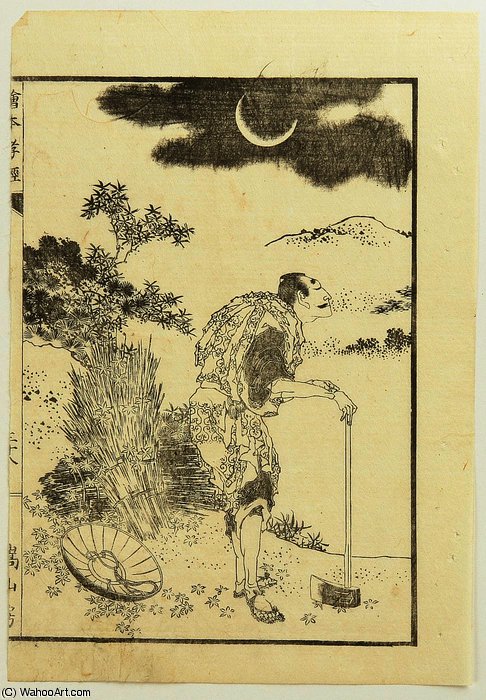
Wood Cutter and the Moon – A Reflection of Tranquility Amidst Change
Katsushika Hokusai’s *Wood Cutter and the Moon* (circa 1830) transcends mere depiction; it embodies a profound meditation on nature's beauty and the cyclical rhythms of existence. Printed during Japan’s Edo Period, this woodblock print exemplifies the artistic fervor of its time—a period characterized by burgeoning urban centers and an increasing fascination with landscape painting, particularly influenced by Zen Buddhism. The image itself presents a solitary figure – a woodcutter – positioned before a towering cypress tree bathed in the ethereal glow of a crescent moon. This seemingly simple composition is laden with symbolic significance, reflecting core tenets of Japanese aesthetics.
- Composition and Perspective: Hokusai masterfully employs atmospheric perspective—a technique honed through meticulous observation—to convey depth and realism. The cypress tree dominates the foreground, its dark silhouette contrasting sharply against the luminous moonlit sky. This deliberate juxtaposition underscores the enduring presence of nature despite human endeavors.
- Symbolism of Cypress Trees: Cypress trees hold deep cultural resonance in Japan, representing longevity, resilience, and immortality—qualities highly valued within Zen philosophy. Their upward-reaching branches symbolize aspiration and spiritual enlightenment, mirroring the woodcutter’s gaze towards the celestial orb.
- The Moon's Role: The crescent moon serves as a focal point of contemplation, symbolizing tranquility, illumination, and transformation. Its gentle radiance casts a serene light upon the scene, inviting viewers to pause and appreciate the quiet grandeur of the natural world.
The print’s execution showcases Hokusai’s unparalleled skill in *ukiyo-e* printing—a process demanding precision and patience. Utilizing Prussian blue pigment – an accidental discovery that revolutionized Japanese color printing – Hokusai achieved a breathtaking vibrancy, capturing the subtle nuances of moonlight and foliage with remarkable accuracy. The meticulous carving of the woodblock ensured exceptional detail and tonal gradation, resulting in an image that resonates with textural richness.
- Printing Technique: Prussian blue pigment was imported from Europe during this period, marking a significant advancement in Japanese printmaking. Hokusai’s masterful application of this color demonstrates his willingness to embrace innovation while maintaining stylistic integrity.
- Line Work and Texture: The artist's delicate linework contributes significantly to the print's overall aesthetic impact. Fine lines delineate the contours of the tree trunk and branches, creating a sense of organic texture that enhances visual appeal.
Ultimately, *Wood Cutter and the Moon* transcends its formal elements to evoke an emotional response—a feeling of peaceful contemplation and connection with the sublime beauty of nature. It’s a testament to Hokusai's ability to distill complex philosophical ideas into visually arresting imagery, cementing his legacy as one of Japan’s greatest artistic innovators and securing his place among the icons of Western art history. Its enduring appeal lies in its timeless portrayal of serenity amidst change—a message that continues to inspire audiences today.