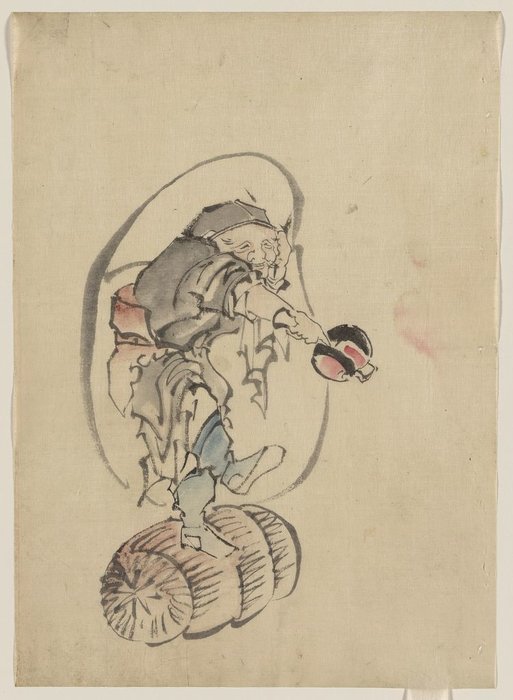
Hotei, The God Of Good Fortune, One Of The Seven Lucky Gods
Katsushika Hokusai’s “Hotei,” a captivating monochrome woodblock print from the Edo period (1615–1868), transcends mere visual representation; it embodies centuries of Japanese artistic tradition and spiritual contemplation. This iconic image, featured prominently in collections like those housed at The Metropolitan Museum of Art (https://www.metmuseum.org/art/collection/search/54439), exemplifies Hokusai’s masterful command of Ukiyo-e aesthetics.
The print depicts a solitary monk, identified as Hotei – one of the Seven Lucky Gods – seated beside a cylindrical vessel filled with rice. His posture exudes serenity and stillness, reflecting the deity's association with abundance and prosperity. The artist’s meticulous linework style—characterized by delicate hatching and shading—creates an illusion of depth and texture without resorting to realistic perspective. This technique is quintessential Ukiyo-e, prioritizing expressive line work over detailed depiction.
- Style: Ukiyo-e – Known for its stylized depictions of everyday life and landscapes, emphasizing emotion and atmosphere rather than precise realism.
- Technique: Woodblock printing—A complex process involving carving a design onto a cherry wood block, applying ink to transfer the image onto paper, and meticulously wiping away excess ink to achieve a tonal print.
- Material: Cherry wood (for the block), Ink (specifically Prussian Blue pigment), Japanese Paper
Beyond its formal artistry, “Hotei” resonates with profound symbolism rooted in Buddhist beliefs. Hotei embodies compassion and generosity—attributes considered vital for attaining enlightenment—and his vessel symbolizes fertility and nourishment. The child meticulously cleaning Hotei’s ear represents purification and the importance of humility.
The print's muted palette – primarily Prussian Blue – contributes to its contemplative mood, mirroring the spiritual essence of its subject matter. It invites viewers into a moment of quiet reflection on themes of fortune, faith, and inner peace. “Hotei” remains an enduring testament to Hokusai’s genius and a cornerstone of Japanese artistic heritage.
- Historical Context: Produced during the Edo period, a time of relative stability and flourishing arts patronage in Japan, reflecting broader cultural values emphasizing harmony and spiritual aspiration.
- Emotional Impact: The print evokes feelings of tranquility, serenity, and goodwill—capturing the spirit of Buddhist ideals and conveying a timeless message about compassion and contentment.