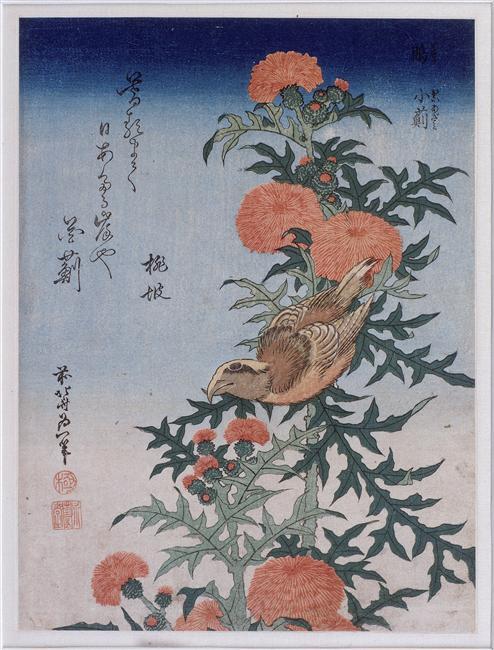
Crossbill and Thistle – A Symphony of Color and Texture by Katsushika Hokusai
Katsushika Hokusai’s “Crossbill and Thistle,” created in 1834 during Japan's Edo Period, stands as a testament to the enduring power of observation and artistic innovation. More than just a depiction of avian beauty nestled amongst floral splendor, it embodies the spirit of Ukiyo-e – a genre that revolutionized Japanese art by capturing fleeting moments from nature with unparalleled sensitivity.
The painting itself is executed in meticulous detail using woodblock printing techniques, a method perfected during Hokusai’s lifetime. Skilled artisans painstakingly carved linoleum blocks depicting the bird and thistle, applying ink pigments with precision to achieve astonishing tonal gradations. This technique allowed for vibrant colors – predominantly blues and pinks – to be layered upon each other, creating an illusion of depth and luminosity that transcends the limitations of traditional painting.
Beyond its technical prowess, “Crossbill and Thistle” resonates deeply with symbolic meaning. The crossbill, a bird known for its distinctive beak adapted for extracting seeds from coniferous cones, represents resilience and adaptability – qualities admired in Japanese culture. Simultaneously, the thistle—a prickly flower associated with nobility and perseverance—underscores themes of strength and fortitude amidst vulnerability. Together, they convey a harmonious balance between nature’s harsh realities and its inherent beauty.
The artwork's placement within the Guimet Museum in Paris speaks to Hokusai’s influence on Western art movements like Impressionism. Artists such as Claude Monet were captivated by Ukiyo-e prints, particularly their ability to capture atmospheric conditions and evoke emotional responses. “Crossbill and Thistle,” with its masterful use of color and texture, exemplifies this aesthetic ideal—a celebration of the ephemeral beauty found in everyday landscapes.
Consider commissioning a high-quality reproduction of “Crossbill and Thistle” for your home or studio. Its serene composition and evocative symbolism will undoubtedly enrich any space, transporting viewers to the tranquil Japanese countryside and reminding them of the profound connection between art and nature.
Artist Background: Katsushika Hokusai (1760-1849) was arguably Japan’s most celebrated artist during his lifetime. Born in Edo (modern Tokyo), he ascended from humble beginnings as a mirror maker's son to become a titan of Ukiyo-e, the “pictures of the floating world,” shaping the visual landscape of 19th century Japan.
Style and Technique: Hokusai’s signature style is characterized by its dramatic use of perspective and color—elements borrowed heavily from Western Impressionism. However, he remained firmly rooted in traditional Japanese woodblock printing methods, achieving breathtaking realism through careful carving and layering of ink pigments. The resulting prints possess an unparalleled luminosity and textural richness.
Historical Context: “Crossbill and Thistle” was created during a period of significant cultural exchange between Japan and Europe. The arrival of Commodore Perry’s warships in 1853 forced Japan to confront the realities of Western imperialism, prompting artists like Hokusai to explore new artistic horizons while simultaneously reaffirming their connection to Japanese heritage.
Symbolism: The bird—specifically the crossbill—represents adaptability and perseverance. Its beak’s unique structure symbolizes overcoming obstacles with ingenuity. Conversely, the thistle embodies nobility and fortitude, highlighting the beauty found within resilience.
Emotional Impact: Viewing “Crossbill and Thistle” evokes a sense of tranquility and contemplation. The artist's masterful rendering of light and color transports the viewer to a serene Japanese garden—a space designed for meditation and appreciation of natural splendor.