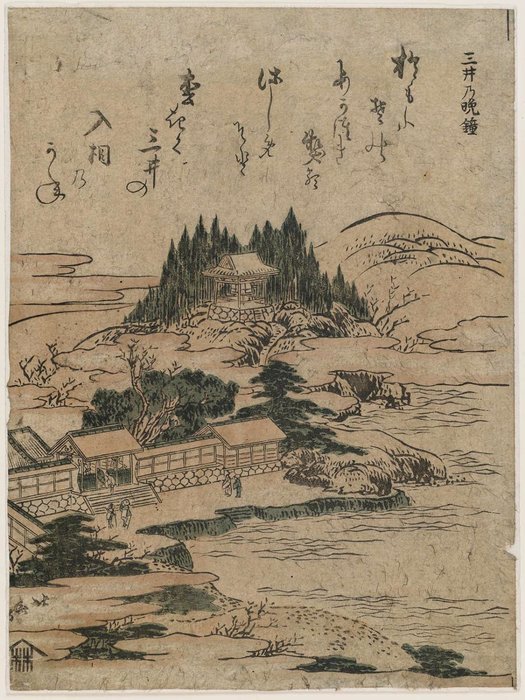
Evening Bell At Mii-dera Temple: A Reflection of Tranquility Amidst Mountain Majesty
Katsushika Hokusai’s *Evening Bell at Mii-dera Temple*, part of his monumental series *Thirty-Six Views of Mount Fuji*, transcends mere landscape depiction; it embodies a profound meditation on impermanence and spiritual contemplation. Created during the Edo period (1603–1868), this woodblock print captures a serene moment at Mii-dera Temple, nestled in the foothills of Mount Hiei – a location steeped in Buddhist history and pilgrimage tradition.
The Artistic Vision: Impressionistic Detail Within Precise Lineage
Hokusai’s masterful technique exemplifies the Japonisme movement that swept across Europe during the mid-19th century. He employed meticulous hatching and shading—a hallmark of Ukiyo-e printing—to convey atmospheric perspective, skillfully rendering the misty mountains and reflecting light onto the temple roof. Unlike Western Impressionists who sought to capture fleeting sensations, Hokusai achieved a similar effect through careful observation and precise execution, prioritizing tonal gradation over sharp delineation.
A Symbol of Impermanence: The Temple Bell’s Resonance
The central element—the bell—is not merely decorative; it symbolizes the Buddhist concept of impermanence (anicca). Its ringing echoes across the landscape, reminding viewers of the transient nature of existence and prompting introspection. The temple itself represents a locus of spiritual practice and devotion, offering solace amidst the grandeur of the natural world.
Historical Context: Edo Period Spirituality and Artistic Patronage
The Edo period witnessed an unprecedented flourishing of Buddhist art and culture in Japan. Temples like Mii-dera served as centers for pilgrimage and meditation, attracting devotees seeking enlightenment. The Tokugawa shogunate actively supported artistic endeavors, fostering a climate conducive to innovation while upholding traditional aesthetic values. Hokusai’s *Thirty-Six Views* were commissioned by wealthy merchants and samurai—individuals who appreciated both beauty and intellectual stimulation.
Emotional Impact: Capturing the Essence of Zen
*Evening Bell at Mii-dera Temple* evokes a feeling of profound stillness and contemplation. The muted palette—dominated by blues, greens, and browns—mirrors the tranquility of the mountain landscape and invites viewers to immerse themselves in its serene atmosphere. It’s more than just a beautiful image; it's a distillation of Zen Buddhist philosophy – a reminder that true beauty lies in accepting the cyclical nature of life and embracing the present moment.