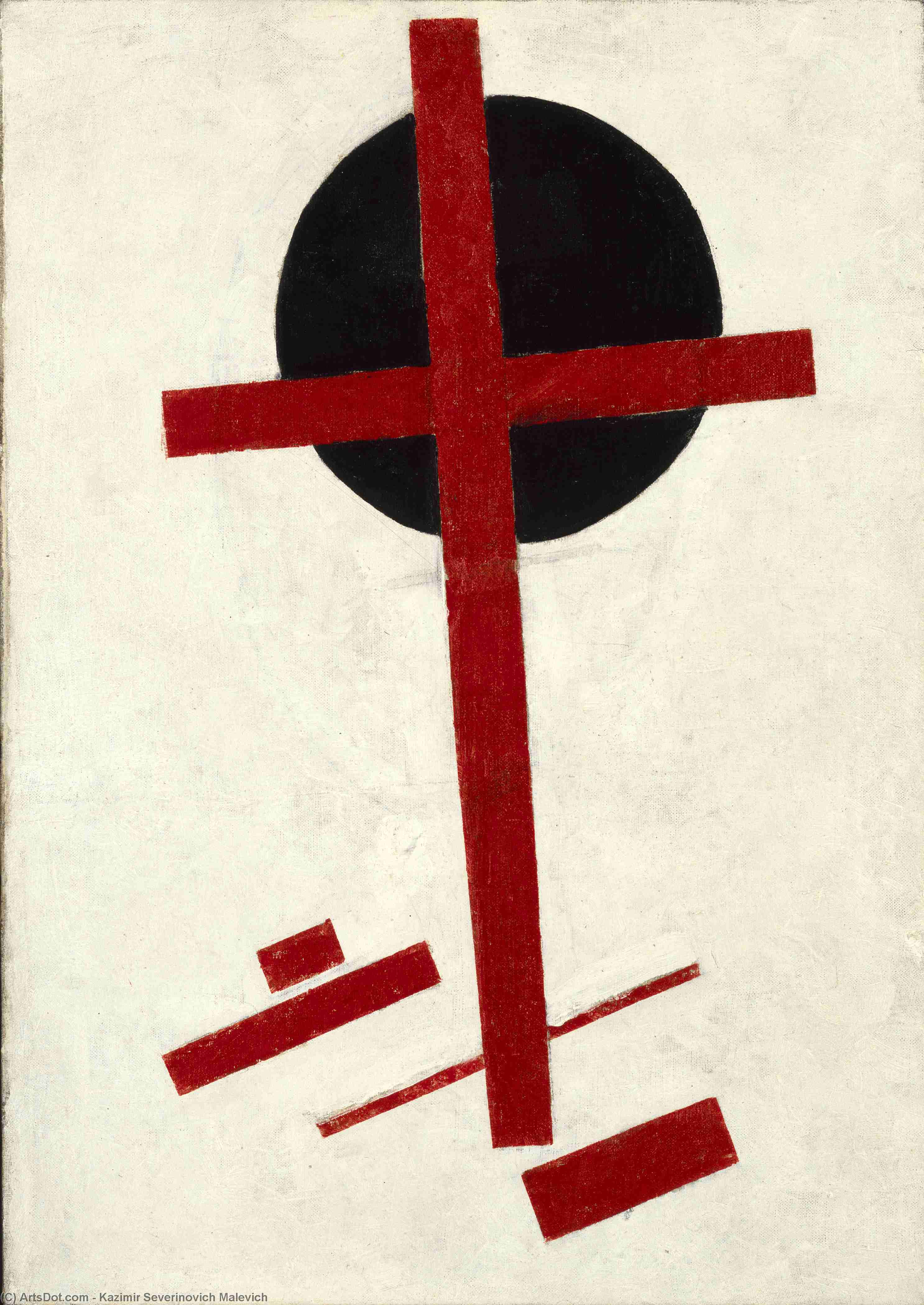
Suprematist Painting 3: A Revolution in Color and Form
Kazimir Severinovich Malevich’s
Suprematist Painting 3 stands as a cornerstone of geometric abstraction—a movement that irrevocably altered the trajectory of twentieth-century art and continues to resonate with contemporary sensibilities. Created in 1917 during the tumultuous period following Russia’s Bolshevik Revolution, this painting transcends mere visual representation; it embodies Malevich's audacious assertion that art should liberate itself from illusionistic conventions and prioritize pure feeling—a concept central to his groundbreaking theory of Suprematism.
The Essence of Geometric Abstraction
Malevich’s artistic vision stemmed from a profound rejection of traditional Western painting styles, particularly Cubism. Influenced by Russian folk art and Eastern Orthodox spirituality, he sought to distill visual experience down to its most fundamental elements: geometric shapes—primarily the cross and circle—and bold color palettes.
Kazimir Severinovich Malevich meticulously reduced his compositions to these basic forms, believing that they could convey spiritual truths more effectively than any depiction of the natural world. This uncompromising approach—characterized by simplicity and clarity—became synonymous with Suprematism’s aesthetic principles.
A Bold Color Scheme: Red and Black
The striking visual impact of
Suprematist Painting 3 derives largely from its masterful use of color—specifically a dominant red contrasted against black. Malevich deliberately eschewed gradations and nuances, opting for flat planes of pigment that conveyed maximum intensity. This deliberate restriction wasn’t merely stylistic; it represented a symbolic gesture—red symbolizing divine energy and black representing the void or nothingness—reflecting Malevich's spiritual convictions. The painting’s color scheme is reminiscent of Orthodox iconography, where red frequently signifies Christ’s sacrifice and resurrection.
Malevich’s Legacy: Influence Beyond Painting
Kazimir Severinovich Malevich’s influence extended far beyond the realm of painting. He developed a comprehensive artistic philosophy—Suprematism—that encompassed architecture, textiles, and graphic design. His conviction that art should transcend representational concerns paved the way for subsequent movements like Constructivism and Minimalism, shaping the visual landscape of the Soviet era and influencing artists globally.
Connections to Other Artists: Kandinsky and Beyond
The spirit of geometric abstraction championed by Malevich finds kindred spirits in Wassily Kandinsky, whose pioneering explorations into color theory and spiritual symbolism anticipated many of Suprematism’s core ideas. Like Malevich, Kandinsky sought to express emotion through abstract forms—as exemplified in works such as
Grey Oval and
Last Watercolour—available on
ArtsDot.com. These paintings underscore the shared commitment to distilling artistic experience into its purest form—a legacy that continues to inspire artists today. Furthermore, exploring Rowcroft Hospice’s impressive collection showcases similar artistic endeavors and demonstrates how art can enrich our lives. You can find more information about Rowcroft Hospice and its artworks on
ArtsDot.com.