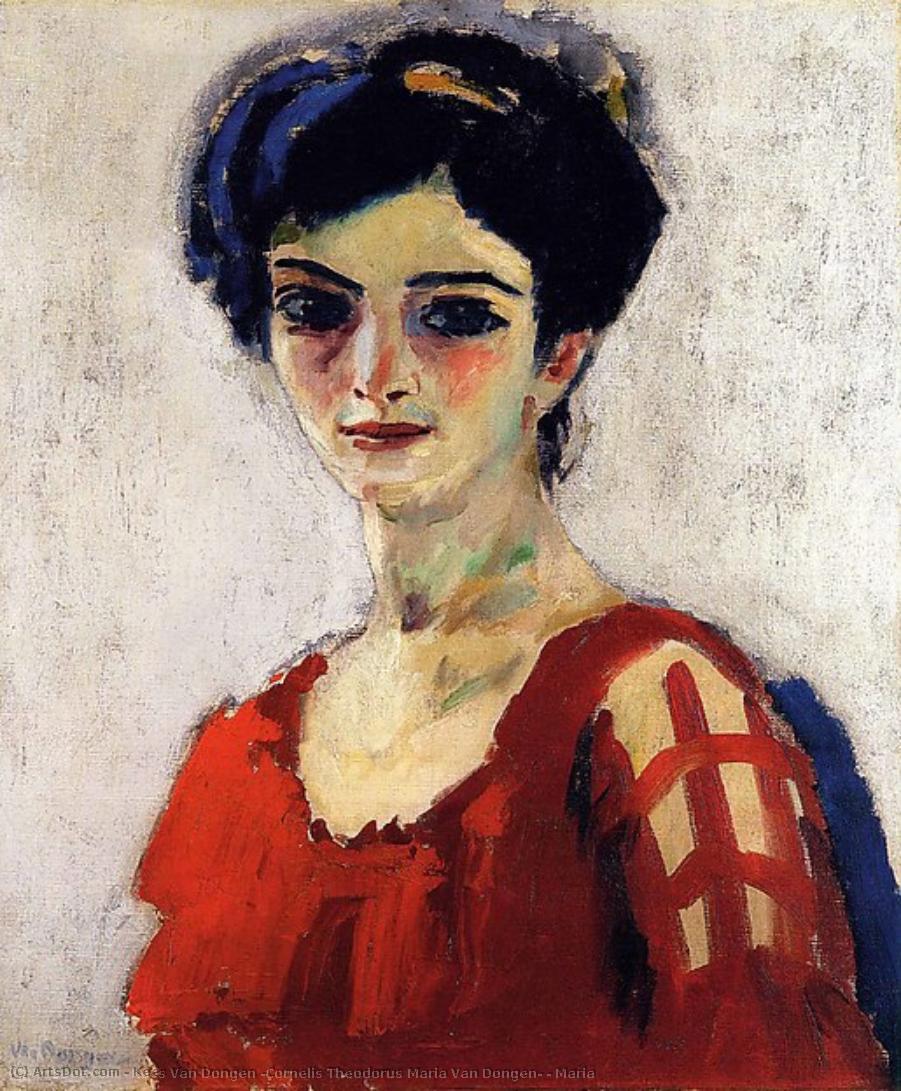
A Gaze of Crimson and Light: Rediscovering Van Dongen’s Maria
The canvas holds a gaze—direct, unflinching—that immediately commands the room. This is Maria, a 1907 masterpiece by Kees van Dongen that serves as a breathtaking window into the intoxicating world of Parisian Fauvism. To encounter this portrait is to be pulled into a moment of profound artistic rebellion. More than just a depiction of a woman, Maria stands as a testament to Van Dongen’s unwavering belief in color as an expressive, visceral language. The subject sits before us with an air of modern elegance, her presence anchored by the striking contrast between her pale ivory skin and the explosive crimson of her dress. It is a work that does not merely ask for attention; it demands it through a visual dissonance that is both unsettling and deeply magnetic.
The technique employed here is a masterclass in the Fauvist spirit, a movement characterized by its "wild beast" approach to pigment. Rejecting the muted, blended tones of the Impressionists and the somber traditions of the Hague School, Van Dongen embraced audacious splashes of unblended color. In Maria, one can observe how the vibrant reds and deep blues are applied with a sense of immediacy and restless energy. The large, confident brushstrokes contribute to a dynamic texture that feels alive, capturing the raw emotion of the subject rather than a mere photographic likeness. This method of using high-contrast hues, often punctuated by starker outlines, lends the figure a graphic intensity that makes her appear to vibrate against the canvas.
The Pulse of Paris and the Spirit of Modernity
To understand the soul of this painting, one must look to the streets of 1907 Paris. This was an era of unprecedented artistic metamorphosis, where luminaries like Matisse and Picasso were shattering established aesthetic ideals. Van Dongen, having moved from the tonal landscapes of his native Netherlands to the neon pulse of Montmartre, became a chronicler of this new, decadent age. Maria sits squarely within this transformative moment, reflecting the burgeoning interest in psychology and the allure of the modern socialite. The painting captures the very essence of the Parisian nightlife—a world of mystery, sensuality, and liberated femininity.
For the discerning collector or interior designer, Maria offers much more than mere decoration; it provides a focal point of profound emotional depth. The symbolism of the piece lies in its defiance of naturalism, prioritizing the feeling of the subject over an accurate anatomical depiction. The blue headband and the piercing eyes suggest a complex inner life, inviting the viewer into an intimate dialogue with the sitter. Whether placed in a contemporary gallery setting or as a bold statement piece in a sophisticated living space, this reproduction brings with it the historical weight of the Fauvist revolution and the timeless, electric energy of a Paris that changed the course of art history forever.