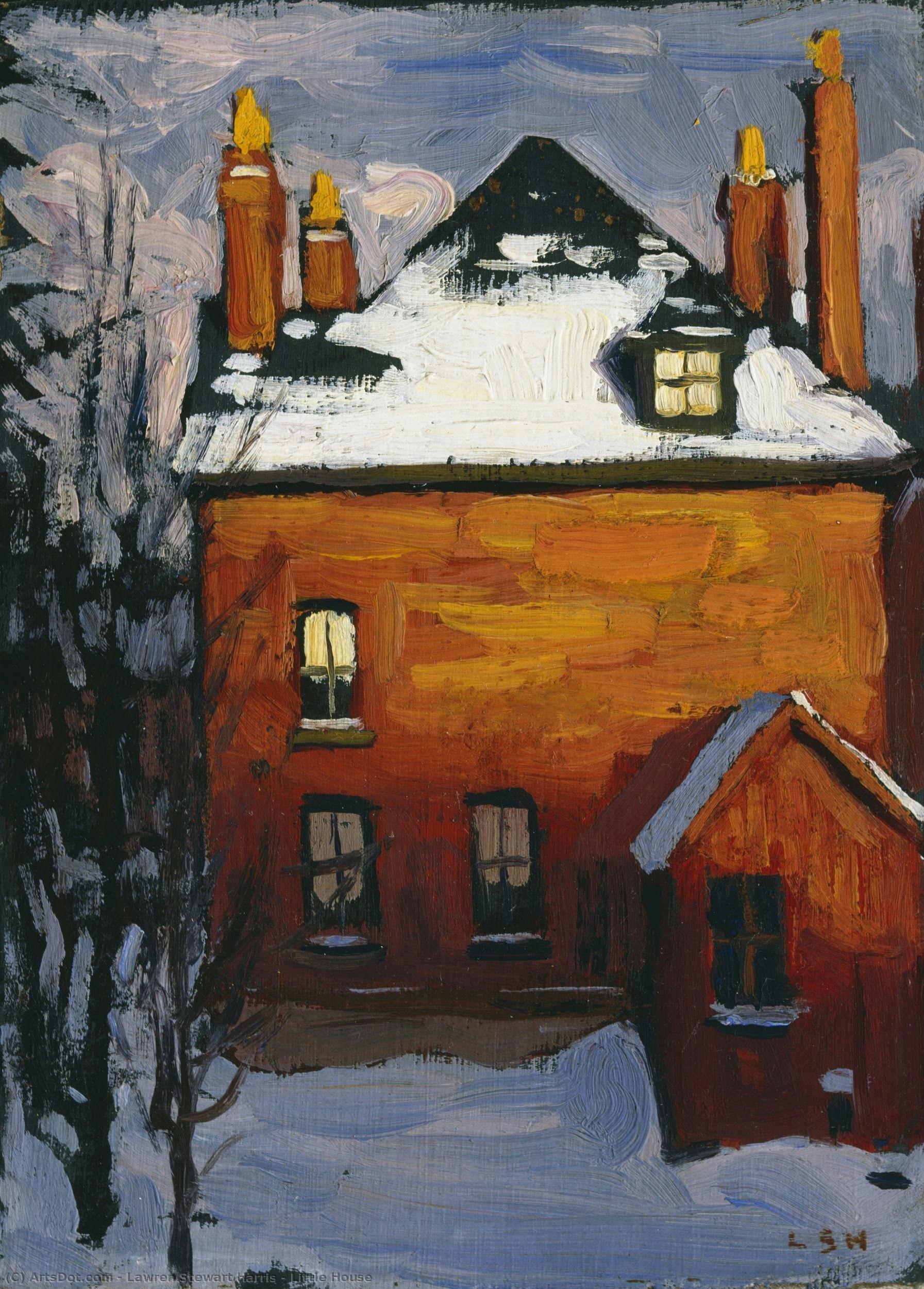
Little House: A Window Into Toronto’s Soul
Lawren Stewart Harris's “Little House,” painted in 1911, isn’t merely a depiction of a building; it’s a carefully considered snapshot of Toronto at the dawn of the twentieth century—a city grappling with rapid industrialization and immigration while simultaneously striving to retain its distinctive character. This unassuming brick dwelling nestled amongst snow-covered rooftops speaks volumes about Harris's artistic vision and his fascination with capturing the subtle nuances of everyday life.
- Subject Matter: The painting focuses on a single house—a modest structure in The Ward, a densely populated neighborhood comprised primarily of immigrants arriving from Europe. This deliberate choice underscores Harris’s interest in portraying not grand landscapes but rather the lived experience of ordinary people within his homeland.
- Style & Technique: Harris employed a minimalist style characteristic of the Group of Seven, prioritizing geometric forms and tonal variations to convey atmosphere and emotion. The muted palette—dominated by browns, greys, and ochres—reflects the bleak winter conditions but also lends an air of quiet dignity to the scene. Notice how Harris skillfully uses light to illuminate the house’s façade, creating a focal point that draws the viewer's eye.
Historical Context: The Group of Seven and Canadian Identity
“Little House” emerged during a pivotal moment in Canadian art history—the formation of the Group of Seven. This collective sought to establish a distinctly Canadian artistic idiom, rejecting European influences and embracing the rugged beauty of the Canadian wilderness. However, Harris’s exploration didn't stop at capturing the landscape; he actively engaged with urban life, recognizing its importance in shaping national identity.
- Influence of J.E.H MacDonald: Harris collaborated closely with fellow Group Seven artist J.E.H MacDonald on several projects, including “Little House.” MacDonald’s own artistic sensibilities—particularly his penchant for capturing the emotional resonance of landscapes—influenced Harris's approach to portraying Toronto.
Symbolism & Emotional Resonance: Beyond Representation
More than just a visual record, “Little House” embodies a deeper symbolic significance. The snow-covered roof serves as a reminder of winter’s harshness but also symbolizes resilience and endurance—qualities central to the Canadian spirit. Harris's masterful use of tonal gradation creates an immersive experience for the viewer, inviting contemplation on themes of solitude, simplicity, and connection to place.
- The Ward: The choice of location—The Ward—was deliberate. As Sarah Milroy notes at McMichael Canadian Collection, Harris was interested in “the gritty texture of urban life.” This neighborhood housed immigrants from Europe who were transforming Toronto into a cosmopolitan city.
- Light and Atmosphere: Consider how Harris captures the golden light filtering through the snow-laden rooftops—a fleeting moment of beauty amidst the winter’s gloom. This subtle illumination underscores the painting's emotional impact, conveying a sense of peace and contemplation.
A Legacy of Quiet Beauty
"Little House" stands as an enduring testament to Lawren Stewart Harris’s artistic genius—a masterpiece that transcends mere representation to communicate profound ideas about Canadian identity and the human experience. Its understated elegance continues to inspire interior designers and collectors alike, reminding us that beauty can be found in the simplest of forms.