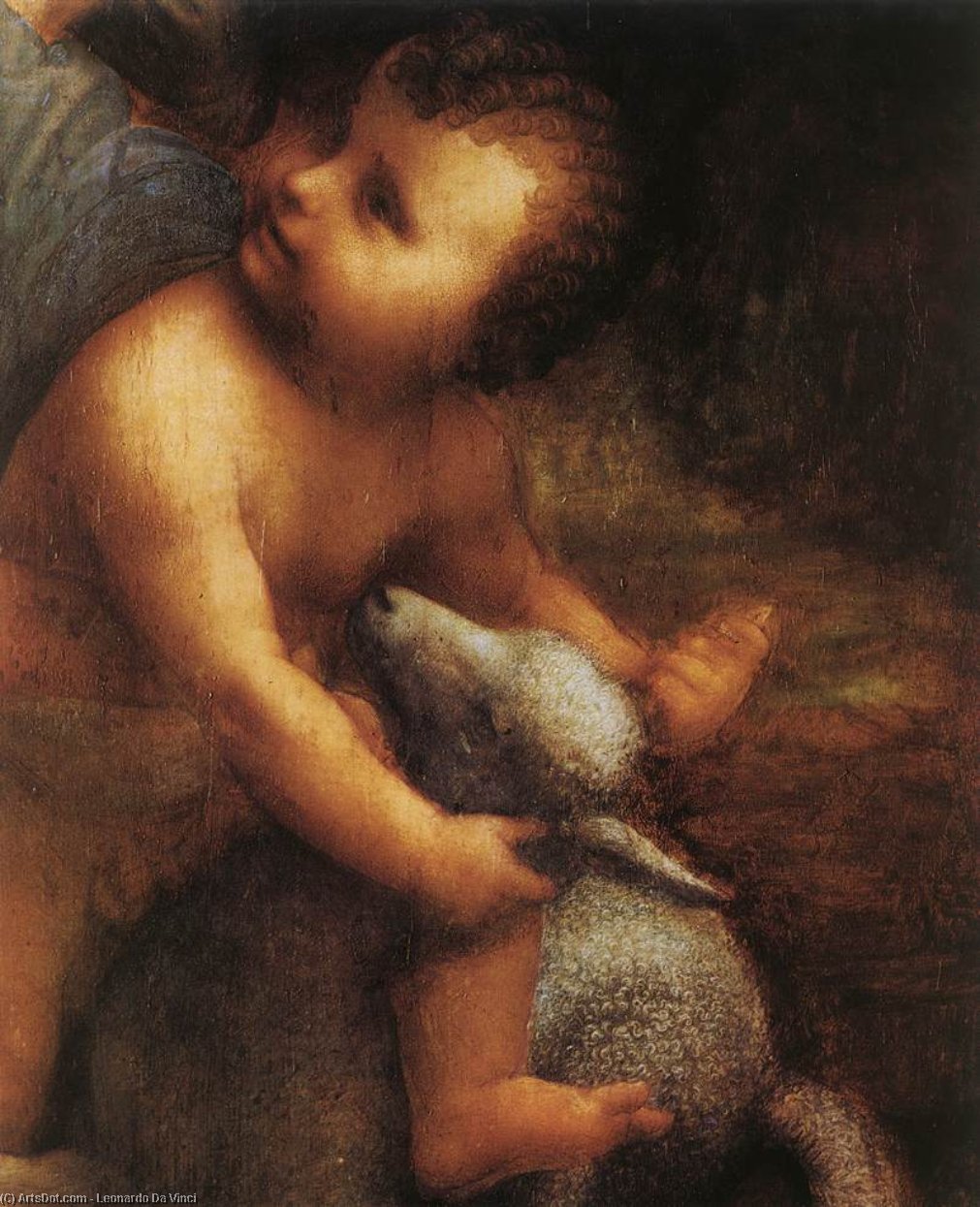
Leonardo da Vinci: The Virgin and Child with St Anne (Detail)
Leonardo da Vinci’s The Virgin and Child with St Anne (Detail) stands as a cornerstone of Renaissance art—a testament to the artist’s unparalleled ability to fuse observation with imagination. Painted around 1510 during his final Milanese period, this intimate depiction transcends mere representation; it embodies Da Vinci's revolutionary approach to painting, prioritizing emotional depth and psychological realism alongside meticulous craftsmanship.
Composition and Symbolism
The scene captures the Virgin Mary cradling Jesus Christ, accompanied by St Anne—Mary’s mother—creating a poignant tableau of familial devotion. Da Vinci skillfully employs a pyramidal structure, anchoring the figures at the apex to convey stability and harmony. This deliberate arrangement isn't merely aesthetically pleasing; it reflects Renaissance ideals of balance and proportion, mirroring classical principles.
Furthermore, the painting is laden with symbolic significance. The lamb held by Jesus represents his sacrificial destiny—a foreshadowing of Christ’s crucifixion and atonement for sins. St Anne’s serene gaze and draped robes symbolize piety and maternal grace, reinforcing the overarching theme of divine motherhood.
Artistic Techniques
Da Vinci's mastery is immediately evident in his masterful application of sfumato—a technique he perfected to achieve a hazy, atmospheric effect. Layers upon layers of translucent glaze subtly blend colors together, creating an illusion of depth and volume that defies conventional perspective. This blurring of boundaries lends the painting an ethereal quality, capturing the elusive beauty of human emotion.
Chiaroscuro—the dramatic interplay between light and dark—further enhances the scene’s emotional impact. Strong contrasts illuminate Mary's face and Jesus’ infant form, drawing the viewer’s eye to these focal points while casting shadows that imbue the background landscape with mystery and tranquility.
The painting’s intricate details—the folds of Mary’s robe, the tenderness in Jesus’ gaze, the delicate texture of St Anne’s drapery—demonstrate Da Vinci's extraordinary skill in capturing the subtleties of human anatomy and expression. Each brushstroke contributes to a profound sense of realism that transcends time.
Historical Context
Commissioned by King Louis XII of France following Mary’s birth, The Virgin and Child with St Anne (Detail) was never delivered to the monarch, remaining in Da Vinci’s possession until his death. Remarkably, it now resides within the Louvre Museum in Paris—a beacon of artistic heritage—where it continues to captivate audiences worldwide.
Relevance and Legacy
This painting solidified Da Vinci's reputation as a visionary artist who fundamentally reshaped Renaissance aesthetics. His innovative techniques—particularly sfumato and chiaroscuro—inspired generations of painters, establishing precedents for future artistic endeavors. The Virgin and Child with St Anne (Detail) remains a timeless masterpiece—a poignant meditation on faith, family, and the enduring beauty of human experience.
Experience the Beauty of Da Vinci’s Art
ArtsDot offers exquisite reproductions of The Virgin and Child with St Anne (Detail) crafted by skilled artisans who meticulously recreate Da Vinci’s original vision. These reproductions capture the essence of his artistic genius—bringing a fragment of Renaissance splendor into your home.
- The Virgin and Child with St Anne (Detail) by Leonardo da Vinci: A masterpiece of Renaissance art.
- Da Vinci’s masterful sfumato technique and chiaroscuro elevate the painting's emotional impact.
- A treasured piece within the Louvre Museum’s collection—a testament to Da Vinci’s enduring influence.
Discover ArtsDot’s reproductions today!