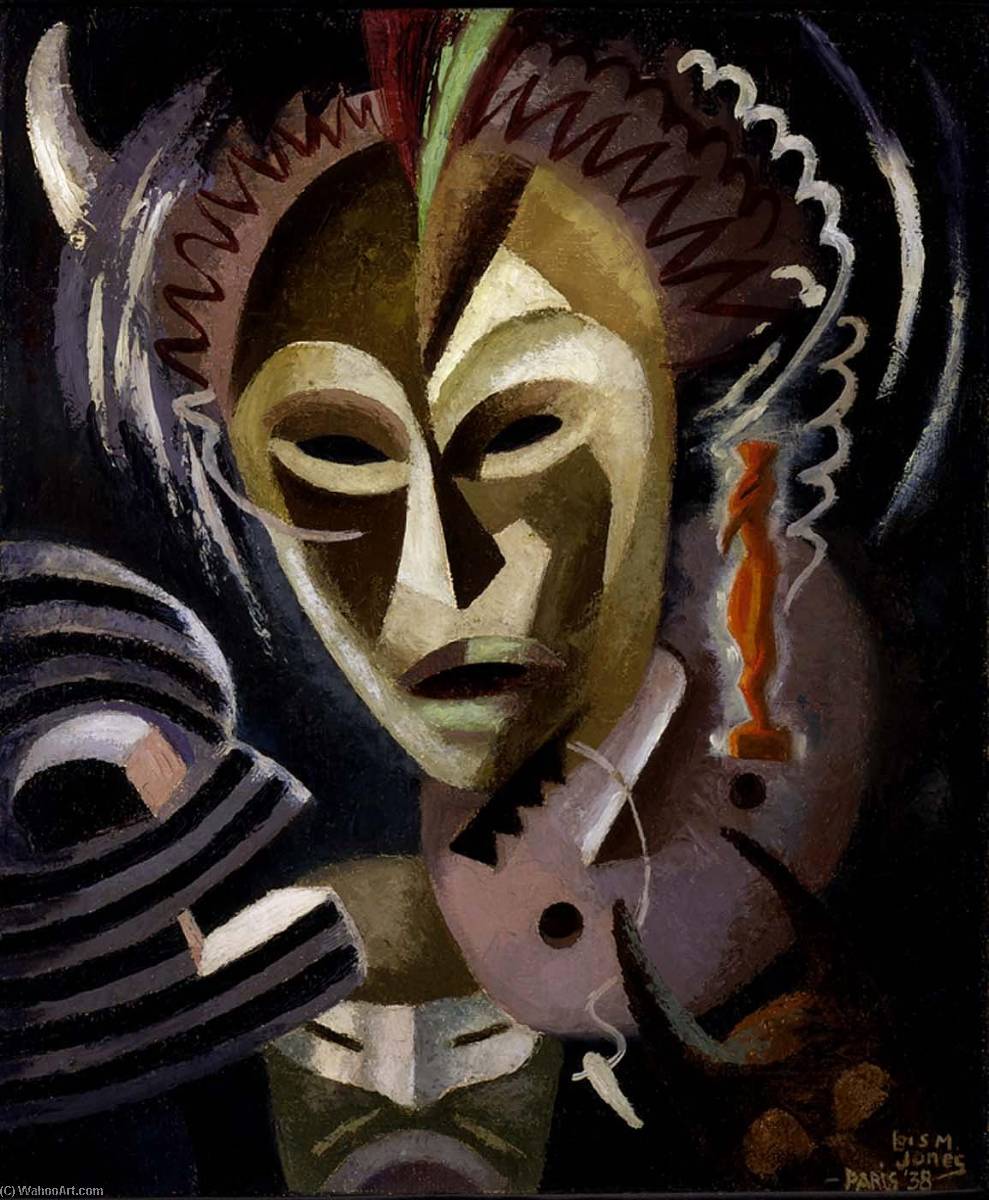
The painting
Les Fétiches by
Lois Mailou Jones is a seminal work of African American art, created in 1938. This oil on linen piece measures 64.7 cm × 54 cm and is part of the collection at the
Smithsonian American Art Museum in Washington, D.C.
Background and Inspiration
Lois Mailou Jones was inspired by her work with
Grace Ripley, an academic and costume designer, where she became familiar with exotic costumes and masks. This experience sparked her interest in African masks, which is evident in
Les Fétiches. The painting features five different African masks painted in a modernist style, with a red religious fetish in the foreground.
African American Art has a rich history, and
Lois Mailou Jones was one of the prominent artists of her time. Her work is characterized by its unique blend of modernism and African influences. For more information on
Lois Mailou Jones and her artwork, visit /art/list/?Filter=lois+mailou+jones,lois,mailou,jones&.
Style and Technique
The painting
Les Fétiches showcases
Lois Mailou Jones' unique style and technique. The use of bold colors and geometric shapes gives the piece a dynamic and modern feel. The masks and fetish appear to float in the mass of a black painted canvas, creating a sense of depth and dimensionality. For more information on the
Smithsonian American Art Museum and its collection, visit /art/list/?Filter=A@D3CFYP-The-Museum-Menard-Art-Museum-(Japan). To learn more about
Les Fétiches and its significance in African American art, visit https://en.wikipedia.org/wiki/Les_F%C3%A9tiches.
- The painting Les Fétiches is considered a seminal work of African American art.
- Lois Mailou Jones was inspired by her work with exotic costumes and masks.
- The piece features five different African masks painted in a modernist style.
Handmade oil painting reproductions of
Les Fétiches are available at https://ArtsDot.com, allowing art lovers to own a piece of history.
The significance of
Les Fétiches lies in its representation of African American culture and identity. As noted by
Holland Cotter, it is "an emblem of black American self-identity."