A Glimpse into Victorian Intellect
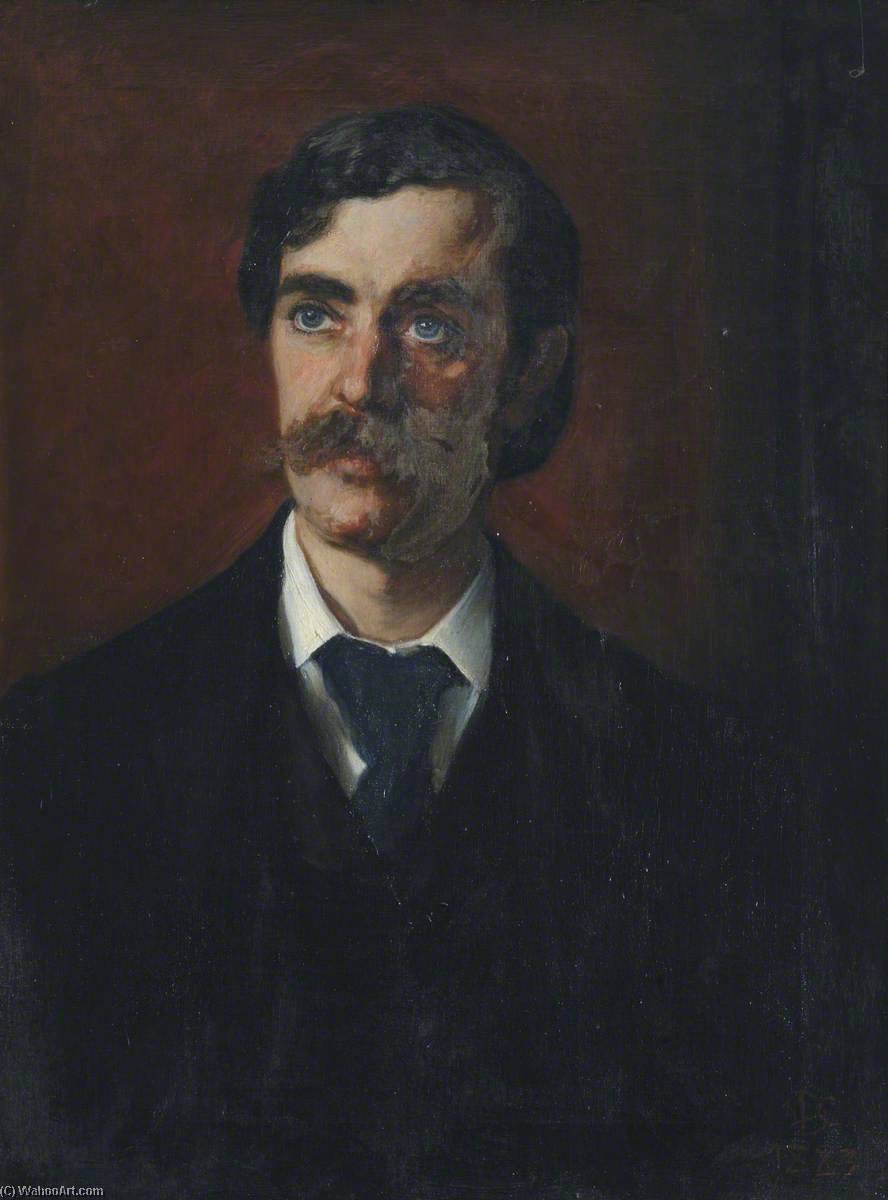
In this evocative portrait from 1883, Lowes Cato Dickinson captures more than just a likeness; he preserves the very essence of Victorian academic rigor. The subject, Thomas Ethelbert Page—a man destined for greatness as a classical scholar and schoolmaster—is presented with an intensity that transcends the canvas. Through the masterful use of light and shadow, Dickinson brings forth a face etched with focus and perhaps a hint of scholarly surprise. The wide, piercing eyes of the sitter command the viewer's attention, drawing us into a silent dialogue with a mind deeply immersed in the ancient texts and classical wisdom of antiquity. It is a moment frozen in time, where the weight of knowledge meets the vitality of human curiosity.
The composition is anchored by a striking contrast between the formal elegance of the subject and the rugged texture of his surroundings. Dressed in the dignified attire of a gentleman—a meticulously rendered suit and tie—Page embodies the social stability and intellectual prestige of the late 19th century. Behind him, the subtle presence of a brick wall provides a grounded, architectural depth, suggesting the structured environments of the halls of learning. This interplay between the soft, organic details of the man's beard and the hard, rhythmic patterns of the masonry creates a visual tension that keeps the eye moving, searching for meaning within the frame.
The Artistry of Lowes Cato Dickinson
To appreciate this work is to understand the lineage of British portraiture. As the son of a prominent lithographer, Dickinson possessed an innate understanding of line and tonal gradation. In this piece, his technique shines through a sophisticated monochromatic palette that emphasizes form over color. The subtle transitions from deep blacks to luminous greys allow the textures of the skin, hair, and fabric to emerge with startling realism. This approach lends the painting a timeless, archival quality, making it an ideal centerpiece for those who appreciate the somber beauty of historical realism.
For the discerning collector or interior designer, this reproduction offers a profound sense of heritage. The portrait does not merely decorate a wall; it introduces a narrative of intellectual legacy and Victorian gravitas into a modern space. Whether placed in a private library, a study, or a sophisticated gallery setting, the painting serves as a window into an era defined by the pursuit of truth and the elegance of tradition. It is a piece that invites contemplation, offering a quiet strength that complements both classical and contemporary decor with ease.