A Poetic Encounter in the Mannerist Tradition
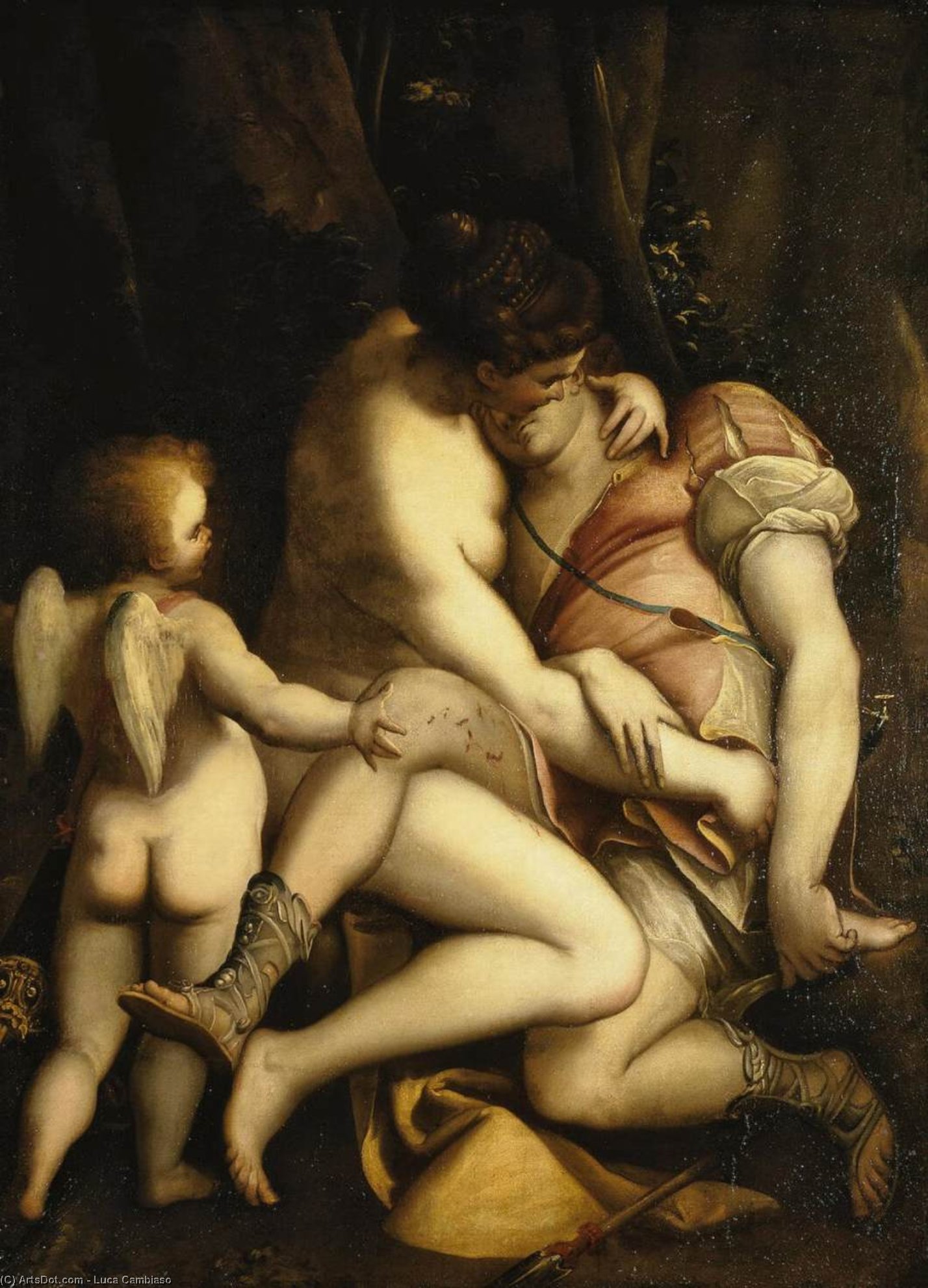
In the grand tapestry of the Italian High Renaissance, few moments capture the tension between divine longing and mortal destiny as poignantly as Luca Cambiaso’s "Venus and Adonis." Painted during the vibrant years of 1565-1569, this masterpiece serves as a breathtaking window into the Genoese School, offering much more than a mere mythological retelling. The scene presents us with an intimate, almost breathless encounter between the goddess of love and her doomed lover. As Venus reclines, her form draped in sumptuous, light-catching fabrics, she reaches out with a gaze that oscillates between profound tenderness and desperate pleading. Beside her, the youthful Adonis stands poised, his red tunic a striking splash of color against the more muted tones of the composition, his hand gripping a spear that foreshadows the tragic hunt to come. It is a moment frozen in time, where the sweetness of passion meets the shadow of impending loss.
The emotional resonance of this work lies in its ability to communicate psychological depth through the language of Mannerism. Unlike the serene and balanced compositions of the earlier Renaissance, Cambiaso utilizes the stylistic hallmarks of his era to heighten the drama. He employs elongated figures and exaggerated, graceful poses that lend an ethereal, almost otherworldly quality to the lovers. This deliberate use of distortion is not a lack of skill, but a sophisticated tool used to convey the internal turbulence of the characters. The viewer is not merely observing a myth; they are witnessing the palpable weight of Venus's anxiety and the stoic, perhaps even oblivious, determination of Adonis.
The Mastery of Light and Symbolic Depth
Technically, "Venus and Adonis" is a triumph of chiaroscuro. Cambiaso, often celebrated for his ability to manipulate light, uses the dramatic interplay of shadow and illumination to sculpt the anatomy of the figures, giving them a startling three-dimensionality. The way light dances across Venus's skin and catches the folds of her drapery creates a sense of tactile realism that invites the eye to linger on every detail. This mastery of light serves a dual purpose: it provides a sense of physical volume while simultaneously creating a stage for the symbolic elements of the painting to emerge.
Beyond the central figures, the composition is enriched by subtle mythological cues. The presence of two winged cupids in the background, clutching their arrows, acts as a divine commentary on the scene. These celestial observers remind us that the passion between Venus and Adonis is governed by forces far greater than human will. Every element, from the laurel wreath upon Adonis's head to the delicate crown of flowers adorning Venus, contributes to a narrative of fertility, beauty, and the cyclical nature of life and death. For the discerning collector or interior designer, this painting offers a profound sense of narrative complexity, making it an ideal centerpiece for spaces that demand both intellectual depth and visual splendor.
An Eternal Inspiration for Sophisticated Interiors
For those looking to curate a space with historical gravity and artistic elegance, a high-quality reproduction of "Venus and Adonis" provides an unparalleled opportunity. The painting’s rich palette—dominated by deep reds, warm flesh tones, and dramatic shadows—allows it to integrate seamlessly into both classical and contemporary settings. In a traditional study or a grand salon, it acts as a window into the soul of the 16th century, sparking conversation and evoking a sense of timelessness. In a more modern, minimalist environment, the dramatic movement and emotional intensity of Cambiaso’s brushwork can serve as a powerful focal point, breaking the stillness with its vibrant energy.
Owning a piece that embodies the Genoese School's finest achievements is an investment in cultural heritage. This work does not merely decorate a wall; it transforms a room into a gallery of human emotion. Whether you are drawn to the technical brilliance of the Mannerist style or the heartbreaking beauty of the mythological subject matter, "Venus and Adonis" remains a timeless testament to the power of art to capture the most fleeting and profound moments of the human experience.