A Symphony of Light and Devotion
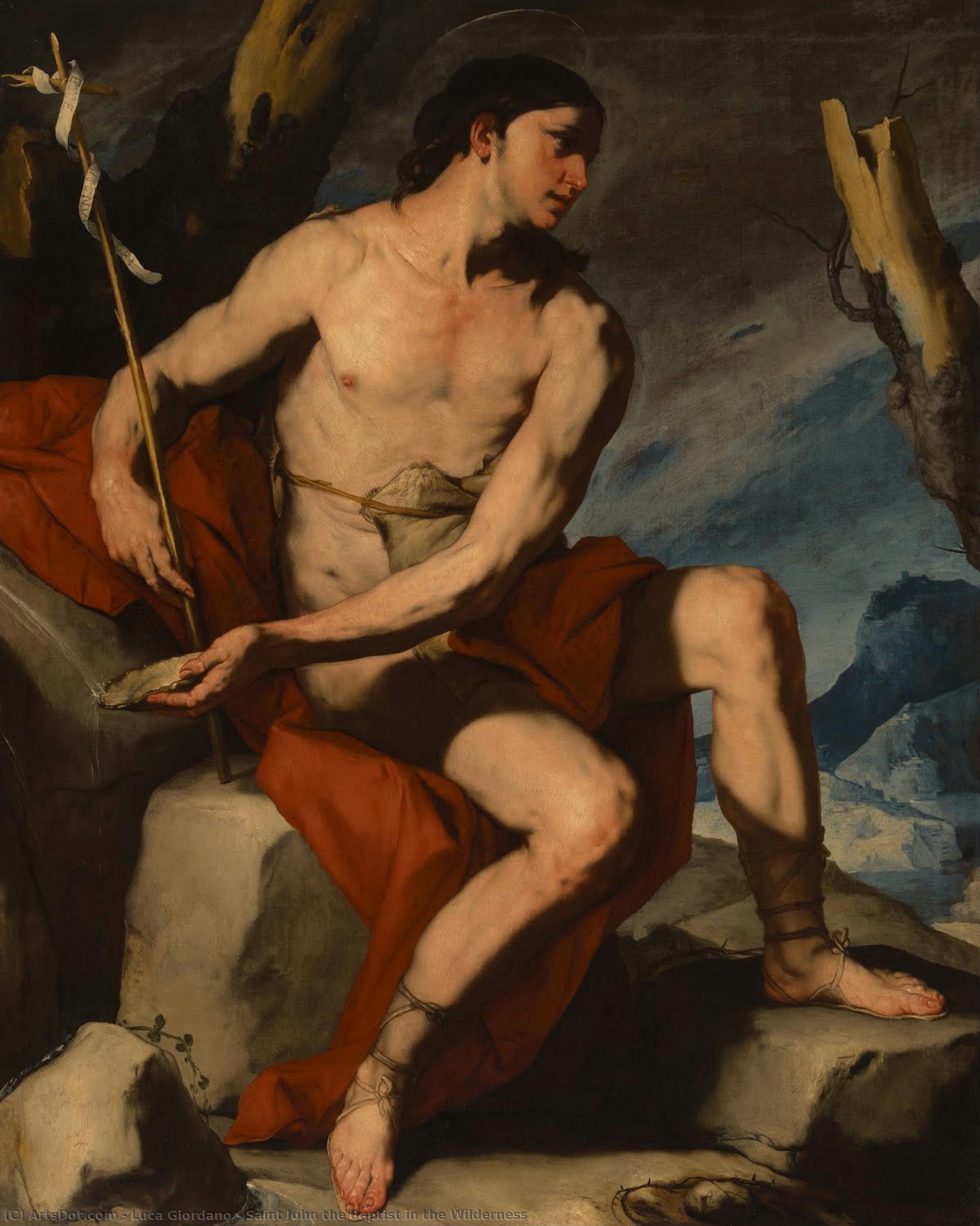
In the heart of the Baroque era, few artists could capture the visceral tension between earthly solitude and divine presence as masterfully as Luca Giordano. His 1660 masterpiece, Saint John the Baptist in the Wilderness, serves as a profound window into a period defined by dramatic illusionism and spiritual fervor. While the title suggests a biblical hermit, the painting breathes life into the figure of Saint Anthony the Great, presenting him not merely as a subject of religious iconography, but as a living embodiment of unwavering devotion. Set against a rugged, mountainous landscape that seems to tremble under a tempestuous sky, the composition draws the viewer into a world where the boundaries between the physical and the metaphysical are beautifully blurred.
Giordano, often celebrated by his contemporaries as "Luca fa presto" for his incredible speed and prolific talent, demonstrates here a sophisticated command of the Baroque aesthetic. The painting is anchored by a powerful pyramidal composition, with the saint positioned centrally to command immediate attention. As your eyes meet his resolute gaze, you are pulled into a narrative of asceticism and strength. The landscape itself—a jagged terrain of weathered rocks and dark, encroaching shadows—mirrors the internal spiritual battles of the saint, creating an atmosphere that is simultaneously somber and deeply inspiring.
The Mastery of Chiaroscuro and Symbolism
Technically, the work is a triumph of chiaroscuro. Giordano utilizes stark, directional lighting to sculpt the musculature of the figure, pulling him out of the surrounding gloom with a theatrical brilliance. This interplay of light and shadow does more than create depth; it imbues the scene with an emotional pulse. The warm palette of ochres, deep reds, and earthy browns creates a sense of groundedness, even as the dramatic lighting suggests a sudden, divine intervention. Every brushstroke serves to emphasize the textures of the natural world—the roughness of the stone, the dampness of the atmosphere, and the weathered skin of the holy man.
Beyond the visual spectacle lies a rich tapestry of symbolic meaning that rewards deep contemplation. The saint clutches a fish, a potent emblem of divine providence and the sustenance provided by God in the most desolate of circumstances. In his other hand, he grips a shepherd’s staff, a symbol of spiritual guidance and protection against the elements of both nature and sin. Even the small, loyal dog resting at his feet contributes to the narrative, representing faithfulness and the companionship found even in profound solitude. For the collector or designer, these layers of meaning offer a profound intellectual depth that transcends mere decoration.
An Eternal Inspiration for the Modern Space
For those looking to curate a space with character and soul, this reproduction offers much more than an aesthetic accent. It is an invitation to reflection. The painting’s ability to evoke intense emotion—ranging from the quietude of prayer to the turbulence of a storm—makes it a versatile centerpiece for sophisticated interiors. Whether placed in a study filled with books or a grand living area designed for conversation, the work brings a sense of historical weight and dramatic elegance.
Owning a high-quality reproduction of such a monumental work allows one to inhabit the atmosphere of the 17th-century Neapolitan Baroque. It is an opportunity to surround oneself with the legacy of Luca Giordano, a painter who transformed the darkness of his predecessors into a luminous celebration of movement and light. This piece remains a timeless testament to the human spirit's capacity for resilience and its eternal search for connection with the divine.