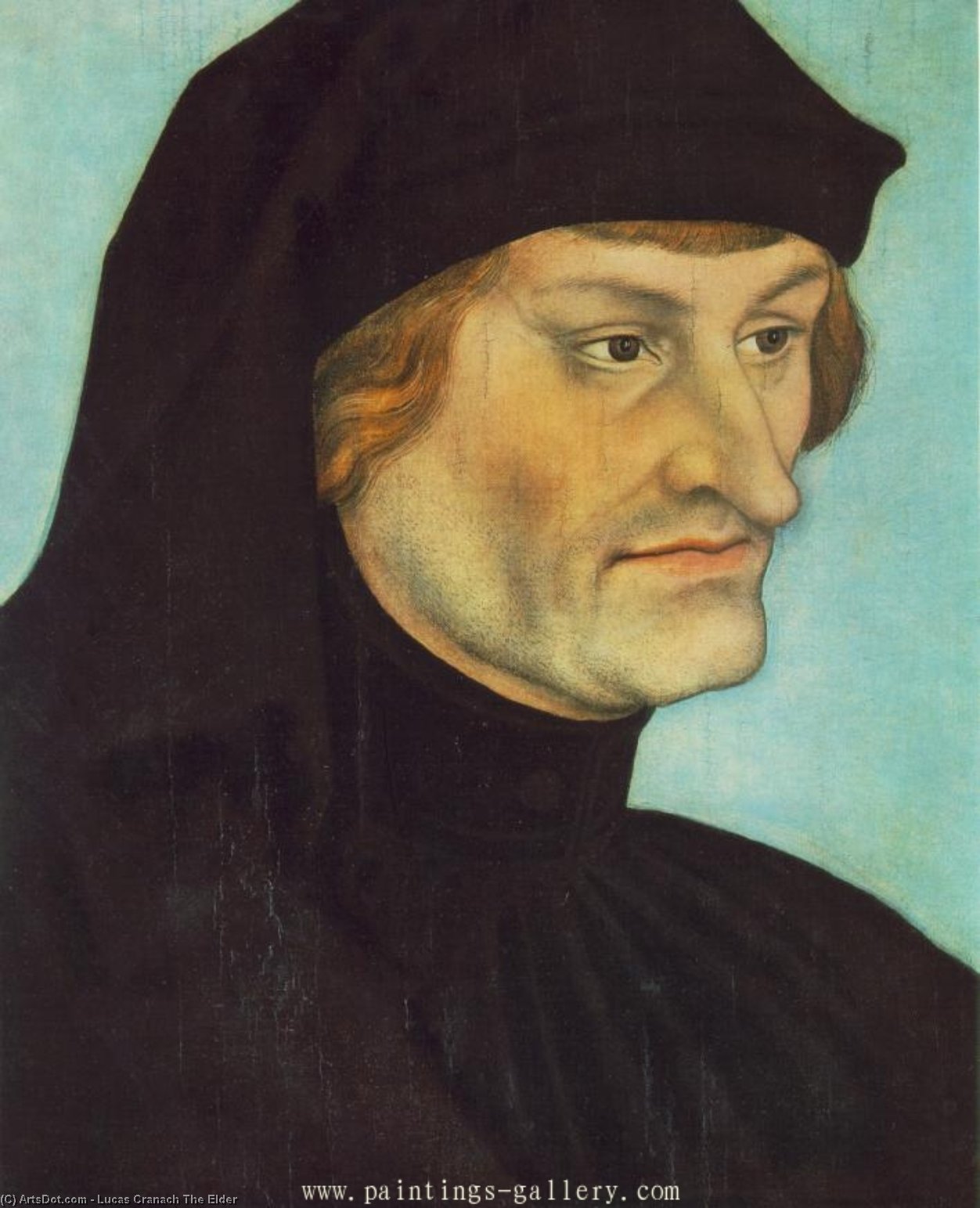
Admire el maestro retrato de Johannes Geiler von Kaysersberg por Lucas Cranach el Viejo: una impresionante reproducción al óleo que captura la elegancia renacentista y profundidad psicológica de la Alte Pinakothek.
Descubre a Lucas Cranach el Viejo (1472-1553), pintor renacentista alemán clave, conocido por retratos de reformadores como Lutero y vibrantes escenas bíblicas. ¡Explora su arte influyente!
Descubre el arte renacentista y barroco en la Pinacoteca Antigua de Múnich. Admira obras maestras de Dürer, Rembrandt y Rubens en un entorno neoclásico impresionante.
A Portrait of Dignity: Exploring Lucas Cranach the Elder’s Masterpiece
Lucas Cranach the Elder's "Portrait of Johannes Geiler von Kaysersberg" stands as a testament to Renaissance artistry and humanist observation. Painted circa 1530, this oil on panel artwork resides within the Alte Pinakothek in Munich, Germany—a location that itself speaks volumes about its enduring significance within German art history. More than just a likeness of a prominent Saxon noble, Cranach’s depiction embodies the intellectual fervor of his time and reveals profound insights into portraiture as a genre during the Reformation era.
Style and Composition: Balancing Form and Feeling
Cranach's stylistic approach is characterized by a masterful blend of Flemish realism—particularly evident in the meticulous glazing technique—with the elegance inherent in German Renaissance tradition. The artist skillfully employs chiaroscuro, manipulating light and shadow to sculpt Geiler’s face and robe, creating a palpable sense of depth and dimensionality. This careful attention to detail isn't merely decorative; it serves to convey an inner stillness and contemplative seriousness that transcends mere visual representation. The composition itself is balanced—the figure centrally positioned against a serene azure sky—a deliberate choice designed to emphasize dignity and composure.
Technique: Glazing and Color Palette – Reflections of Renaissance Innovation
The painting’s technique exemplifies Cranach's mastery of oil paint. He utilized the glazing method extensively, applying thin layers of translucent pigment over subsequent coats to achieve luminous colors and subtle tonal variations. This painstaking process resulted in a surface that glows with an ethereal quality—a hallmark of Cranach’s oeuvre and indicative of his engagement with innovative artistic practices circulating throughout Europe during this period. The color palette is restrained yet impactful, dominated by blues – mirroring the sky – complemented by earthy browns and blacks that ground the figure and lend him gravitas. These colors aren't chosen arbitrarily; they subtly convey a sense of solemnity and intellectual contemplation.
Historical Context: Reformation’s Influence on Artistic Expression
Painted during the tumultuous years of the Protestant Reformation, “Portrait of Johannes Geiler von Kaysersberg” reflects the anxieties and aspirations of its time. Cranach served as court painter to Frederick III, aligning himself with a humanist movement that championed reason and individual liberty—values antithetical to the Catholic dogma dominating Europe. Yet, despite this political backdrop, Cranach’s portrait transcends mere propaganda; it captures a moment of profound human dignity—a quality valued by reformers who sought to elevate the spirit through contemplation and moral virtue. The sitter's gaze directs outwards, suggesting an awareness of broader intellectual currents shaping the era.
Symbolism: Beyond Appearance – Conveying Inner Character
The portrait’s symbolism extends beyond its surface appearance. Geiler’s stern expression—framed by a long beard and mustache—represents wisdom and authority—attributes highly esteemed during Renaissance society. The robe, draped elegantly over his shoulders, symbolizes nobility and piety—reflecting the social status of the subject and aligning with Christian ideals prevalent at the time. Cranach's deliberate choices in portraying Geiler’s countenance underscore the artist’s belief that true beauty resided not merely in physical form but also in inner character—a conviction that resonates powerfully across centuries.