A Gathering of Conviction: Martin Luther and the Wittenberg Reformers
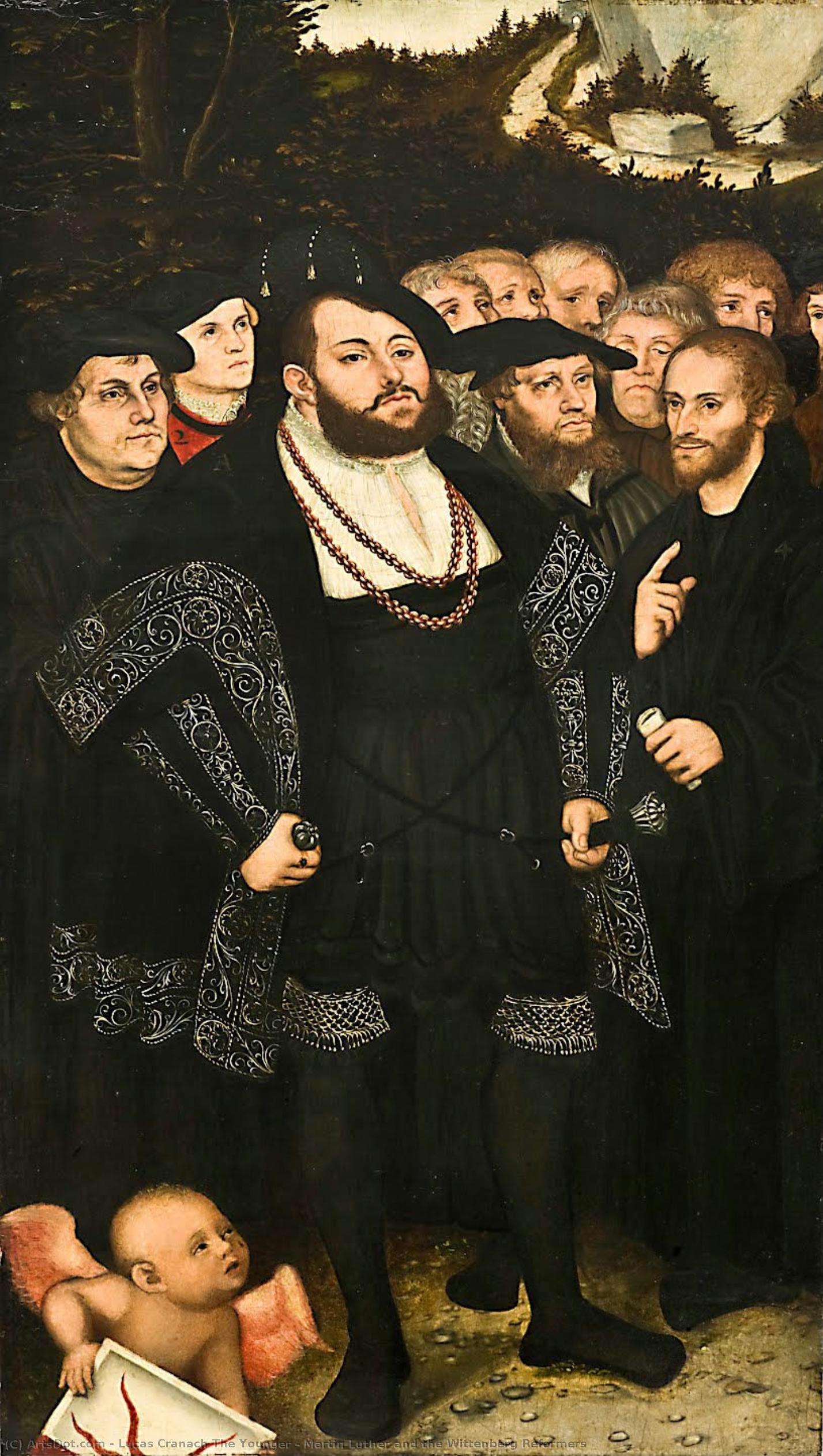
To stand before this depiction of Martin Luther and the Wittenberg Reformers is to step directly into the charged atmosphere of a pivotal moment in Western history. This painting, executed by Lucas Cranach the Younger around 1543, is far more than a mere portrait; it is a visual manifesto. The composition buzzes with intellectual energy, capturing not just a group of men, but an entire movement—the seismic shift that would redefine Christianity and reshape the map of Europe. One can almost feel the weight of conviction emanating from the figures as they gather, their presence solidifying the revolutionary ideas being debated in the halls of Wittenberg.
The Hand of Cranach: Style and Technique
Lucas Cranach the Younger masterfully employs the characteristic vibrancy and narrative clarity associated with German Renaissance painting. His technique allows for a remarkable balance between detailed portraiture and sweeping historical scope. Observe the rendering of the garments; while some figures wear recognizable religious vestments, others sport contemporary attire, grounding the momentous event in the reality of 16th-century life. Cranach’s brushwork lends an immediacy to the scene, making the gathering feel both monumental and deeply personal. The artist excels at capturing individual character within a collective narrative, ensuring that no single face is lost in the crowd's energy.
Symbolism Woven into the Composition
The symbolism here is rich and multifaceted. At the heart of the group stands Martin Luther, the intellectual engine of the Reformation. Yet, the inclusion of figures like the man holding a baby adds layers of profound meaning—suggesting that this reformation was not just an academic debate, but a deeply human, life-affirming renewal. The crowd surrounding them acts as both witness and participant; they represent the populace ready to embrace change, drawn by the powerful rhetoric emanating from the reformers. Every gesture, every grouping of figures, speaks to the tension between established dogma and burgeoning individual conscience.
Historical Resonance for the Modern Collector
Owning a reproduction of this work is to invite a piece of intellectual history into your own space. For the collector or designer, it serves as a powerful focal point that speaks to themes of belief, revolution, and enduring thought. The drama captured here—the clash between old certainties and new truths—is timeless. It suggests that profound change often begins with a small gathering of dedicated minds. This painting does not merely decorate; it prompts contemplation on the power of ideas to move mountains.