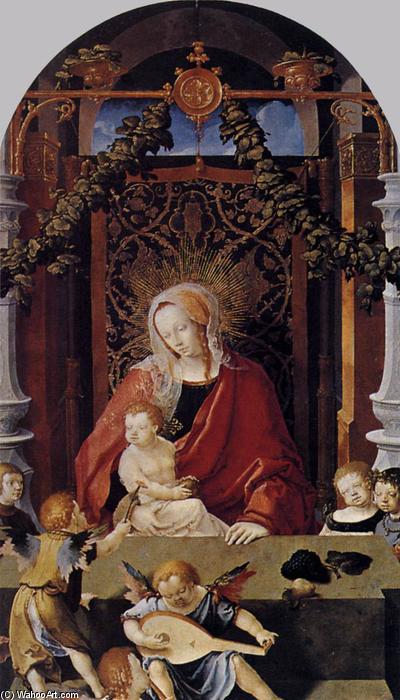
Virgin and Child with Angels: A Renaissance Masterpiece of Serenity and Symbolism
Lucas van Leyden’s “Virgin and Child with Two Angels,” created around 1520, stands as a testament to the artistic fervor of the Early Renaissance—a period marked by an unprecedented revival of classical ideals and a profound shift toward humanist thought. Executed in meticulous detail on oak wood panel, this painting transcends mere representation; it embodies a spiritual contemplation that continues to resonate with viewers centuries later.
- Subject Matter: The composition centers on the Virgin Mary cradling Jesus Christ, surrounded by two angelic figures. This iconic depiction reflects the central dogma of Christianity—the incarnation of God—and speaks to themes of purity, divine grace, and maternal devotion.
- Style & Technique: Van Leyden’s style aligns seamlessly with the burgeoning artistic trends of Nuremberg, mirroring Albrecht Dürer's pioneering approach to engraving and painting. He employs a technique known as glazing – layering thin translucent coats of paint over thicker undercoats—resulting in luminous colors and remarkable textural depth. The artist skillfully captures the subtle nuances of light and shadow, enhancing the sculptural quality of the figures and creating an atmosphere of ethereal beauty.
- Composition: The painting’s hierarchical arrangement emphasizes Mary and Christ at its core, elevated above the angelic attendants who flank them. A grand arched structure dominates the background, adorned with stylized foliage and grapes—symbols of royalty and fertility—further reinforcing the artwork's solemn grandeur. Lines are predominantly straight and geometric, defining architectural elements and outlining forms with precision.
- Color Palette: The color scheme is dominated by warm hues – rich reds, earthy browns, and opulent golds – complemented by muted blues and greens within the drapery and foliage. These colors evoke a sense of warmth and tranquility, aligning perfectly with the painting’s contemplative mood.
- Historical Context: Produced during the High Renaissance, “Virgin and Child” reflects the humanist preoccupation with human anatomy and perspective—characteristics that distinguish it from earlier Gothic art. It exemplifies the artistic ambition to capture not only visual reality but also spiritual truth, cementing Van Leyden's place as a pivotal figure in shaping European artistic sensibilities.
The artwork’s enduring appeal lies in its ability to convey profound emotion—a serene stillness that invites reflection on faith and compassion. Its meticulous craftsmanship and symbolic richness continue to inspire admiration and offer invaluable insight into the intellectual and aesthetic values of the Renaissance era.