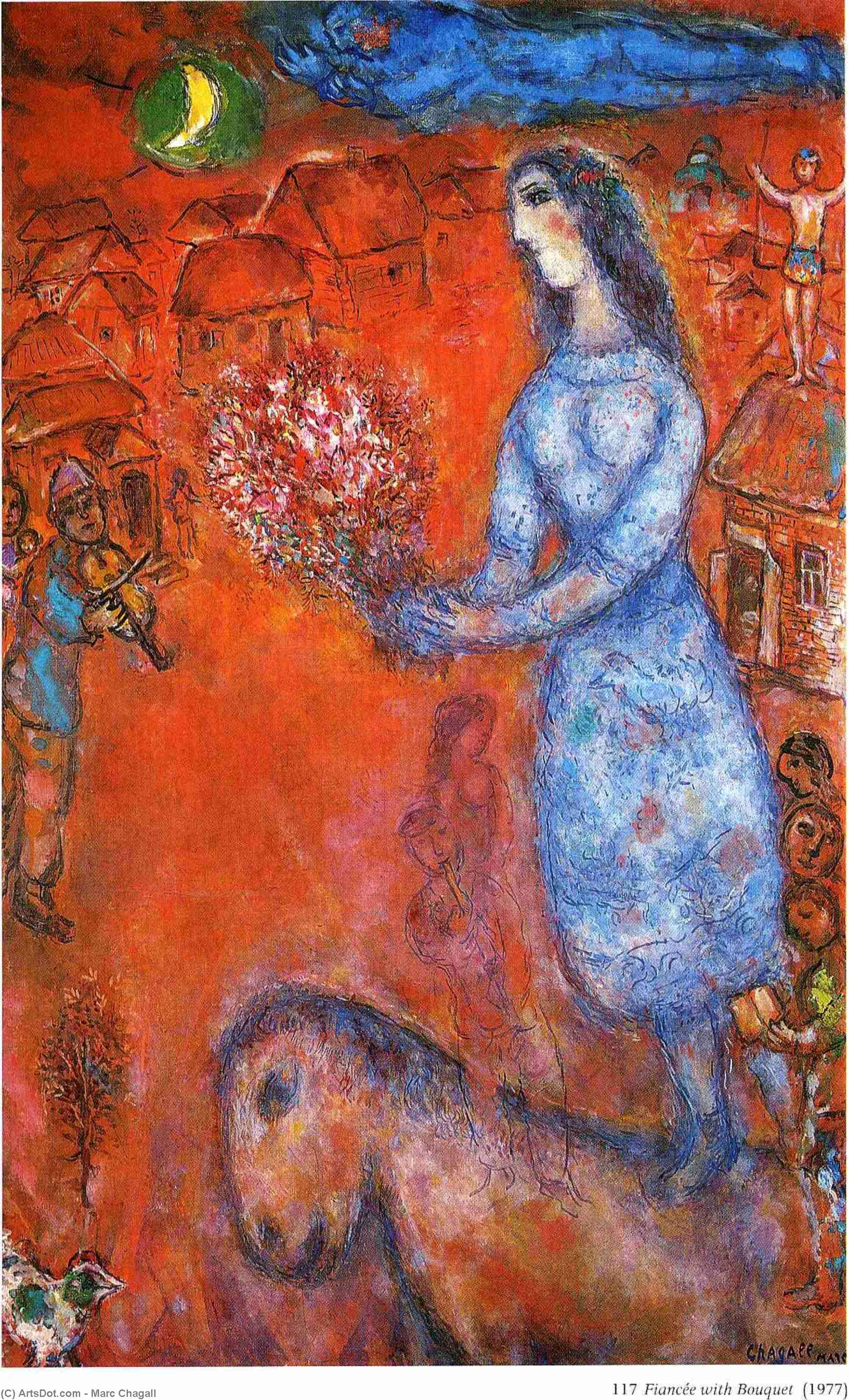
“Prometida con ramo” fue creada en 1977 por Marc Chagall en estilo Arte Naíf (Primitivismo). Encuentra más obras destacadas de pintura de género en WikiArt.org – la mejor base de datos de arte visual.
Descubre a Marc Chagall (1887-1985): artista ruso-francés famoso por sus vibrantes pinturas cubistas y simbolistas, temas del folclore judío y impresionantes vidrieras. ¡Explora su legado! #MarcChagall
A Tapestry of Dreams: Exploring Marc Chagall’s ‘Fiancee with Bouquet’
Marc Chagall's 'Fiancee with Bouquet,' painted in 1977, stands as a quintessential embodiment of his signature Naïve Art style—a genre characterized by its childlike spontaneity and rejection of academic conventions. More than just a depiction of a woman holding flowers; it’s an invitation into Chagall’s deeply imaginative world, where reality blends seamlessly with myth and memory. The painting resides within Vitebsk, Belarus, reflecting the artist's lifelong fascination with his birthplace and its cultural heritage.
Style and Technique: Embracing Primitivism
Chagall’s technique eschews meticulous realism, opting instead for bold color palettes and simplified forms—a deliberate choice that prioritizes emotional expression over precise representation. Thick brushstrokes dominate the canvas, conveying a palpable sense of movement and texture. The artist employs flattened perspectives, creating an illusionistic space that feels both familiar and otherworldly. This stylistic approach aligns perfectly with Naïve Art’s ethos: to capture the essence of experience rather than its literal details. The luminous blues and yellows characteristic of Vitebsk landscapes permeate the composition, mirroring Chagall's own recollections of his formative years.
Historical Context: Vitebsk Under Siege
Painted during a period marked by significant political upheaval—specifically Vitebsk’s tumultuous defense against Nazi invasion in 1941—the artwork carries an undeniable resonance with its time. Chagall himself experienced firsthand the horrors of war, and this trauma profoundly influenced his artistic output. The inclusion of figures huddled together under umbrellas symbolizes resilience and solidarity amidst adversity – a poignant reflection of Vitebsk’s spirit during the siege. Furthermore, the painting's depiction of a serene woman surrounded by flowers serves as an antidote to the anxieties of the era, representing hope and beauty in the face of darkness.
Symbolism: Folklore and Fantasy
‘Fiancee with Bouquet’ is replete with symbolic imagery drawn from Jewish folklore and Chagall’s personal mythology. The woman herself embodies femininity and grace—a recurring motif throughout his oeuvre. Her gaze directs upwards towards the heavens, signifying spiritual aspiration and transcendence. The bouquet of flowers symbolizes love, fertility, and remembrance – elements deeply ingrained in Vitebsk’s cultural traditions. Flying figures—a hallmark of Chagall's visual language—represent liberation from earthly constraints and embody the artist’s belief in a realm beyond material concerns.
Emotional Impact: A Window into Chagall’s Soul
Ultimately, ‘Fiancee with Bouquet’ transcends mere visual representation; it communicates profound emotional depth. The painting evokes feelings of nostalgia, tenderness, and wonder—drawing viewers into Chagall's dreamlike vision. Its vibrant colors and expressive brushstrokes captivate the senses, transporting us back to Vitebsk and inviting contemplation on themes of love, loss, and faith. It’s a testament to Chagall’s ability to distill complex psychological states into accessible artistic forms – a masterpiece that continues to inspire audiences worldwide.