Introduction to the Painting and Artist
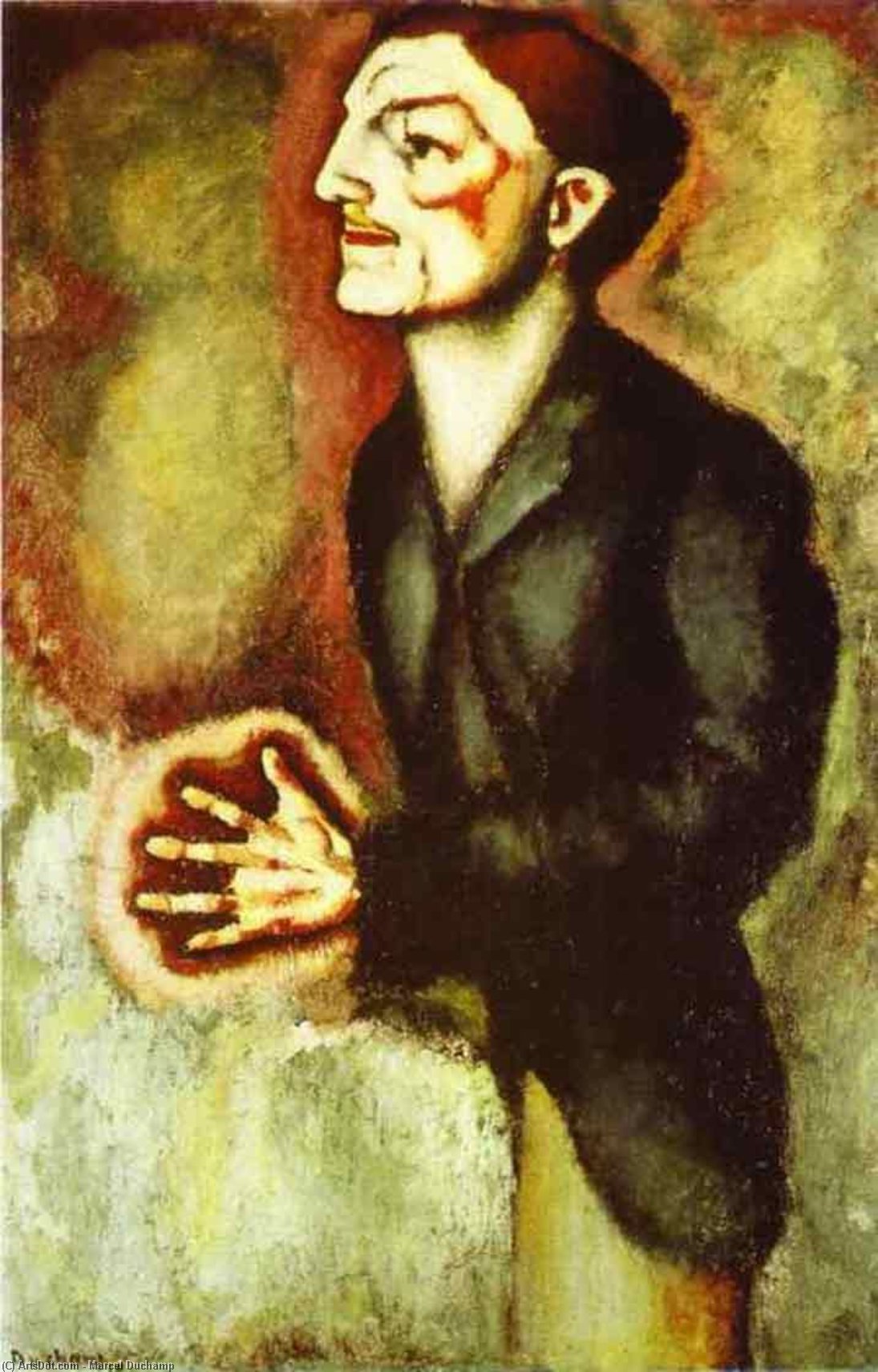
Marcel Duchamp’s Portrait of Dr. R. Dumouchel, painted in 1910, is a remarkable example of Post-Impressionism (learn more about this art movement at ArtsDot). The painting features Raymond Dumouchel, a childhood friend of Duchamp who was studying medicine at the time. This three-quarter-length portrait is well-known for its non-naturalistic colors and strong contrasts between pink and green tones.
The vibrant pink halo surrounding Dr. Dumouchel's hand and upper body in Portrait of Dr. R. Dumouchel is particularly striking. This element can be interpreted as a reference to X-rays, which had fascinated the public since their discovery a quarter-century earlier. Duchamp was likely aware of the occult interpretation of modern science that viewed X-rays as a means of registering supernatural forces beyond the boundaries of the knowable. This perspective aligns with Duchamp’s belief in emphasizing the mental side of art-making rather than relying solely on direct visual description (explore more works by Marcel Duchamp at ArtsDot).
Interpreting the Painting
The painting’s palette—dominated by hues of pink and green—immediately distinguishes it from traditional portraiture. These colors weren't chosen for their representational accuracy but rather to convey a mood, hinting at introspection and perhaps even unease. Duchamp deliberately eschewed naturalistic coloration, prioritizing emotional impact over visual realism.
The halo effect around Dumouchel’s hand isn’t merely decorative; it symbolizes the invisible realm of radiography—a burgeoning field during Duchamp's time that promised to penetrate beneath skin and bone. This gesture reflects Duchamp’s fascination with scientific advancements and their potential to illuminate hidden truths, mirroring his broader artistic preoccupation with challenging conventional perceptions.
The Significance of the Painting
Beyond its chromatic choices and symbolic references, Portrait of Dr. R. Dumouchel embodies Duchamp’s core artistic philosophy: a rejection of mimetic representation in favor of conceptual exploration. He sought to provoke thought and question the very definition of art—a stance that would become central to his contribution to Conceptual Art.
Considered alongside Duchamp's other works, this portrait underscores his commitment to pushing boundaries and disrupting established artistic conventions. It stands as a testament to his belief that art should transcend mere visual pleasure, engaging the intellect and prompting contemplation about its role in society.
Availability of the Painting
The original Portrait of Dr. R. Dumouchel by Marcel Duchamp is housed in the Philadelphia Museum of Art (visit the museum's website for more information). However, you can own a high-quality reproduction of this masterpiece through ArtsDot’s handmade oil painting service (learn how ArtsDot preserves classic beauty through its reproductions).
At ArtsDot, you can acquire a museum-quality reproduction of this masterpiece and bring a piece of art history into your home or office (visit ArtsDot.com to explore our collection).