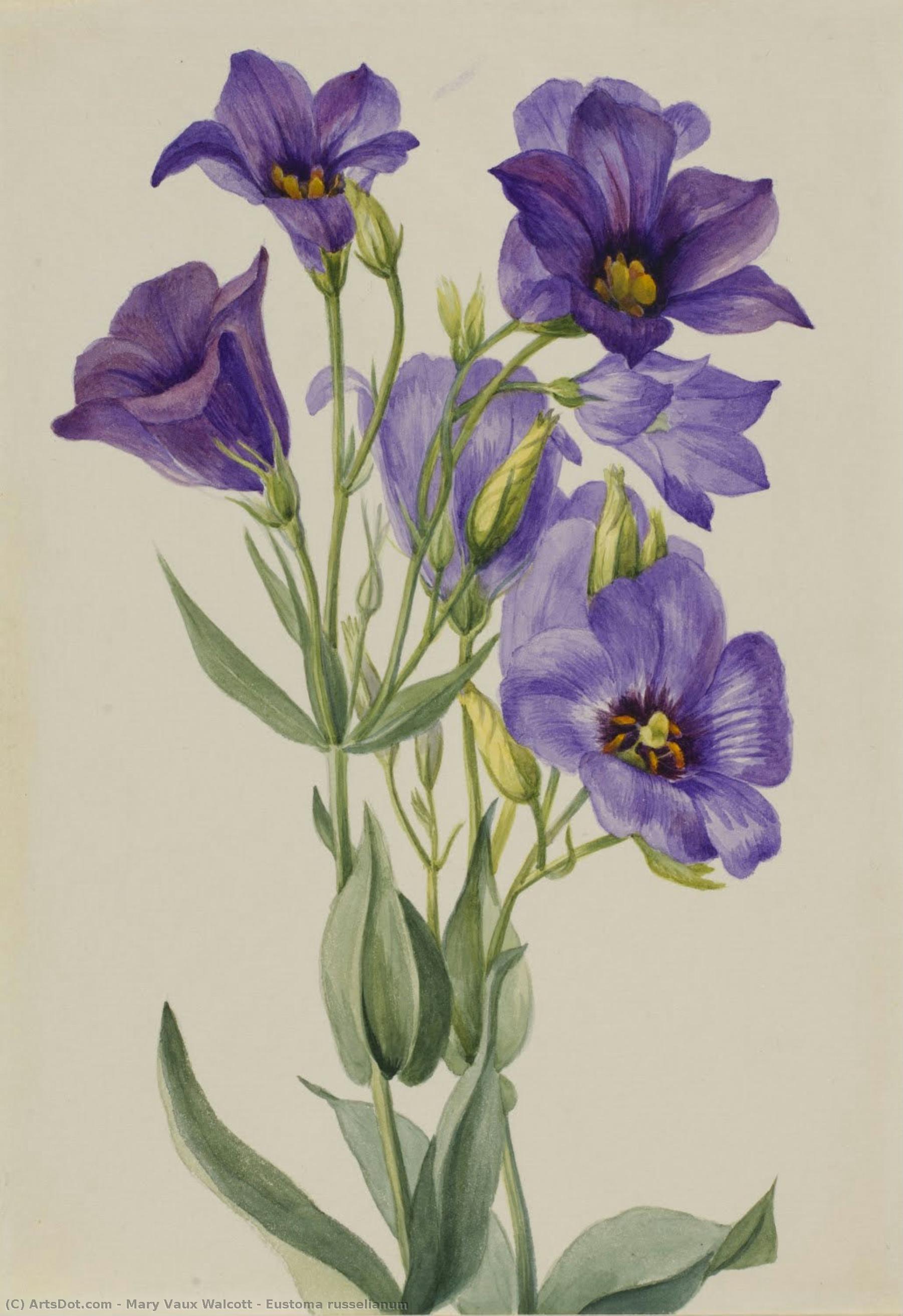
Eustoma russelianum: A Watercolor Symphony of Resilience
Mary Vaux Walcott’s “Eustoma russelianum,” completed circa early 1930s, stands as a testament to the enduring power of observation and artistic dedication. More than just a depiction of purple flowers—specifically the Russian eustoma—it embodies Walcott's profound connection with the American landscape and her unwavering commitment to documenting its botanical treasures for the Smithsonian Institution.
Botanical Precision Meets Artistic Impression
Walcott’s meticulous technique is immediately apparent. Employing watercolor on paper, she achieved remarkable detail through layering translucent washes of pigment—a hallmark of her style—capturing the subtle variations in petal texture and leaf coloration with astonishing accuracy. Yet, this scientific precision never overshadows an underlying artistic impulse; instead, it serves as a foundation for conveying emotion and capturing the ethereal beauty characteristic of wildflower paintings.
A Window into Early 20th Century Botany
The painting emerged during a period of significant botanical exploration and conservation efforts in the United States. Walcott’s work aligns with the broader movement to catalog and preserve North American flora, reflecting the burgeoning interest in scientific inquiry alongside an appreciation for artistic representation. Her meticulous illustrations were invaluable in furthering understanding of plant species and their habitats—a legacy that continues to inspire botanists and artists alike.
Symbolism of Color and Form
The dominant purple hue speaks to themes of dignity, spirituality, and transformation – colors frequently associated with royalty and rebirth. The arrangement of the flowers—grouped together in a stylized bouquet—suggests harmony and interconnectedness within the natural world. Furthermore, the delicate rendering of individual petals emphasizes fragility and beauty—a poignant reminder of the ephemeral nature of life itself.
Emotional Resonance: Finding Beauty Amidst Change
"Eustoma russelianum" transcends mere botanical illustration; it evokes a sense of wonder and contemplation. Walcott’s masterful watercolor captures not only the visual splendor of the flower but also its inherent resilience—a quality mirrored in her own life journey as she navigated familial responsibilities while pursuing her artistic passions. The painting serves as an enduring symbol of perseverance, creativity, and the transformative potential of engaging with the natural world.
- Artist: Mary Vaux Walcott
- Year Created: Circa Early 1930s
- Medium: Watercolor on Paper
- Dimensions: 25 x 17 cm
- Collection: Smithsonian American Art Museum, Gift of the Artist
This stunning reproduction captures the essence of Walcott’s artistic vision—a celebration of botanical beauty and a testament to her unwavering dedication to documenting America's flora.