Mary Vaux Walcott: A Pioneer of Botanical Watercolor
Mary Vaux Walcott (1860-1940) stands as an unparalleled figure in the annals of American art history – affectionately dubbed “the Audubon of Botany.” Her extraordinary talent lay not merely in capturing visual beauty but in meticulously documenting North American flora with breathtaking watercolor precision, earning her a place among the most influential naturalists and artists of her era. This dedication to scientific observation combined seamlessly with artistic vision, resulting in paintings that transcend mere representation and resonate deeply with viewers.
Winterberry: A Symphony of Crimson and Delicate Watercolor
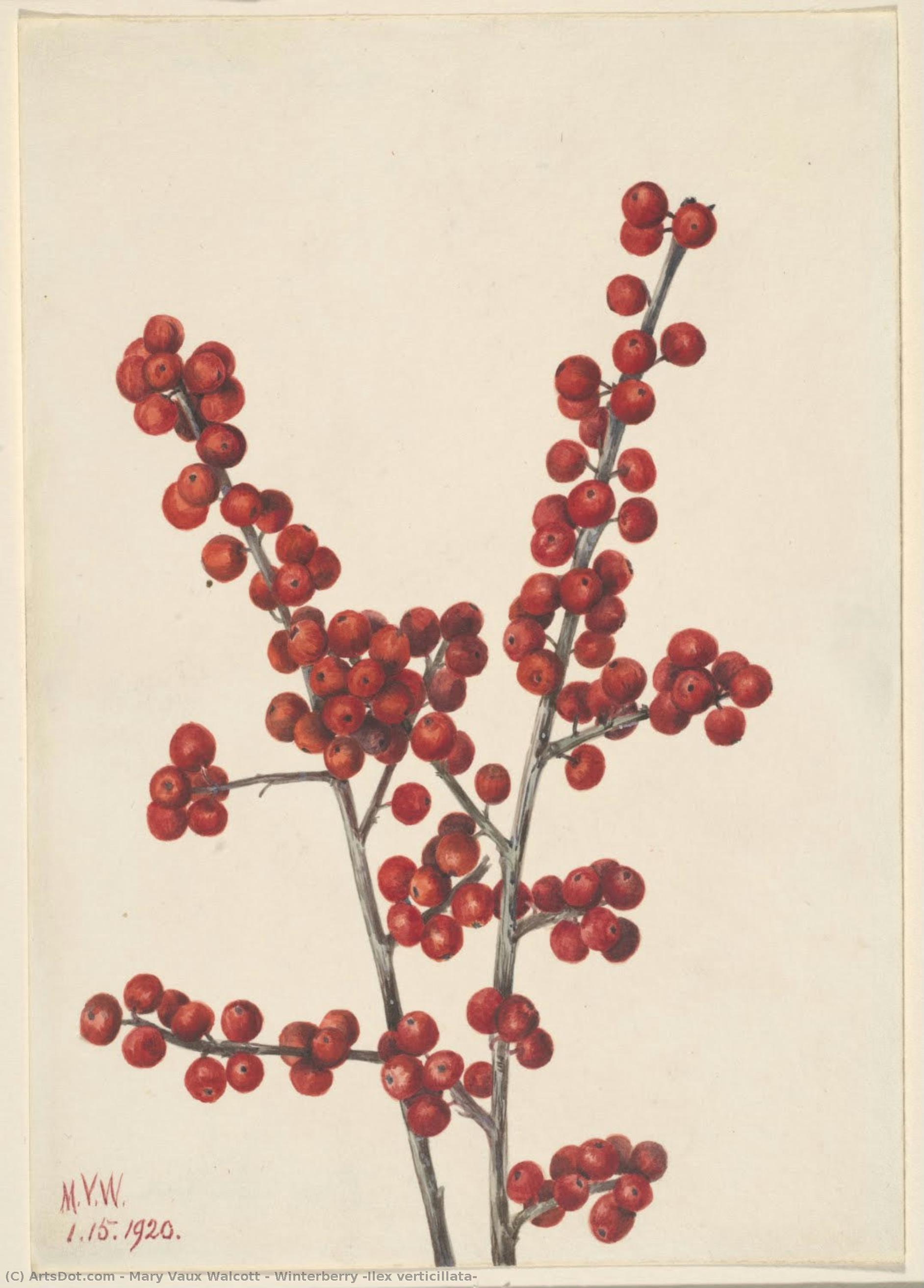
“Winterberry,” painted in 1920 by Mary Vaux Walcott, exemplifies Walcott’s signature style – a masterful blend of botanical accuracy and luminous watercolor technique. The artwork depicts a single branch laden with vibrant red berries (Ilex verticillata), meticulously rendered using translucent washes of pigment that capture the subtle nuances of light and texture. Each berry is painstakingly detailed, revealing its velvety surface and capturing the way it reflects ambient illumination.
- Style: Botanical Watercolor
- Technique: Layered watercolor washes; meticulous detail rendering
- Size: 25 x 17 cm
- Date: 1920
Historical Context and Significance
Walcott’s work emerged during a period of burgeoning interest in naturalism and conservation. Inspired by the writings of Charles Darwin and fueled by a profound respect for the wilderness, she embarked on an ambitious project to create comprehensive botanical illustrations documenting the flora of North America – a task that would ultimately contribute significantly to scientific understanding and inspire public appreciation for biodiversity.
Symbolism and Emotional Resonance
"Winterberry" transcends its formal depiction as a plant specimen; it embodies themes of resilience, beauty amidst hardship, and the enduring power of nature. The striking crimson berries symbolize vitality and perseverance during winter’s dormancy—a visual metaphor for Walcott's own unwavering commitment to her artistic pursuits despite personal challenges.
Smithsonian Legacy
Currently housed at the Smithsonian American Art Museum in Washington, D.C., “Winterberry” represents a cornerstone of Walcott’s oeuvre and stands as a testament to her enduring legacy as one of America's foremost botanical artists. Its exquisite watercolor execution continues to captivate audiences today, offering an unparalleled glimpse into the artistic sensibilities of a remarkable woman who revolutionized the field of botany.
- Location: Smithsonian American Art Museum
- Gift From Artist: 1970.355.394
- Free Use: Copyright permission granted
Further Exploration
To delve deeper into Mary Vaux Walcott’s artistic journey and her profound impact on American conservation, we encourage you to visit Winterberry (Ilex verticillata) | Smithsonian American Art Museum for detailed artwork information and biographical details.
Recommended Resources
Explore Mary Vaux Walcott’s life and work through these insightful articles: Mary Vaux Walcott: Botanical Precision & Artistic Vision in American Conservation
Artist Database
Mary Vaux Walcott is celebrated as the “Audubon of Botany,” renowned for her exquisite watercolor wildflower paintings documenting North American flora.