A Tender Encounter in the Heart of the German Renaissance
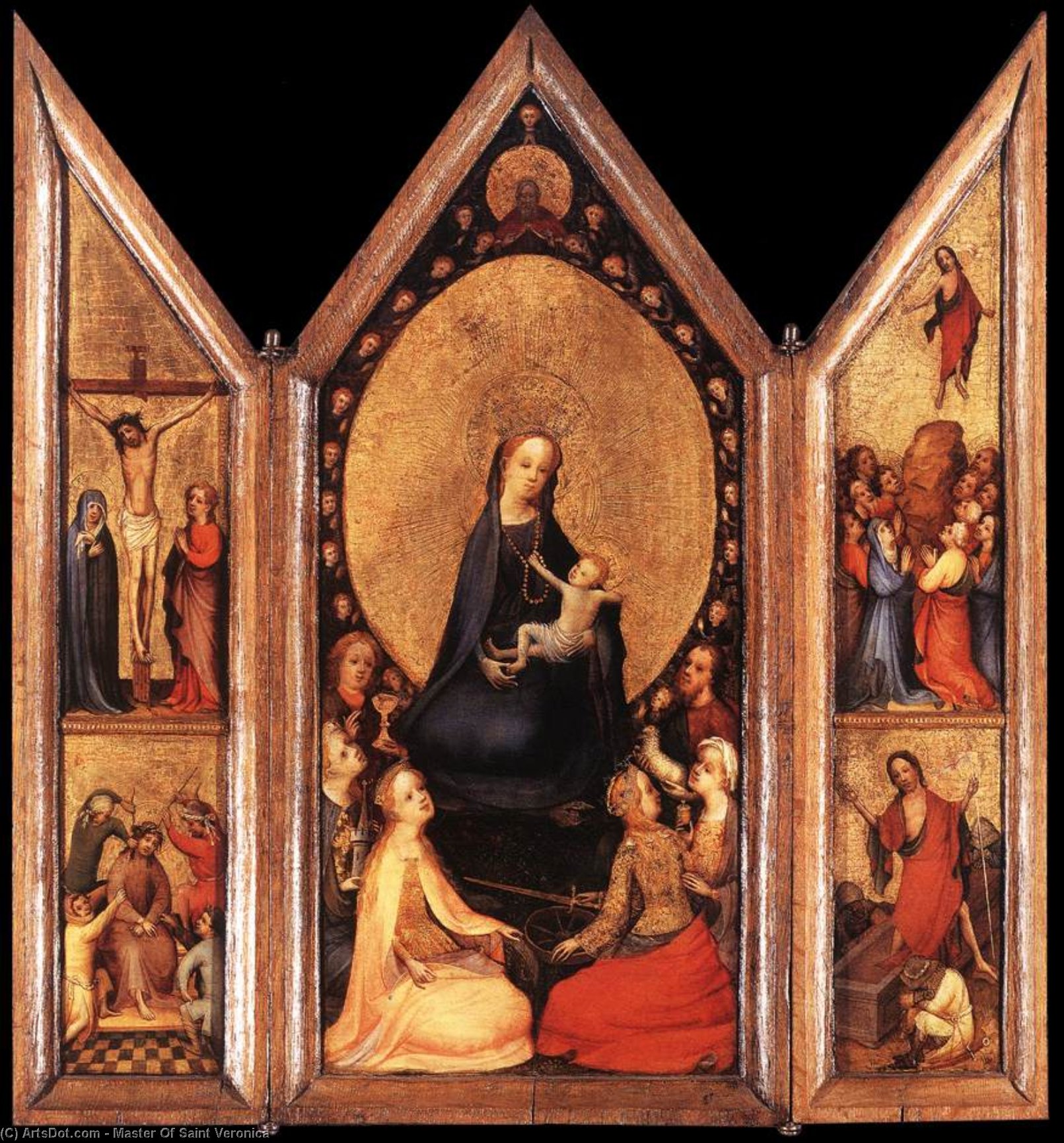
In the quiet, evocative depths of this 15th-century masterpiece, we find ourselves transported to the sacred atmosphere of Cologne during the early decades of the Renaissance. The Triptych (open), attributed to the enigmatic Master of Saint Veronica, serves as a profound window into a lost era of devotional intensity. At its heart lies a moment of breathtaking intimacy: a woman cradling an infant with a tenderness that transcends the centuries. This central figure, bathed in a soft, spiritual light, acts as the emotional anchor for the entire composition, drawing the viewer into a shared experience of maternal protection and divine grace. The surrounding figures, captured in various states of quiet contemplation and communal interaction, create a tapestry of human connection that feels both timeless and deeply rooted in the religious fervor of 1410 Germany.
The artistry of this piece is defined by its remarkable ability to blend the monumental with the minute. The artist utilizes a style characteristic of the late Gothic transition into the Renaissance, where every fold of fabric and every architectural detail carries weight. As we gaze upon the backdrop of arched windows and ancient stone, we see more than just a setting; we see a stage for the sacred. The technique involves a meticulous attention to texture—the softness of the child’s skin contrasted against the structured, old-fashioned architecture—which invites the eye to linger on the subtle nuances of light and shadow. This interplay of light does not merely illuminate the scene but seems to emanate from the subjects themselves, suggesting a divine presence woven into the very fabric of the earthly encounter.
Symbolism and the Legacy of an Anonymous Master
To understand this triptych is to engage with the mystery of its creator. The Master of Saint Veronica remains one of art history’s most captivating enigmas, a name known only through the profound emotional resonance of his surviving works. In this painting, the symbolism of the central bond between mother and child serves as a powerful metaphor for the relationship between the faithful and the divine. The surrounding crowd, engaged in quiet dialogue and shared glances, represents the community of believers, all gathered around the miracle of life and spirit. Every element, from the way the figures lean toward one another to the solemnity of the architectural backdrop, is designed to evoke a sense of reverence and communal peace.
For the discerning collector or interior designer, this reproduction offers much more than mere decoration; it provides a focal point of historical depth and emotional gravity. The piece possesses a unique ability to anchor a room, bringing a sense of heritage and contemplative stillness to any space. Whether placed in a grand gallery setting or a curated private study, the Triptych (open) commands attention through its narrative complexity and its hauntingly beautiful execution. It is an invitation to pause, to reflect, and to reconnect with the profound human emotions that have remained unchanged since the dawn of the 15th century.