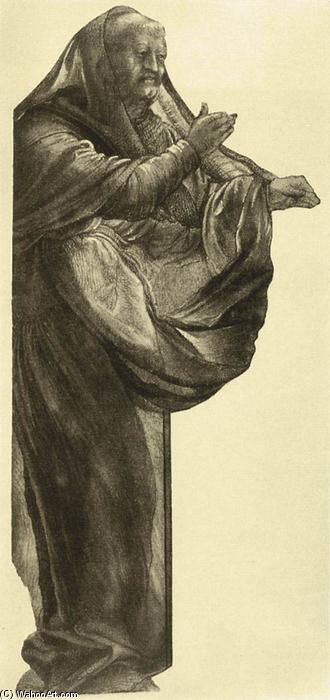
Matthias Grünewald’s Study of an Apostle, a chalk drawing from 1511, captures a profound moment of spiritual contemplation through masterful realism and gesture. Discover this iconic Northern Renaissance artwork and bring its timeless beauty into your space.
A Moment Frozen in Time: Examining Grünewald’s ‘Study of an Apostle’
Matthias Grünewald's “Study of an Apostle,” created circa 1511, stands as a testament to the enduring power of Northern Renaissance artistic vision. More than just a depiction of biblical iconography—a solitary apostle rendered in profile—it embodies a complex interplay of observation, emotion, and spiritual contemplation that continues to resonate with viewers today.
Technical Mastery: Chalk and Texture – The Language of Detail
Executed primarily in chalk on paper, Grünewald’s technique demonstrates an unparalleled dedication to realism. Unlike the smoother surfaces favored by Italian Renaissance artists, chalk lends itself beautifully to capturing subtle nuances of light and shadow—a crucial element in conveying the apostle's three-dimensionality. The artist meticulously builds up texture through layering thin washes of pigment, resulting in palpable folds within the drapery and a sense of movement that breathes life into the figure.
Symbolism Within Simplicity: Gesture and Spiritual Resonance
The apostle’s posture—raised hands slightly above his torso, fingers curled inward—is laden with symbolic significance. Traditionally interpreted as gestures of blessing or prayer, it speaks to a profound yearning for divine grace. This quiet contemplation is further reinforced by the apostle's gaze, subtly directed towards the viewer, inviting introspection and fostering a connection between artist and subject.
Historical Context: Beyond Humanism – Faith Illuminated
While Grünewald’s work operates within the broader humanist movement of his time—a burgeoning interest in classical ideals and human intellect—he prioritizes religious expression above all else. Unlike many artists exploring humanist themes, Grünewald focuses on conveying spiritual fervor through meticulous observation and masterful technique. The absence of extraneous ornamentation underscores this dedication to conveying inner truth.
A Legacy of Emotion: Why Grünewald Still Matters
"Study of an Apostle" exemplifies the Northern Renaissance’s distinctive approach to portraying religious subjects—a fusion of realism, emotional intensity, and symbolic depth. Its enduring appeal lies in its ability to capture a moment of profound stillness, prompting viewers to consider questions of faith and contemplation. Reproductions from ArtsDot allow you to experience this masterpiece's beauty and artistry firsthand.