Maurice Quentin de La Tour: Capturing Majesty in Pastel
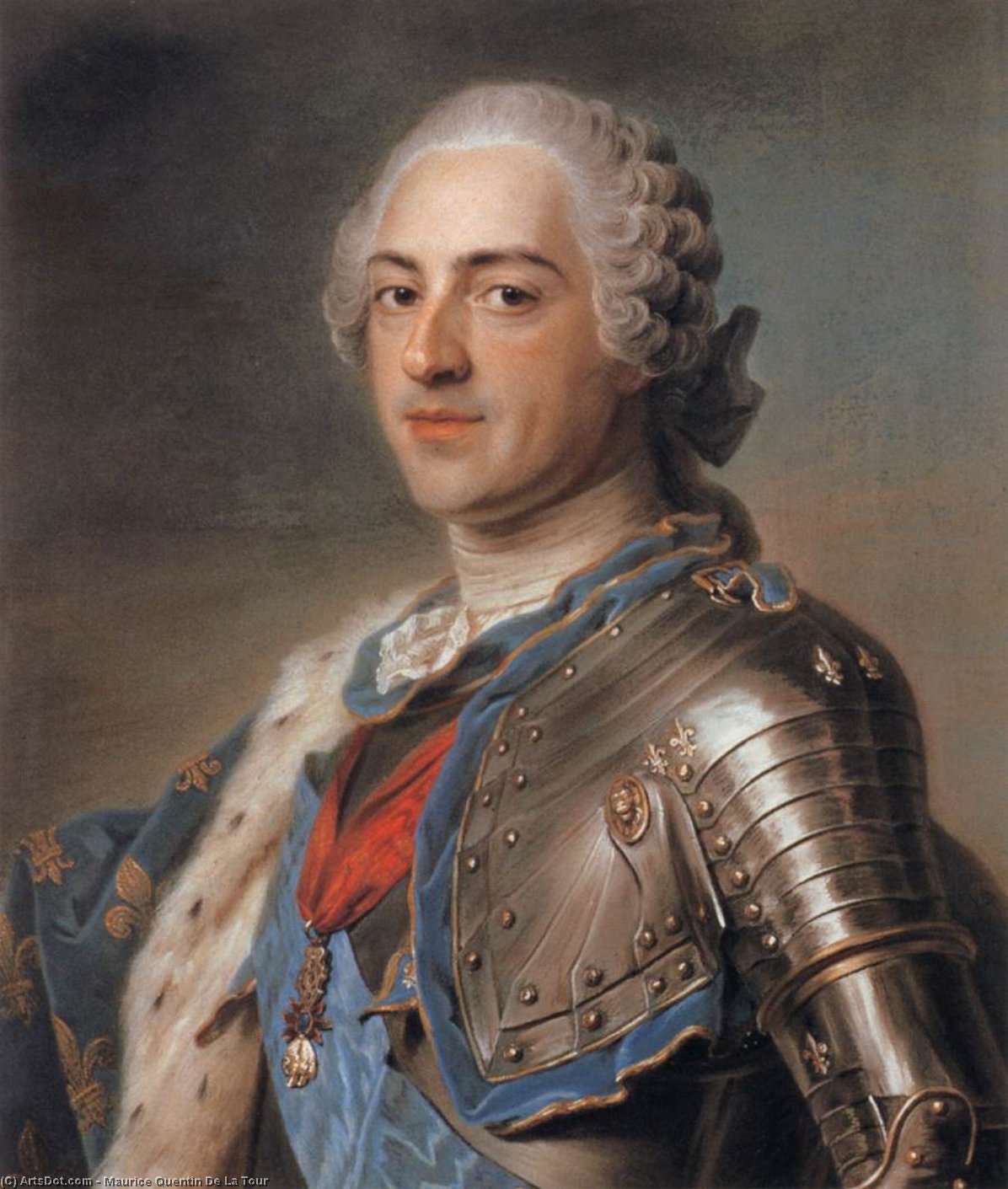
Maurice Quentin de La Tour (1704 – 1788) stands as a pivotal figure in Rococo portraiture, renowned for his masterful manipulation of pastel—a technique that allowed him to achieve unparalleled luminosity and delicacy. This remarkable artwork, “Louis XV,” exemplifies the stylistic hallmarks of his era and offers a fascinating glimpse into the opulent world of French aristocracy during Louis XV’s reign.
The painting depicts Louis XV, seated with an air of regal composure. He wears a striking blue coat adorned with gold embroidery—a deliberate choice reflecting the wealth and prestige associated with royalty. A scarlet sash encircles his torso, further emphasizing his status, while a golden crown rests upon his head, symbolizing authority and divine right.
A Pastel Pioneer: Technique and Innovation
Unlike oil paint, pastel relies on finely powdered pigment mixed with binder—typically gum arabic—to create soft, velvety surfaces. La Tour’s skill lay in exploiting the medium's ability to capture subtle tonal variations and shimmering highlights. The artist meticulously blended pastel hues onto paper, layering colors to build depth and creating an ethereal glow that distinguishes his portraits from those produced by contemporaries.
The use of pastel wasn’t merely a stylistic preference; it represented a significant advancement in portraiture. It allowed for greater spontaneity and immediacy than oil paint, capturing fleeting expressions and conveying psychological nuance—qualities particularly valued during the Rococo period. La Tour's approach was revolutionary, influencing subsequent artists and establishing pastel as a favored medium for depicting likenesses.
Historical Context: The Reign of Louis XV
Louis XV’s reign (1724 – 1774) marked the zenith of French Baroque influence, transitioning into the exuberant aesthetic of Rococo. This era celebrated beauty, frivolity, and aristocratic indulgence—themes powerfully reflected in La Tour's artwork. The portrait serves as a testament to the grandeur of Versailles and the pervasive fascination with royal iconography.
Furthermore, La Tour’s work aligns with broader artistic currents of the time, mirroring the interest in capturing inner character alongside outward appearance. Like Voltaire and Madame de Pompadour, Louis XV was portrayed not merely as a ruler but as an individual—a human being capable of emotion and contemplation. This humanist sensibility distinguishes La Tour's oeuvre from more formal depictions of monarchs.
Symbolism and Emotional Impact
The composition itself is carefully considered, directing the viewer’s gaze towards Louis XV’s face—the focal point of the portrait. The posture exudes confidence and dignity, conveying a sense of power and serenity. The subtle shading and luminous highlights contribute to an emotional resonance that transcends mere visual representation.
“Louis XV” is more than just a likeness; it's an embodiment of Rococo ideals—beauty, elegance, and refined sensibility. La Tour’s pastel technique elevates the portrait beyond a simple depiction of royalty, transforming it into a captivating meditation on human presence and artistic mastery.