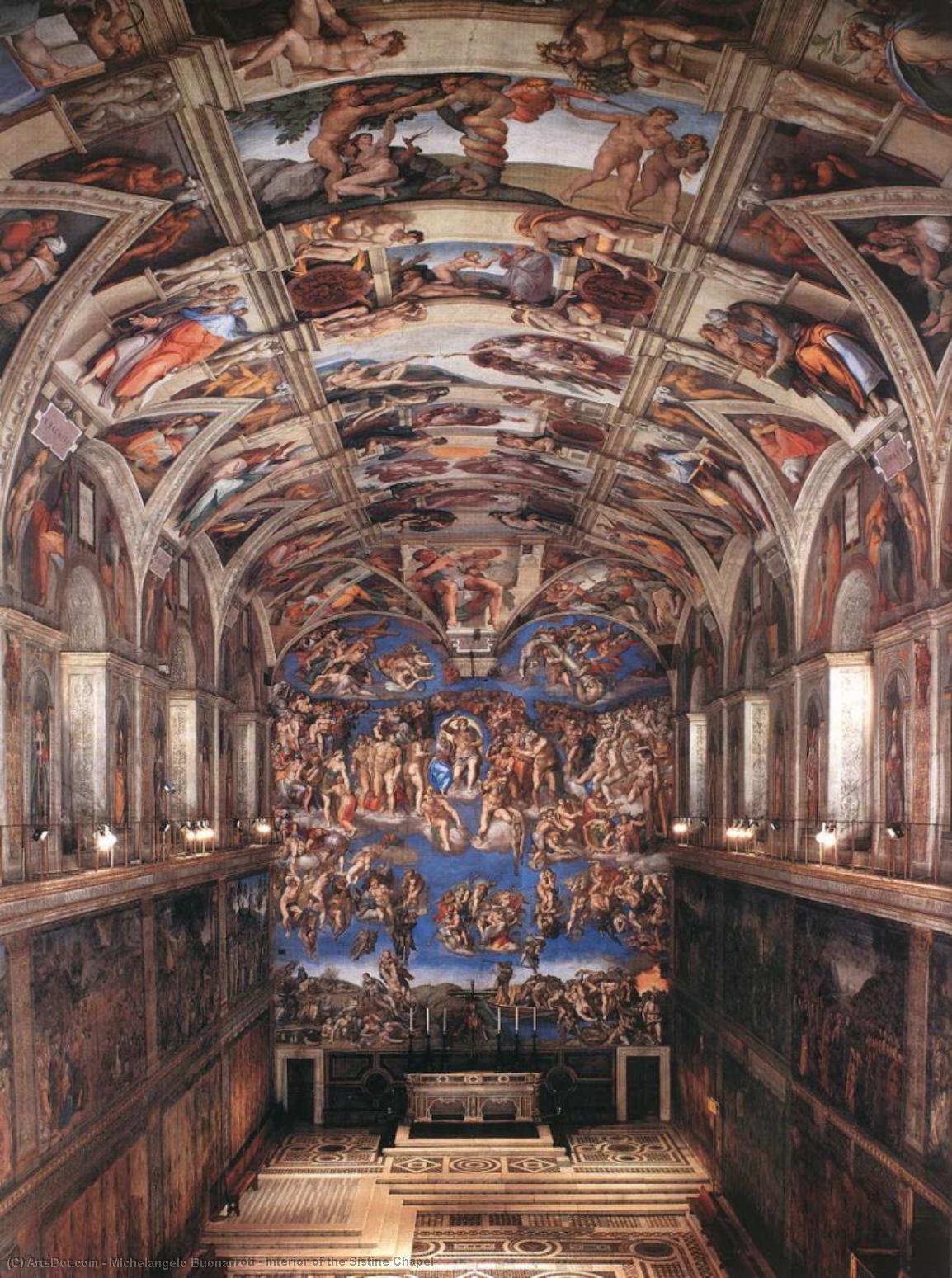
Interior of the Sistine Chapel
The
Sistine Chapel, a renowned papal chapel within the Vatican Palace, is celebrated for its breathtaking frescoes created by the legendary artist
Michelangelo Buonarroti. Among his notable works is the captivating painting titled 'Interior of the Sistine Chapel,' which showcases the artist’s unparalleled skill and artistic genius.
The Historical Context
Commissioned by Pope Julius II in 1508, Michelangelo began working on the ceiling of the
Sistine Chapel and completed it in 1512. This monumental project was a cornerstone of High Renaissance art, transforming the chapel into an iconic symbol of artistic excellence. It represented a bold ambition to revive classical ideals and elevate papal prestige amidst turbulent political times—a testament to Julius II’s determination to assert papal authority and commemorate his own legacy.
The Artistic Elements
The 'Interior of the Sistine Chapel' painting features intricate frescoes on the walls and ceiling, depicting various scenes and figures from the Book of Genesis. These monumental compositions are executed in tempera paint on plaster, utilizing a technique perfected by Michelangelo himself—a masterful blend of meticulous observation and imaginative interpretation. Vibrant colors – predominantly reds, blues, yellows, and greens – dominate the palette, creating an immersive visual experience that draws upon principles of linear perspective and chiaroscuro to heighten dramatic impact. The artist’s unparalleled understanding of human anatomy is evident in the numerous figures portrayed, capturing movement and emotion with astonishing realism.
Key Features
-
Intricate Details: The painting showcases intricate details, including a large archway that spans across the width of the image. This architectural element serves as a focal point for the viewer’s gaze, guiding their eye through the narrative unfolding on the ceiling.
-
Vibrant Colors: The use of vibrant colors adds depth and beauty to the artwork. Michelangelo skillfully employed color symbolism—particularly red representing divine passion and royal authority—to reinforce thematic messages within the biblical narratives.
-
Human Anatomy: Michelangelo’s skill in depicting human figures is evident in the various poses and expressions. Each figure embodies a carefully considered gesture or facial expression, conveying psychological nuance and contributing to the overall emotional resonance of the scene.
Relevance and Impact
The 'Interior of the Sistine Chapel' has drawn multitudes of visitors since its creation, making it one of the most celebrated works of art in history. It continues to inspire awe and admiration for its sheer scale, technical brilliance, and profound theological significance. Michelangelo Buonarroti’s legacy extends far beyond the chapel walls—his influence on subsequent generations of artists is undeniable, cementing his place as arguably the greatest sculptor and painter of all time. For those interested in exploring more of Michelangelo's works, visit
Michelangelo Buonarroti: Interior of the Sistine Chapel on ArtsDot.com. To delve deeper into Michelangelo’s life and works, refer to
Michelangelo - Wikipedia.