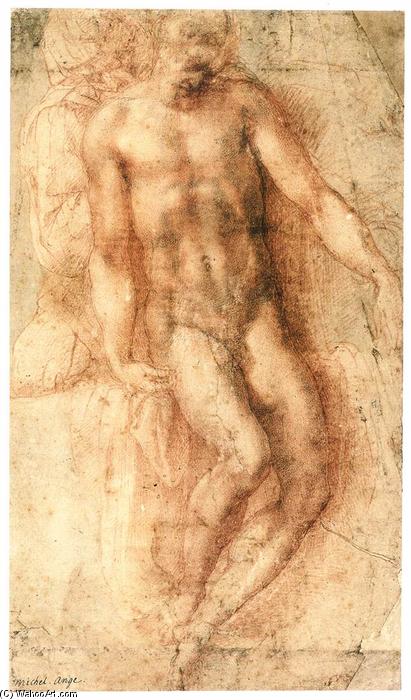
Michelangelo Buonarroti: The Lamentation of Christ – A Masterpiece of Grief
The Lamentation of Christ by Michelangelo Buonarroti stands as a monumental testament to Renaissance artistic achievement and human emotion. Executed in chalk on paper, measuring 411 x 234 cm, this drawing transcends mere representation; it embodies profound sorrow and spiritual contemplation—themes central to Christian iconography throughout history. Its presence within the Graphische Sammlung Albertina Museum in Vienna underscores Michelangelo’s enduring legacy as one of the most influential artists of his era.
Background and Context: The Albertina's Treasure
The Albertina, renowned for its unparalleled collection of drawings and prints by Old Masters, houses a remarkable selection of Michelangelo’s creations. Among these treasures is
The Lamentation of Christ, a drawing that exemplifies Michelangelo’s meticulous attention to anatomical detail and expressive gesture—characteristics defining his artistic style. The museum's dedication to preserving and showcasing artistic heritage provides visitors with an exceptional opportunity to experience Michelangelo’s genius firsthand.
Artistic Technique and Composition: Capturing Emotion Through Medium
Michelangelo’s masterful use of chalk on paper is crucial to conveying the drawing’s emotional depth. The central figure, depicted in the nude, portrays Christ's lifeless body with agonizing realism—a deliberate choice reflecting Michelangelo’s profound understanding of human anatomy and his commitment to portraying suffering with uncompromising honesty. Two figures flanking Christ—Mary Magdalene and Nicodemus—add dynamism to the composition, emphasizing the collective grief experienced by those mourning Jesus’s death. The careful positioning of hands and facial expressions communicates palpable sorrow, cementing the drawing's place as a cornerstone of Renaissance art.
Symbolism and Interpretation: Grief and Redemption
The Lamentation motif carries significant religious symbolism—representing the universal experience of bereavement following Christ’s crucifixion. Michelangelo’s interpretation delves into the psychological complexities of grief, portraying not merely physical pain but also spiritual anguish. The drawing's pyramidal structure lends stability to the scene while simultaneously directing the viewer’s gaze towards the central figure—a focal point embodying compassion and sorrow. This masterful composition speaks to the enduring human desire for solace amidst suffering—a sentiment powerfully conveyed by Michelangelo’s artistic vision.
Relevance in Art History: An Influence That Endures
Michelangelo Buonarroti revolutionized Renaissance art through his innovative techniques and unwavering dedication to anatomical accuracy. His groundbreaking sculptures like David and Pietà, alongside his frescoes adorning the Sistine Chapel ceiling, established him as a pioneer—inspiring generations of artists who followed.
The Lamentation of Christ stands as a testament to his artistic prowess and continues to captivate audiences worldwide—a timeless masterpiece embodying the pinnacle of Renaissance artistry. For those seeking to immerse themselves in Michelangelo’s legacy, ArtsDot offers high-quality reproductions of his paintings, including
The Lamentation of Christ. Visit /art/list/?Filter=8XZRXB-Michelangelo-Buonarroti-The-Lamentation-of-Christ to discover more about this piece and other works by Michelangelo.