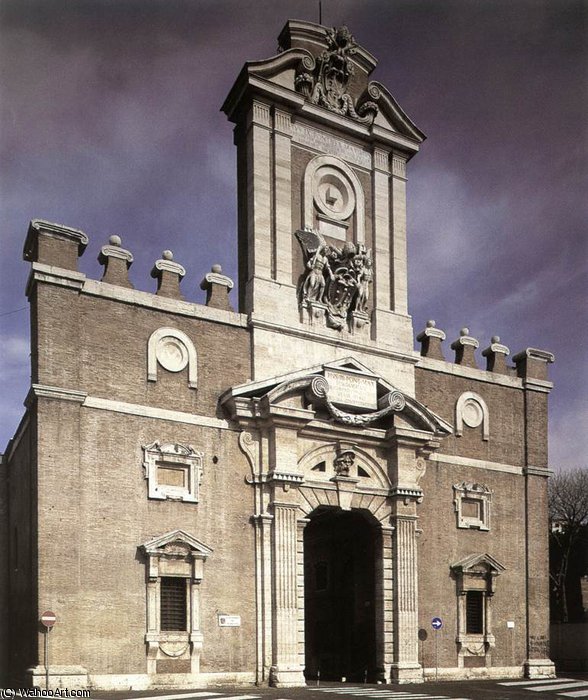
Late - Porta Pia
“Late - Porta Pia” is more than just a depiction of an architectural marvel; it’s a window into the soul of Michelangelo Buonarroti and the tumultuous spirit of 16th-century Rome. Painted in 1561, this monumental sketch captures a pivotal moment in Florentine history – the opening of the Aurelian Walls to celebrate the unification of Italy under Pope Pius IV.
- Subject Matter: The artwork portrays Porta Pia, one of the gates guarding Rome’s ancient Aurelian Walls. Its grandeur reflects the ambition of Renaissance architects and symbolizes the triumph of papal authority over centuries of division.
- Style: Characteristic of Michelangelo's Mannerist style, “Late - Porta Pia” abandons the idealized beauty of High Renaissance art for a more dramatic and expressive approach. The artist prioritizes conveying emotion and psychological depth over strict anatomical accuracy.
- Technique: Executed in chalk, ink, brown wash, and white gouache on paper, Michelangelo employed meticulous detail to capture the textures and contours of the gate’s stonework. The subtle layering of pigments creates a luminous surface that enhances the sculpture's visual impact.
- Historical Context: Created during Pius IV’s reign, “Late - Porta Pia” commemorates the successful siege of Castel Sant’Angelo by papal forces in 1527 – an event known as Sack of Rome—marking the end of the Italian Renaissance and ushering in a new era.
- Symbolism: The sketch embodies Michelangelo's fascination with Classical ideals, particularly those expressed in Roman architecture. It serves as a testament to his enduring influence on artistic vision and reinforces the importance of monumental sculpture as a means of commemorating historical achievements.
Michelangelo’s meticulous attention to detail—evident in the rendering of the clock tower and statue—demonstrates his mastery of sculptural technique and reflects his profound understanding of human anatomy and proportion. The sketch's subdued palette contributes to its contemplative mood, inviting viewers to contemplate the grandeur of Roman history and the enduring legacy of Michelangelo Buonarroti.
This artwork is a captivating glimpse into Michelangelo’s creative process and offers invaluable insight into the artistic sensibilities of his time. Its reproduction allows collectors and interior designers alike to appreciate the sublime beauty and intellectual depth of one of the greatest artists in Western history.