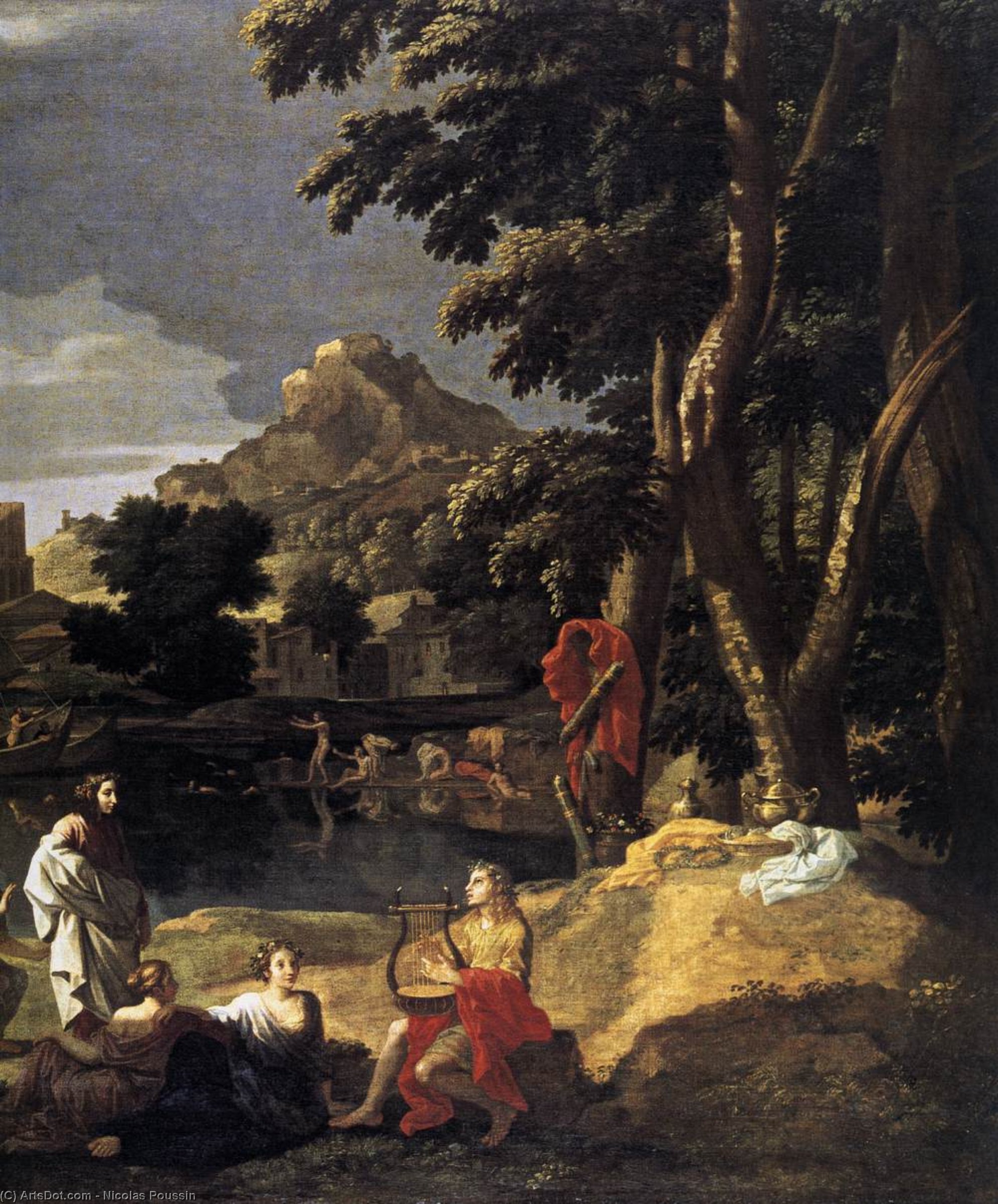
Landscape with Orpheus and Eurydice (detail)
Nicolas Poussin’s “Landscape with Orpheus and Euridice” isn't merely a depiction of a pastoral scene; it’s an embodiment of classical ideals distilled into visual form, a testament to the artist’s unwavering devotion to the principles of antiquity. Painted between 1650 and 1653 for Jean Pointel, a wealthy Parisian banker and fellow libertine – a circle that fostered intellectual debate and challenged societal norms – this monumental canvas transcends its immediate subject matter to explore profound themes of grief, redemption, and the enduring power of myth.
- Subject Matter: The painting portrays Orpheus, the legendary musician who charmed Eurydice, his beloved wife, with his lyre, venturing into Hades to retrieve her soul after her untimely death. This narrative draws heavily from Greek mythology, specifically Euripides’ tragedy “The Bacchae,” cementing Poussin's commitment to retelling classical tales in a manner that honored their intellectual depth.
- Style: Characteristic of Poussin’s oeuvre, "Landscape with Orpheus and Euridice" exemplifies Baroque Classicism. Unlike the exuberant dynamism favored by many contemporaries, Poussin meticulously crafted an image characterized by serene composure and geometric precision. The artist eschewed dramatic gestures or turbulent emotions, opting instead for a carefully constructed composition that prioritizes clarity of form and harmonious balance.
- Technique: Poussin’s mastery of oil paint is evident in the subtle gradations of color and light—a technique known as chiaroscuro—that imbues the landscape with an ethereal glow. He employed painstaking layering, applying thin glazes over thicker underpaintings to achieve remarkable luminosity and depth. The artist's meticulous attention to detail extends beyond mere representation; he sought to convey a sense of spiritual contemplation, inviting viewers to contemplate the sublime beauty of nature alongside the poignant drama unfolding before them.
- Historical Context: Poussin’s work emerged during a period of artistic revival in France following the Baroque era, fueled by renewed interest in Roman art and philosophy. The artist was deeply influenced by Raphael's frescoes in the Vatican Stanze della Segreti, demonstrating his unwavering admiration for the High Renaissance canon. This stylistic choice reflects a broader cultural movement aimed at restoring order and rationality to European aesthetics after decades of turbulent upheaval.
- Symbolism: Beyond its narrative content, “Landscape with Orpheus and Eurydice” is laden with symbolic significance. The dark forest represents Hades—the underworld—while the luminous sky symbolizes Elysium—paradise—creating a visual microcosm mirroring the cosmic drama of death and resurrection. The central figures are positioned in an idealized landscape that embodies harmony and spiritual transcendence, reinforcing Poussin’s belief in the transformative power of art to elevate the human spirit.
The painting's enduring appeal lies not only in its exquisite craftsmanship but also in its ability to evoke profound emotions—melancholy contemplation mingled with hope for eternal life. It remains a cornerstone of French Baroque art, demonstrating Poussin’s unparalleled skill in capturing both the grandeur of nature and the complexities of human experience. Its serene beauty continues to inspire artists and collectors alike, securing its place as one of Nicolas Poussin's most celebrated masterpieces.