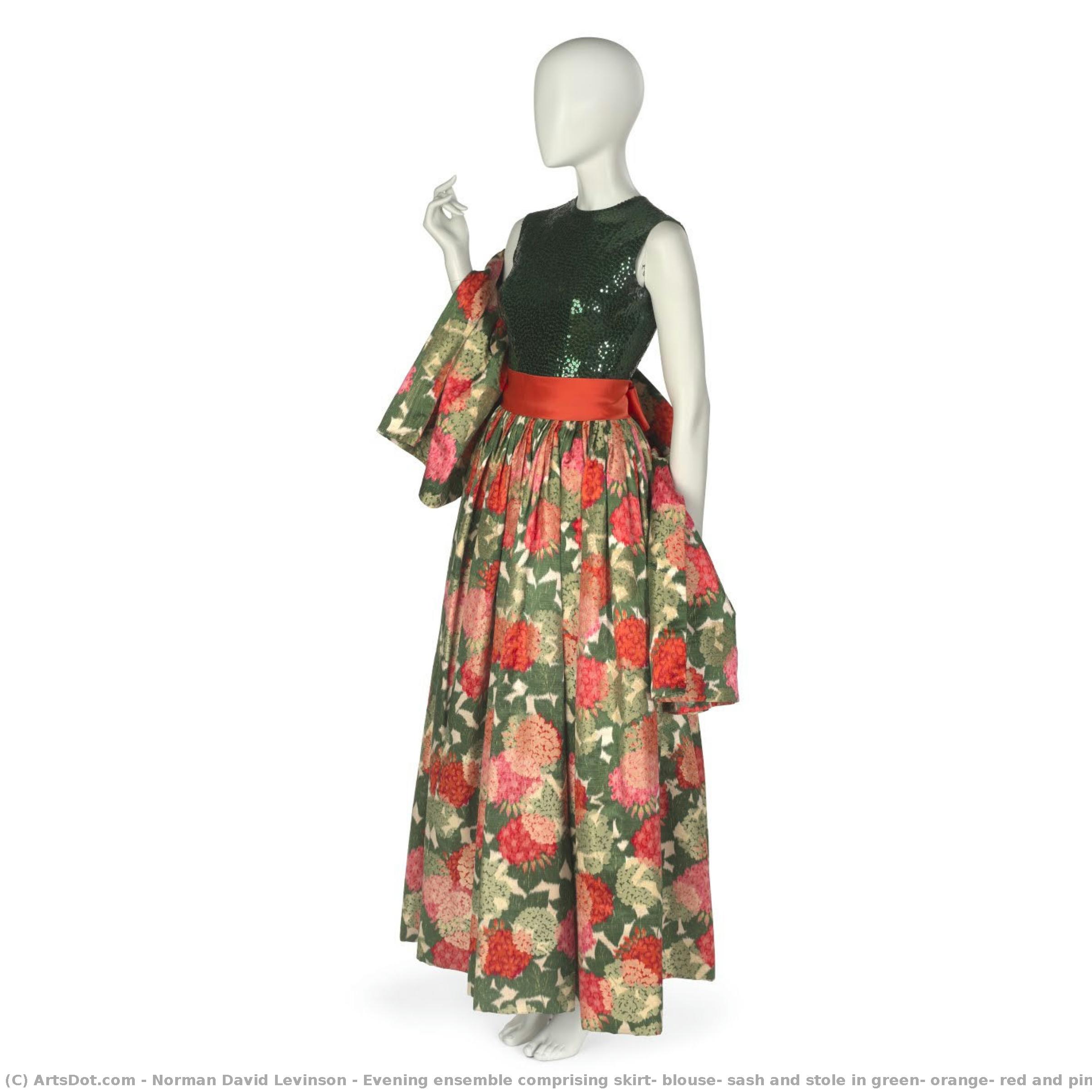
A Symphony in Silk: The Norman David Levinson Evening Ensemble (1961)
This exquisite evening ensemble, meticulously crafted by Norman David Levinson in 1961, stands as a vibrant testament to the burgeoning optimism and bold design sensibilities of mid-century modern fashion. More than just a garment, it’s a captured moment – a studio shot that reveals the artistry and technical prowess of a designer deeply influenced by both American innovation and the elegance of Parisian couture. The photograph itself, executed with a keen eye for detail, highlights the luxurious textures and captivating color palette that define this iconic piece.
Design and Construction: A Masterclass in Silhouette
- Form and Function: The ensemble’s design is rooted in classic silhouettes – a full, floor-length skirt achieved through skillful gathering and horsehair stiffening creates dramatic volume, while a 3/4-inch waistband defines the natural waist. This construction speaks to Norell's meticulous approach to tailoring, prioritizing both beauty and wearability.
- Fabric and Texture: Constructed from silk taffeta, the fabric possesses a desirable sheen and crisp texture, perfectly suited for capturing light and emphasizing the intricate floral pattern. The use of double fabric on the stole further elevates the luxurious feel.
- Details Matter: Subtle yet crucial details – the hook-and-eye closure on the skirt, the cotton organdy lining – demonstrate Norell’s commitment to quality craftsmanship, a hallmark of his design philosophy.
The Floral Narrative: Geraniums and Peonies in a Riot of Color
The heart of this ensemble lies in its breathtaking warp-printed floral motif – geraniums and peonies rendered in a vibrant palette of orange, red, pink, dark green, and light green. This bold combination of colors immediately evokes a sense of celebration and glamour, aligning with the optimistic spirit of the 1960s. The repetition of the floral pattern creates a visually dynamic effect, drawing the eye across the entire garment. The cream accents provide a delicate counterpoint, preventing the design from becoming overwhelming.
Norman Norell: A Parisian-Influenced Visionary
Norman David Levinson, later known as Norman Norell, was a pivotal figure in American fashion during his time. Born in Noblesville, Indiana, in 1900, he honed his skills at Parsons School of Design before establishing himself in New York City. His designs were characterized by refined silhouettes and subtle references to Parisian haute couture, reflecting a deep understanding of European style. Norell’s legacy extends beyond individual garments; he helped shape the aesthetic of mid-century American fashion, solidifying his place as an icon of timeless elegance.
Symbolism and Emotional Impact
The vibrant colors and floral motif within this ensemble transcend mere decoration. They evoke feelings of femininity, celebration, and a touch of playful extravagance – emotions deeply resonant with the era’s embrace of youthful optimism. The overall effect is one of confident glamour, perfectly capturing the spirit of an evening event. This piece represents not just fashion but also a cultural moment, offering a glimpse into the aspirations and aesthetic sensibilities of 1960s America.