A Symphony of Light and Shadow
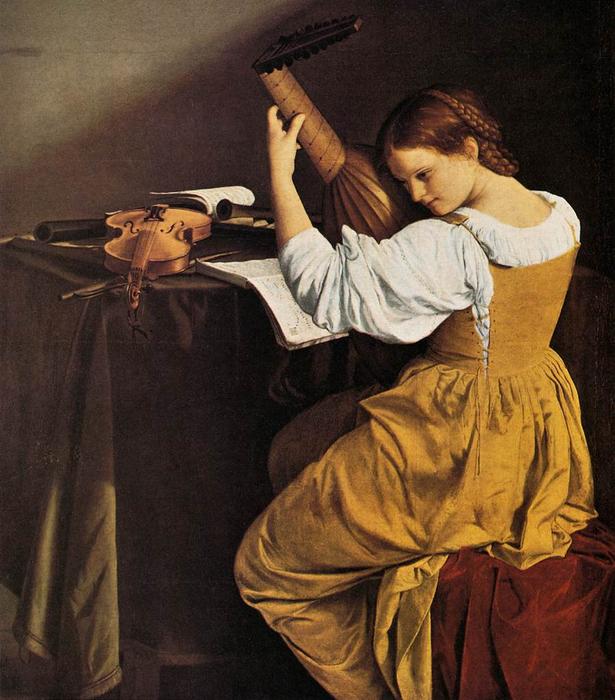
In the quietude of Orazio Gentileschi’s “The Lute Player,” one does not merely observe a scene; one enters a moment of profound, suspended animation. Painted during the vibrant dawn of the Baroque era, around 1612–1615, this masterpiece serves as a breathtaking window into the soul of the seventeenth century. The central figure, a young woman lost in the delicate melodies of a psaltery, embodies a sense of introspective grace that transcends the canvas. As she leans into her instrument, her focus is so absolute that the world around her seems to dissolve, leaving only the resonance of a single, perfect note. For the discerning collector or interior designer, this piece offers more than decoration; it provides an anchor of tranquility and intellectual depth, making it a sublime addition to any space dedicated to contemplation and refined taste.
The brilliance of the work lies in its masterful command of chiaroscuro, a technique heavily inspired by the revolutionary Caravaggio. Gentileschi does not simply use light to illuminate; he uses it to sculpt. Dramatic shadows dance across the textured backdrop, emerging from deep, earthy umbers to highlight the luminous contours of the woman’s face and the delicate folds of her gown. This interplay of brilliance and obscurity creates a palpable sense of three-dimensionality, pulling the viewer into the intimate atmosphere of the room. The color palette is a sophisticated harmony of warm ochres and rich browns, punctuated by the cool, ethereal blues of her attire, creating a visual rhythm that mirrors the music being played.
Symbolism and the Art of Devotion
Beyond its striking visual surface, “The Lute Player” is a tapestry of symbolic meaning. The psaltery—a precursor to the lute—is far more than a mere musical prop; in the Baroque lexicon, it serves as a potent emblem of harmony, learning, and spiritual devotion. The meticulous way Gentileschi renders the instrument, with its polished surfaces and intricate details, suggests a reverence for the discipline required to master such an art. The woman’s posture, characterized by a quiet diligence, invites the viewer to reflect on the pursuit of beauty and the importance of finding stillness within a chaotic world.
Every brushstroke contributes to this narrative of emotional depth. Through the skillful application of layering and glazing, the artist achieves a luminous quality that makes the fabric appear soft to the touch and the wood of the instrument glow with an inner light. This technical virtuosity ensures that a high-quality reproduction retains the soul of the original, capturing the rich textures and the heavy, atmospheric mood that defines the Italian Baroque. Whether placed in a grand library or a contemporary living space, this painting acts as a conversation piece, evoking a sense of history, elegance, and an enduring passion for the arts.