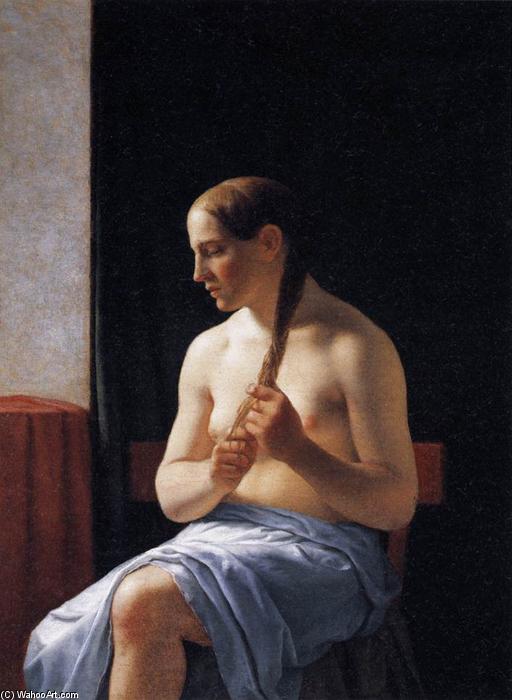
Admira la maestría de Eckersberg en 'El Modelo Sedado', una obra maestra neoclásica del Louvre que captura la belleza y el silencio contemplativo con luz dramática y detalles exquisitos. #arte #neoclasicismo
Descubre a Christoffer Wilhelm Eckersberg (1783-1853), el 'Padre de la Pintura Danesa'! Explora sus retratos neoclásicos, paisajes y escenas históricas llenas de realismo.
Descubre el Louvre en París: hogar de obras icónicas como la Mona Lisa y Venus de Milo. ¡Viaja por la historia del arte desde Egipto hasta iconos renacentistas! Planifica tu visita hoy.
París
Francia
Un Palacio Forjado a Través del Tiempo: Revelando el Alma del Louvre
El Musée du Louvre no es simplemente un edificio que alberga obras maestras; es un palimpsesto grabado en piedra y lienzo, susu
Seated Nude Model: A Portrait of Quiet Contemplation
The Seated Nude Model by Christoffer Wilhelm Eckersberg transcends mere representation; it embodies the spirit of Danish Neoclassicism and stands as a testament to the artist’s profound understanding of human form and emotion. Painted in 1839, this intimate oil on canvas masterpiece resides within the Musée du Louvre, Paris, continuing to captivate audiences with its serene beauty and masterful execution.
Artist and Context: Eckersberg's Legacy
Christoffer Wilhelm Eckersberg (1783-1853) wasn’t simply a painter; he was a pivotal figure in establishing Denmark as a beacon of artistic innovation during the Golden Age. Educated initially by Jes Jessen, Eckersberg honed his skills through meticulous observation and exploration—a dedication that would permeate his entire oeuvre. Unlike many of his contemporaries who embraced Romanticism's dramatic fervor, Eckersberg championed realism and clarity, prioritizing anatomical accuracy and subtle tonal gradations. His influence extended far beyond his own canvases, shaping the artistic sensibilities of an entire generation and cementing his reputation as “The Father of Danish Painting.”
A Study in Light and Form: Technical Brilliance
Eckersberg’s technique is characterized by painstaking brushwork—a hallmark of academic realism—designed to capture the nuances of human skin texture and drapery folds. The artist skillfully employs chiaroscuro, utilizing a single light source positioned on the left side of the composition to sculpt the figure's contours and imbue it with depth. Note the careful layering of pigments, creating an illusionistic surface that invites contemplation. The canvas itself—textured with subtle brushstrokes—adds to the overall richness of the artwork. Measuring 45 x 33 cm, this piece is deliberately scaled to foster a personal connection between the viewer and the subject matter.
Symbolism Beyond Appearance: Inner Reflection
Beyond its formal beauty lies a deeper symbolic resonance. The nude model’s posture—seated gracefully before a mirror—suggests introspection and self-awareness. Her gaze downward focuses on her hair, an act laden with significance representing vanity, but also a preoccupation with inner beauty and identity. Eckersberg's deliberate choice of muted earth tones—browns, ochres, blues—contributes to the painting’s tranquil atmosphere, mirroring the stillness of the moment captured on canvas. The dark background serves as a powerful counterpoint, emphasizing the luminosity of the figure and drawing attention to its delicate form.
A Timeless Masterpiece: Inspiration for Reproduction
The Musée du Louvre proudly displays this iconic artwork alongside other celebrated masterpieces by Jacques Louis David and fellow luminaries of the era. To experience the grandeur of Eckersberg’s vision firsthand, explore a stunning handmade oil painting reproduction at https://ArtsDot.com/. For further insight into Eckersberg's artistic journey, visit /art/list/?Filter=8Y399L-Christoffer-Wilhelm-Eckersberg-Seated-Nude-Model. Let this captivating image inspire your own creative endeavors!