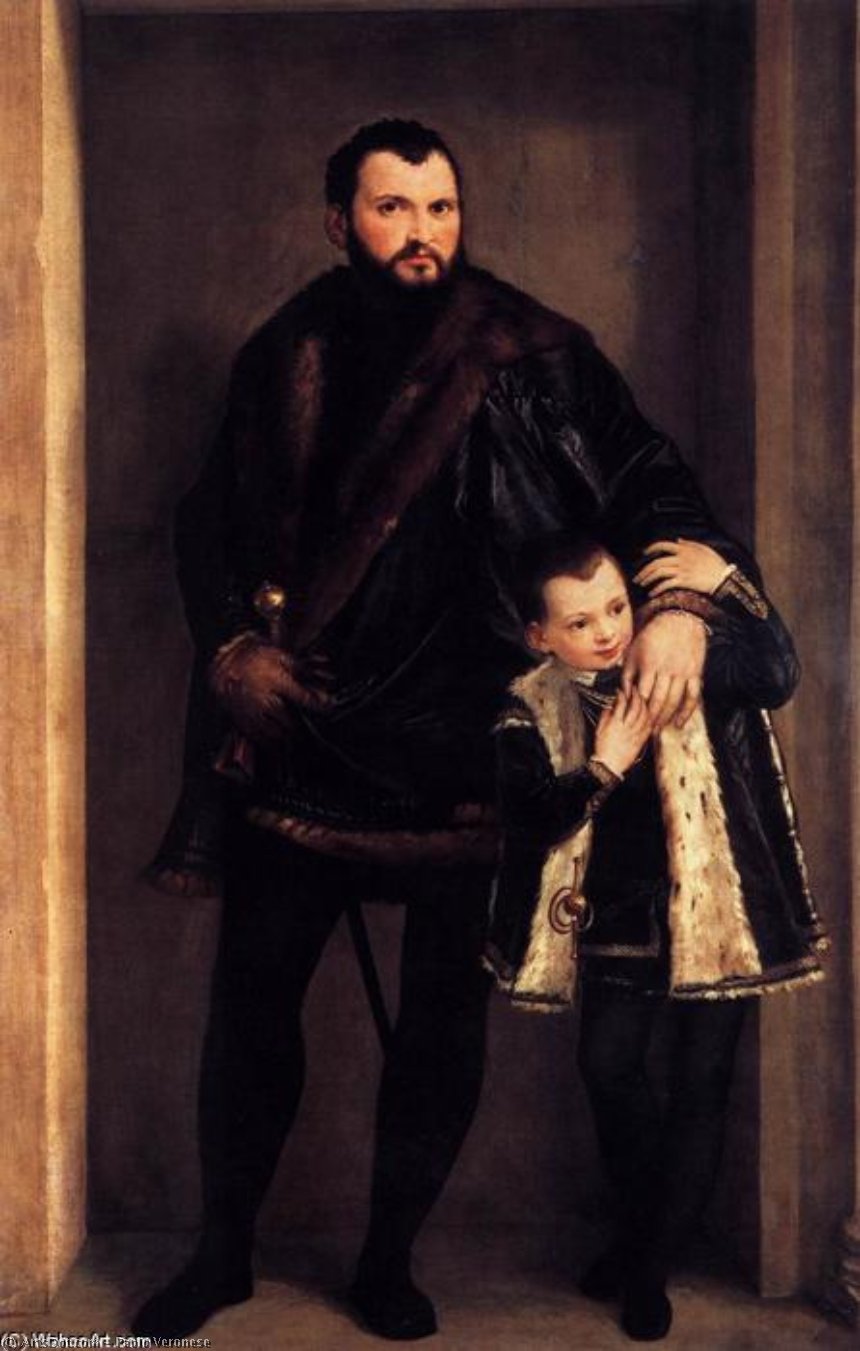
Portrait of Count Giuseppe da Porto with his Son Adriano
Paolo Veronese’s ‘Portrait of Count Giuseppe da Porto with His Son Adriano’ – a stunning Renaissance masterpiece! Explore this 1551 oil painting's rich details, dramatic lighting & historical significance.
This monumental portrait captures the essence of Venetian aristocratic life during the mid-century. Executed in a masterful blend of realism and idealized beauty, it exemplifies Veronese’s signature style – characterized by opulent color palettes, meticulous observation of anatomy, and an ambitious theatrical presentation. The painting depicts Count Giuseppe da Porto alongside his son Adriano, reflecting the importance of lineage and familial bonds within Venetian society.
- Subject Matter: The portrait focuses on two prominent figures—Count Giuseppe da Porto and his son Adriano—representing a symbol of noble heritage and paternal authority.
- Style: Veronese adheres to the Renaissance tradition, prioritizing clarity of form and harmonious composition. However, he departs from strict Mannerist conventions, favoring a more naturalistic approach that captures the subtle nuances of human expression.
- Technique: Veronese employs a sophisticated oil painting technique—primarily glazing and scumbling—to build up layers of color and texture with remarkable precision. This meticulous process ensures that every brushstroke contributes to the overall illusion of depth and luminosity, creating an immersive visual experience.
- Color Palette: The artist’s masterful use of color is arguably his greatest achievement. He employs a vibrant palette dominated by reds, golds, and blues—colors associated with wealth, nobility, and divine grace—to heighten the dramatic impact of the scene.
- Lighting: Dramatic chiaroscuro—the interplay between light and shadow—is skillfully utilized to sculpt the figures’ forms and create a sense of spatial depth. A single source of illumination casts strong shadows that accentuate musculature and drapery folds, enhancing the painting's realism and theatrical quality.
The composition is centered around the two subjects, with Giuseppe dominating the frame—a deliberate gesture conveying his status as patriarch and protector. Adriano’s placement to Giuseppe’s left reinforces this hierarchy while simultaneously suggesting a connection between father and son. The dark wall serves as an understated backdrop, emphasizing the figures' presence and directing the viewer’s gaze towards their faces.
More than just a depiction of two individuals, ‘Portrait of Count Giuseppe da Porto with His Son Adriano’ embodies the humanist ideals prevalent during the Renaissance—a celebration of human dignity and beauty. It stands as a testament to Veronese's artistic genius and his ability to transform historical figures into enduring symbols of Venetian culture.
This artwork is currently housed in the Musée du Louvre, Paris, where it continues to captivate audiences with its breathtaking artistry and timeless appeal.