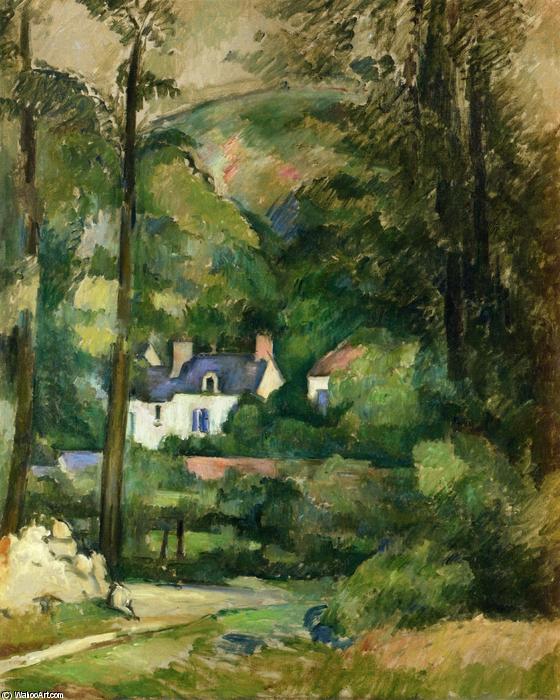
Introduction to “Houses in the Greenery”
“Cezanne’s
Houses in the Greenery" is a captivating oil on canvas painting created by the renowned French artist Paul Cézanne in 1881. This artwork exemplifies the essence of Post-Impressionism, a movement that emerged as a reaction against Impressionists’ focus on naturalistic light and color depiction. It represents a pivotal moment in artistic history, marking a decisive break from the aesthetic conventions of its predecessors and paving the way for groundbreaking innovations in painting technique and conceptual exploration.
Artistic Style and Movement
Post-Impressionism, which flourished roughly between 1886 and 1905, sought to transcend the limitations perceived by Impressionists as restrictive. Artists like Cézanne, Vincent van Gogh, and Paul Gauguin experimented boldly with color palettes—often vibrant and dissonant—and distorted forms, prioritizing expressive emotion over accurate representation. This movement wasn’t merely a stylistic rebellion; it was fueled by philosophical debates concerning the role of art in conveying subjective experience and challenging traditional notions of beauty. It served as fertile ground for avant-garde movements such as Fauvism and Cubism, fundamentally reshaping the visual landscape of the early 20th century. Cézanne’s approach can be described as “geometric abstraction,” where he meticulously analyzed the underlying structure of objects—reducing them to fundamental planes and cylinders—to achieve a heightened sense of solidity and presence on the canvas.
Painting Description
“Cezanne's
Houses in the Greenery" measures 206 x 165 cm and is characterized by its serene and picturesque depiction of a small village nestled amidst rolling hills. The scene captures a tranquil moment—likely late afternoon—illuminated by diffused sunlight that casts gentle shadows across the landscape. Dominating the composition is a large house with a prominent red roof, meticulously rendered in shades of ochre and crimson, anchoring the viewer’s gaze. Surrounding it are numerous trees and shrubs—primarily olive trees—painted with textured brushstrokes that convey their organic vitality. Two figures—a man and a woman—are positioned near the center of the canvas, adding human scale to the monumental landscape. A dog rests peacefully on the left side of the image, subtly reinforcing the idyllic atmosphere. Cézanne’s masterful use of color—particularly the interplay between warm reds and cool greens—creates a harmonious visual balance that invites contemplation. The artist's technique is notable for its deliberate simplification of forms and textures, prioritizing expressive gesture over photographic realism.
Relevance and Significance
“Cezanne's
Houses in the Greenery" transcends its aesthetic beauty to embody a profound philosophical shift within art history. Cézanne’s insistence on portraying the world as perceived by the artist—rather than merely observed—challenged Impressionist conventions and anticipated the conceptual concerns of subsequent generations of painters. It stands as an emblem of Post-Impressionism's ambition to explore the depths of human emotion and psychological experience, solidifying Cézanne’s legacy as one of the most influential artists of his era. For those seeking to immerse themselves in the artistic spirit of this transformative period,
Paul Cézanne: Houses in the Greenery awaits on ArtsDot. Furthermore, delving into
Post-Impressionism Art Movement Introduction offers a comprehensive understanding of the intellectual and artistic currents that shaped this pivotal moment in European art.
Other Relevant Works
*
Paul Cézanne: View Of L'Esperance On The Schoharie River
*
Pablo Picasso: Portrait Of Juli Gonzalez
*
Pablo Picasso: Las golondrinas
These paintings—alongside “Houses in the Greenery”—demonstrate the innovative and expressive qualities that define Post-Impressionism. They represent a daring departure from Impressionist aesthetics, establishing Cézanne as a cornerstone of modern art and inspiring countless artists to explore new visual languages.