Paul Cézanne: A Revolutionary Vision
Paul Cézanne (1839–1906) stands as an undeniable cornerstone of modern art, bridging the gap between Impressionism’s fleeting beauty and Cubism’s geometric fragmentation. His legacy isn't merely artistic; it fundamentally reshaped how artists perceived and represented the world around them. Cézanne’s journey began in Aix-en-Provence, where he absorbed influences from Romanticism—particularly the landscapes of Barbizon—and the pioneering explorations of Gustave Courbet—a rejection of academic conventions that would define his entire oeuvre.
Early on, Cézanne wrestled with capturing the essence of nature not as it appeared to the eye at a particular moment, but as it existed beneath the surface. He meticulously studied geological formations and sought to distill their underlying structure into simplified forms—a technique he termed “pictorial simplification.” This approach directly challenged Impressionist ideals of optical realism, prioritizing form and solidity over color and luminosity.
His artistic development was profoundly impacted by fellow artists like Paul Gauguin and Georges Seurat. Gauguin’s bold use of color and expressive brushstrokes instilled in Cézanne a desire to convey emotion through pigment—a departure from Impressionism's focus on capturing atmospheric conditions. Similarly, Seurat’s scientific method of applying paint—pointillisme—influenced Cézanne’s experimentation with texture and surface treatment.
Composition and Symbolism
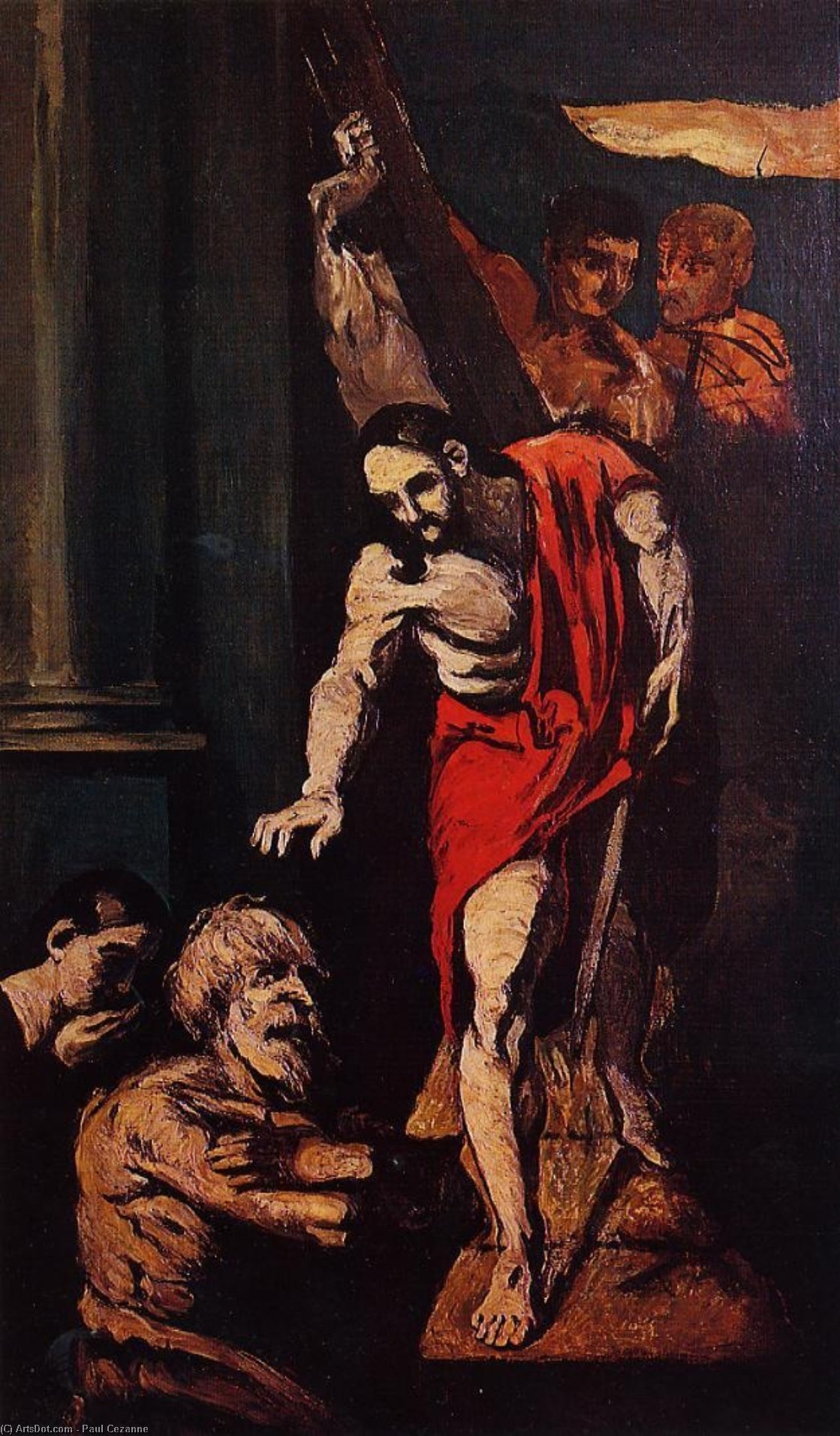
“Christ in Limbo,” painted in 1867, exemplifies Cézanne's early Romantic tendencies. The artwork depicts Jesus crucified, surrounded by figures conveying intense emotion and drama—a deliberate choice to confront viewers with themes of suffering and sacrifice. Unlike Impressionists who aimed for serene depictions of landscapes or portraits, Cézanne sought to express psychological depth through stylized forms.
The painting’s monochromatic palette—primarily black and white—amplifies the emotional impact of the scene. This stylistic decision harkens back to Romantic artists like Eugène Delacroix, who utilized dramatic chiaroscuro (contrast between light and dark) to heighten visual tension. Cézanne's meticulous attention to detail—particularly in rendering the musculature of Jesus’s body—demonstrates his commitment to anatomical accuracy while simultaneously prioritizing expressive form.
The figures surrounding Christ are rendered with a degree of abstraction that anticipates Cubism, foreshadowing Picasso and Braque’s groundbreaking explorations of geometric representation. Cézanne's use of interlocking planes creates a sense of dynamism and instability—a deliberate disruption of traditional perspective—reflecting his belief that art should capture the underlying structure of reality.
Technique and Legacy
Cézanne employed oil paint on canvas, applying thick impasto strokes to build up textured surfaces. This technique—characteristic of Cézanne’s style—contrasts sharply with Impressionist brushwork, which aimed for smooth, blended tones. The resulting visual richness contributes to the painting's emotional intensity and reinforces its connection to Romantic artistic traditions.
“Christ in Limbo” remains a pivotal work in Cézanne’s oeuvre, showcasing his pioneering approach to form and color—a legacy that profoundly influenced subsequent generations of artists. It cemented Cézanne’s reputation as a visionary innovator who irrevocably altered the course of modern art.
For more information on Paul Cézanne and his artistic journey, visit ArtsDot.com or Wikipedia.org.