A Window into Cézanne’s Vision: The Soul of Victor Choquet
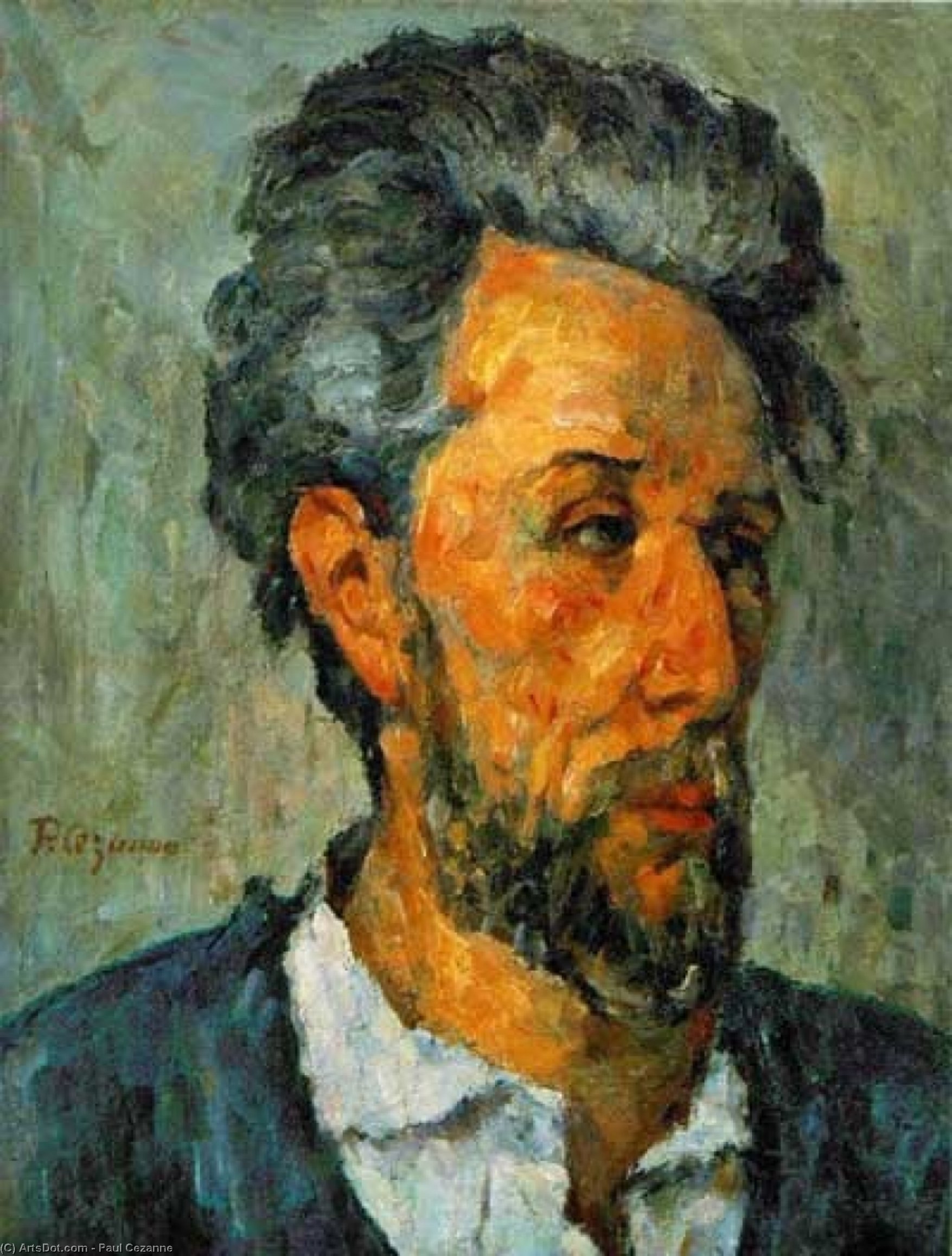
In the quiet intensity of Paul Cézanne's 1875 masterpiece, Portrait of Victor Choquet, we encounter more than a mere likeness of a man; we step into the threshold of a revolution. As a cornerstone of Post-Impressionism, this painting serves as a profound departure from the fleeting, light-drenched whimsy of the Impressionist movement. Here, Cézanne does not seek to capture a passing moment of sunlight, but rather to excavate the enduring essence of his subject. The portrait depicts Lord Victor Choquet, a dear friend and patron, rendered with a gravity that commands the viewer's attention. Through the meticulous observation of features—the structured beard, the thoughtful gaze behind spectacles, and the stark contrast of a white collar against a deep blue shirt—Cézanne invites us to look past the surface and into the psychological depth of the human experience.
The emotional resonance of this work lies in its stillness. There is an almost palpable sense of searching within the brushstrokes, a relentless pursuit of capturing what is fundamentally unchanging beneath the ephemeral veil of appearance. For the collector or the lover of fine art, this piece offers a meditative quality, making it an exquisite focal point for a sophisticated interior. It does not merely decorate a room; it anchors it with a sense of historical weight and intellectual curiosity.
The Architecture of Color and Form
To gaze upon this portrait is to witness the early tremors of Cubism. Cézanne’s technique in 1875 was already beginning to fracture reality into something more structural and permanent. Rather than relying on traditional, polished academic finishes, he utilized interlocking planes of color and texture to build the subject's face. This method suggests a world that is simultaneously solid and unstable, mirroring the complex internal workings of human consciousness. The artist treats the features of Choquet not as idealized icons, but as geometric components that contribute to a larger, more complex whole.
The use of color in this particular rendering—notably the striking interplay between the cool tones of the blue shirt and the stark, bright white of the collar—creates a rhythmic tension that draws the eye inward. This technique of fragmented reality allows the viewer to perceive the subject as a collection of essential forms. For interior designers seeking to infuse a space with character, this painting provides a masterclass in balance; it possesses enough visual complexity to spark conversation, yet maintains a monochromatic elegance that integrates seamlessly into both classical and contemporary settings.
A Legacy Written in Paint
Understanding the historical context of this work reveals its true brilliance. Painted during Cézanne’s formative years, the portrait emerged when Parisian art circles were in a state of radical upheaval. While contemporaries like Monet were chasing the ephemeral effects of light, Cézanne was laying the groundwork for the modern era. He sought to bridge the gap between the sensory experience of Impressionism and the structural rigor that would later define the works of Picasso and Braque. This painting is a vital link in the chain of art history, representing the moment when art began to move away from what we see toward how we perceive.
Owning a high-quality reproduction of this work is an opportunity to possess a piece of the very foundation of modernism. It is an invitation to surround oneself with the spirit of innovation and the quiet strength of a master who dared to redefine the boundaries of the canvas. Whether placed in a sunlit study or a moody, darkened gallery, the Portrait of Victor Choquet remains a timeless testament to the power of the human gaze and the enduring legacy of Paul Cézanne.