A Poetic Encounter in Color and Line
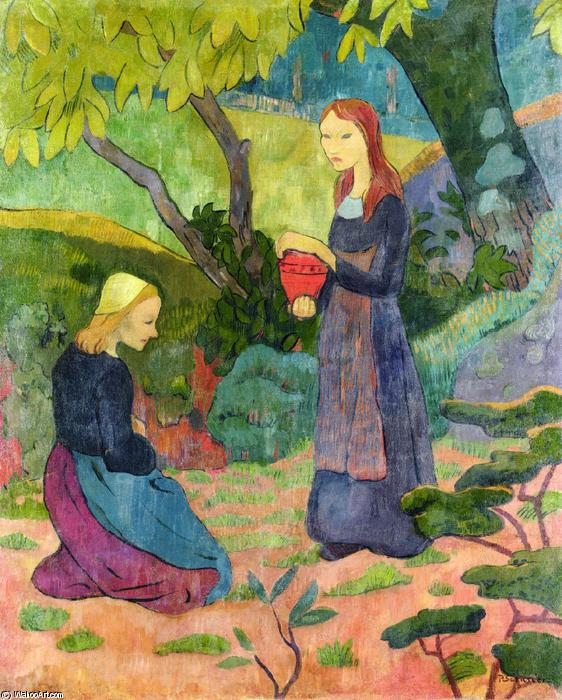
In the quiet intimacy of a sun-drenched field, Paul Sérusier captures a moment of profound connection in his 1892 masterpiece, Madeline with the Offering. This evocative oil on canvas invites the viewer into a serene pastoral world where two women share a silent, sacred exchange. One figure kneels upon the earth, her posture one of reverence and receptivity, while the standing companion leans forward to present an object—perhaps a jug or a vessel—with a grace that transcends the simple act of giving. The surrounding landscape, lush with verdant foliage and rhythmic trees, does not merely serve as a backdrop but acts as an emotional extension of the figures themselves, enveloping the scene in a sense of timeless tranquility.
The painting is a quintessential triumph of Cloisonnism, an avant-garde stylistic movement that sought to redefine the boundaries of modern art. Eschewing the delicate transitions of traditional realism, Sérusier employs bold, dark outlines to encase vibrant patches of color, much like the stained glass of a cathedral. This technique creates a striking two-dimensionality, where flat forms and rhythmic contours command the eye's attention. The interplay between deep greens and warm reds provides a pulsating energy to the composition, ensuring that while the scene is peaceful, it remains visually arresting and intellectually stimulating.
The Legacy of the Nabis and Modern Abstraction
To understand the depth of Madeline with the Offering, one must look toward the revolutionary spirit of the late 19th-century French art scene. Sérusier, a pivotal figure in the Les Nabis group, was deeply influenced by the experimental approach of Paul Gauguin. This period marked a departure from mere imitation of nature toward a more symbolic and synthesized reality. Through his work, we see the seeds of abstraction being sown; the artist is not merely painting a field, but rather using color and shape to evoke the spiritual essence of the encounter. The heavy outlines and saturated hues serve to distill the subject matter into its most potent, emotive components.
For the discerning collector or interior designer, this piece offers more than just aesthetic beauty; it provides a sophisticated focal point that bridges the gap between classical grace and modern boldness. A high-quality reproduction of this work brings a sense of historical weight and artistic prestige to any space, whether it be a contemporary gallery setting or a curated residential study. The painting’s ability to balance heavy, structural lines with a soft, emotive narrative makes it an enduring choice for those who appreciate art that speaks to both the eye and the soul.