A Soul Captured in Profile: The Intimacy of Paula Modersohn-Becker
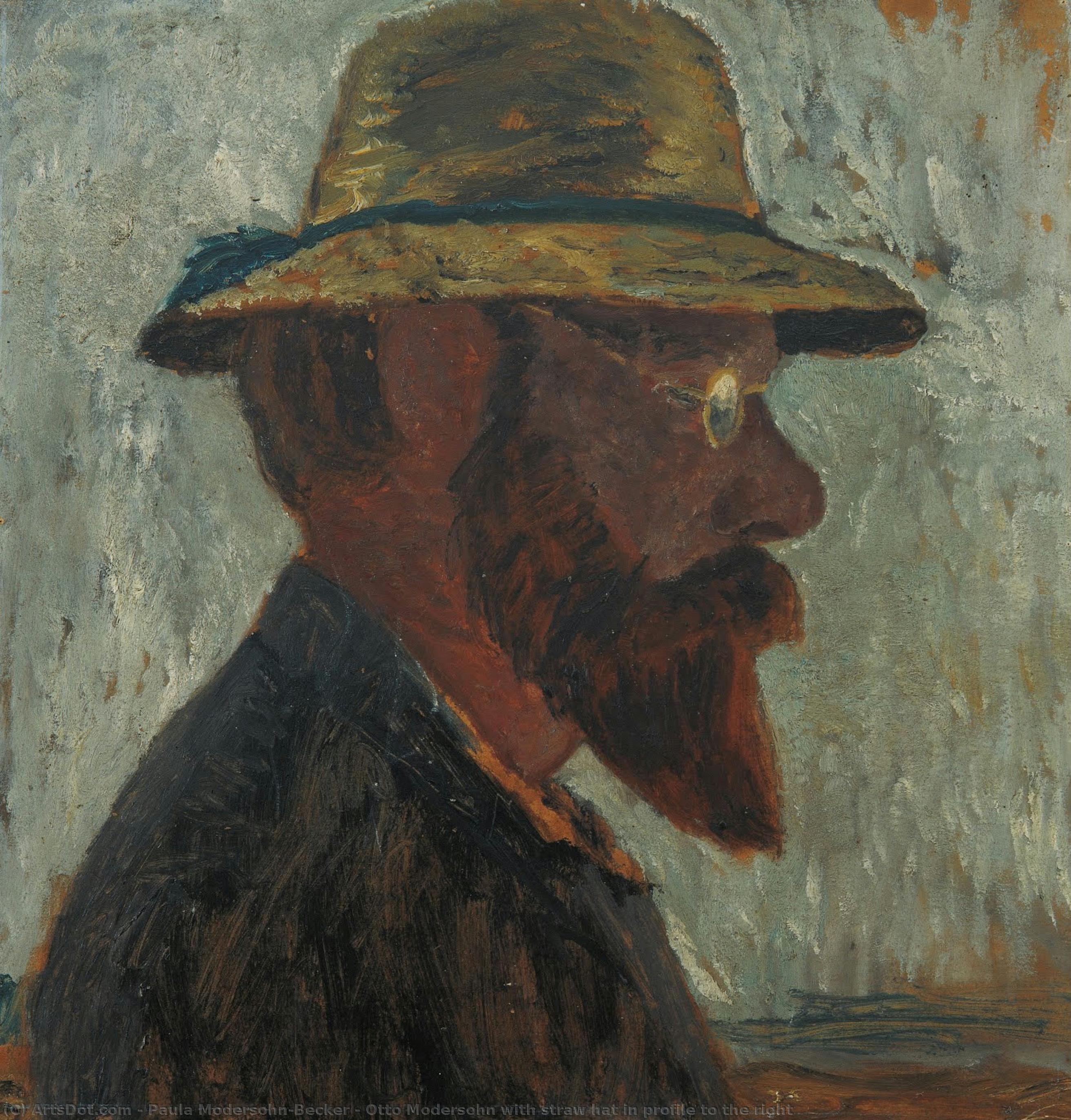
In the quiet, mist-laden landscapes of Worpswede, Germany, a profound artistic revolution was taking root, far from the polished academies of Paris or Berlin. At the heart of this movement stood Paula Modersohn-Becker, an artist whose brush did not merely seek to replicate reality but to unearth the raw, psychological essence of her subjects. Her 1905 masterpiece, Otto Modersohn with straw hat in profile to the right, serves as a breathtaking window into this era of early Expressionism. This portrait of her husband, Otto, is far more than a simple likeness; it is a deeply personal meditation on connection, vulnerability, and the quiet strength found within domestic life.
The painting presents a striking profile that commands the viewer's attention through its sheer emotional presence. As we gaze upon Otto, his face—framed by the rustic texture of a straw hat—is illuminated with a masterful use of chiaroscuro. This dramatic interplay of light and shadow does more than define the contours of his beard and spectacles; it sculpts a sense of character, highlighting a gaze that feels both serious and tenderly directed toward the observer. The composition is subtly layered, with hints of other figures in the background that suggest a larger, lived-in world, yet the focus remains intensely intimate, pulling the viewer into a private moment of contemplation.
Technique and Texture: The Language of Expressionism
To behold this work is to experience the tactile energy of Modersohn-Becker’s unique technique. Eschewing the smooth, invisible brushwork of traditional portraiture, the artist embraced oil on cardboard, a choice that allowed for a concentrated, visceral application of paint. The surface is alive with thick, impasto strokes that create a rugged topography across the canvas. These bold, rhythmic marks do not just represent skin or fabric; they vibrate with a palpable energy that mirrors the inner psychological depth characteristic of the Expressionist movement.
For the discerning collector or interior designer, this texture offers an unparalleled sensory experience. The way the light catches the raised ridges of paint adds a dynamic quality to the piece, making it a focal point that changes subtly with the ambient lighting of a room. It is a work that demands presence, offering a sophisticated blend of rustic charm and avant-garde complexity that can anchor a modern gallery wall or add a layer of historical gravity to a classic study.
Symbolism and the Legacy of an Icon
Beyond its technical brilliance, the painting is rich with symbolic resonance. The straw hat, while a practical element of rural life, acts as a subtle metaphor for protection—a shield against the uncertainties of a changing world. This theme of shielding and vulnerability is central to Modersohn-Becker’s oeuvre, which often explored the delicate balance between the maternal instinct and the individual spirit. In capturing Otto in this light, she invites us to consider the quiet heroism found in everyday existence.
Owning a high-quality reproduction of this work means bringing a piece of art history into one's personal sanctuary. It is an invitation to engage with the legacy of a woman who was a pioneer of the inner vision, an artist who dared to prioritize emotional honesty over stylistic perfection. Whether placed in a sunlit living space or a moody, darkened library, this portrait continues to whisper the profound truths of the human condition, making it an enduring choice for those who seek art that speaks to the soul.