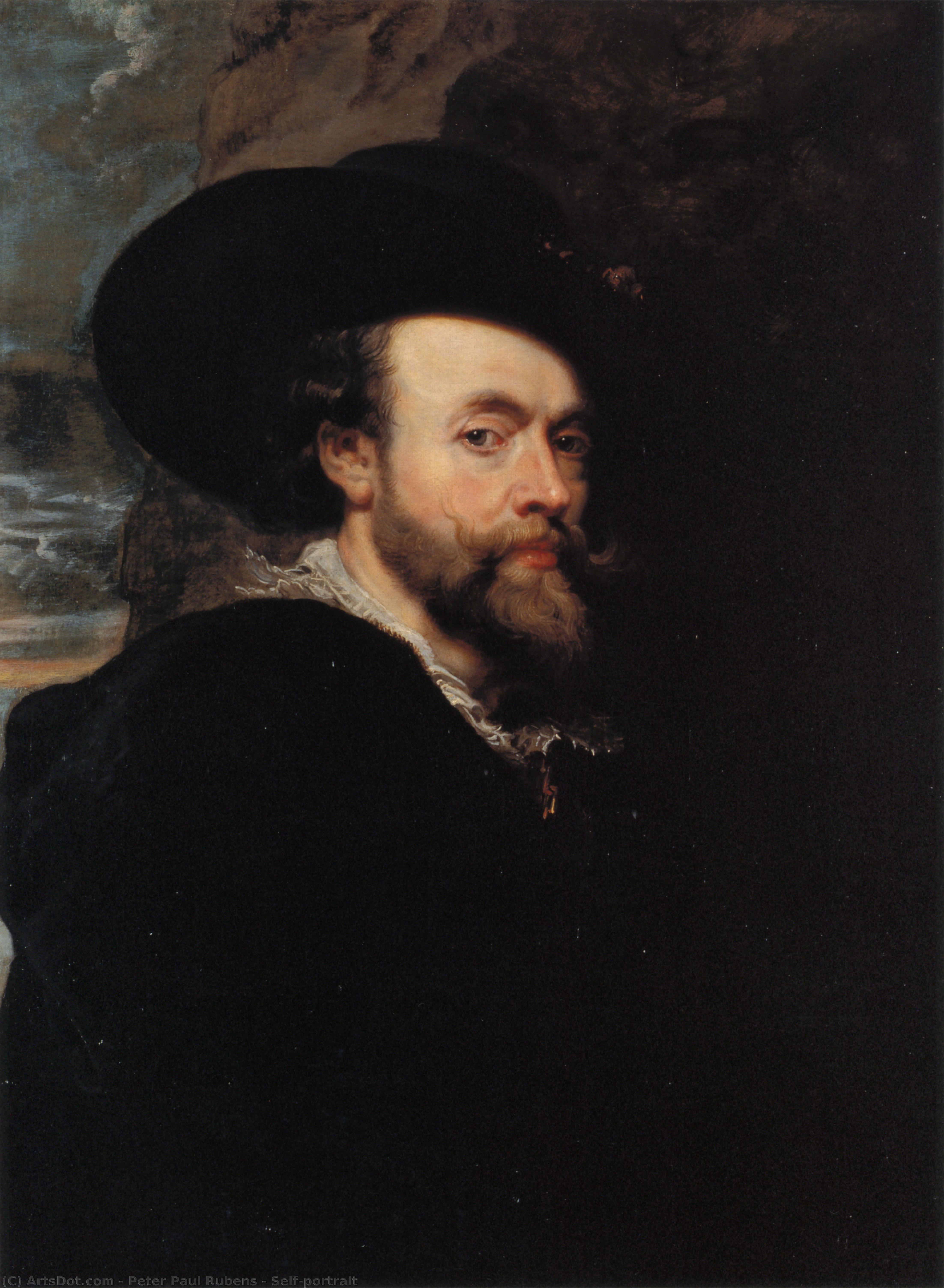
Self-Portrait
Peter Paul Rubens, one of the most influential artists of the Flemish Baroque tradition, created a captivating self-portrait in 1623. This painting is not only a reflection of his artistic prowess but also a window into the era’s cultural and social context. It's more than just an image; it’s a statement—a declaration of identity amidst the grandeur of his time.
Artistic Style and Technique
Rubens’ self-portrait exemplifies the Baroque style, characterized by dramatic lighting, intense emotions, and highly detailed realism. The artist’s masterful use of oil on canvas allowed for rich textures and vibrant colors, enhancing the overall visual impact. Notice how Rubens skillfully employs *chiaroscuro*, manipulating light and shadow to sculpt form and create a palpable sense of depth—a technique borrowed directly from Caravaggio, demonstrating Rubens' unwavering dedication to mastering artistic innovation. The painting measures 62 x 86 cm, making it a significant piece that commands attention and invites contemplation.
Historical Context
Painted during a period when Rubens was at the height of his career, having established himself as a prominent figure in European art—particularly serving as court painter to Philip IV of Spain—the self-portrait reflects the cultural influences of its time. Rubens’ work frequently referenced classical and Christian themes, mirroring the spiritual fervor prevalent throughout Europe during the Counter-Reformation. This particular piece was housed at the National Gallery of Australia in Canberra, showcasing Rubens' enduring legacy within the broader artistic canon.
Artistic Influences
Rubens’ style was profoundly impacted by various artists and movements. For instance, his use of *chiaroscuro*, as mentioned earlier, was undeniably inspired by Caravaggio—a deliberate homage to a rival who championed realism and emotional intensity. Furthermore, Rubens' emphasis on movement and sensuality in his compositions aligns perfectly with the Baroque aesthetic, capturing the dynamism and grandeur characteristic of the period. He wasn’t merely depicting himself; he was embodying the spirit of an age obsessed with theatricality and emotion.
Other Notable Works
Rubens’ body of work includes numerous masterpieces that continue to inspire artists today. One notable example is
Portrait of Nicolas de Respaigne, which showcases his ability to capture the essence of his subjects with elegance and precision—a testament to Rubens’ unwavering commitment to artistic excellence. This painting is part of the collection at Staatliche Kunstsammlungen in Kassel, Germany.
Museums and Collections
The National Gallery of Australia, where Rubens’ self-portrait is displayed, is a significant cultural institution that houses a diverse range of artworks—a treasure trove for art historians and enthusiasts alike. Similarly, the Museum Santi Alessandro e Vincenzo in Ponteranica, Italy, features works by renowned artists like Lorenzo Lotto and Hans Von Aachen—providing invaluable insight into the artistic landscape of Renaissance and Baroque Europe.
Conclusion
Peter Paul Rubens’ self-portrait is a testament to his artistic genius and the enduring legacy of Baroque art. Through his masterful use of light, color, and composition, he created a piece that continues to captivate audiences today—a timeless image that speaks volumes about ambition, intellect, and the artist's unwavering belief in the power of visual representation. For those interested in exploring more of his work or learning about other artists from the same period,
Peter Paul Rubens: Self-portrait and
Peter Paul Rubens: Portrait of Nicolas de Respaigne are excellent resources.
References
-
Peter Paul Rubens
-
National Gallery of Australia
-
Museum Santi Alessandro e Vincenzo
-
The Museum Santi Alessandro e Vincenzo (Ponteranica, Italy)
For a deeper understanding of the history and evolution of art, refer to
History of Art and
Art of Europe.