Cupid Making His Bow: A Baroque Masterpiece Illuminated
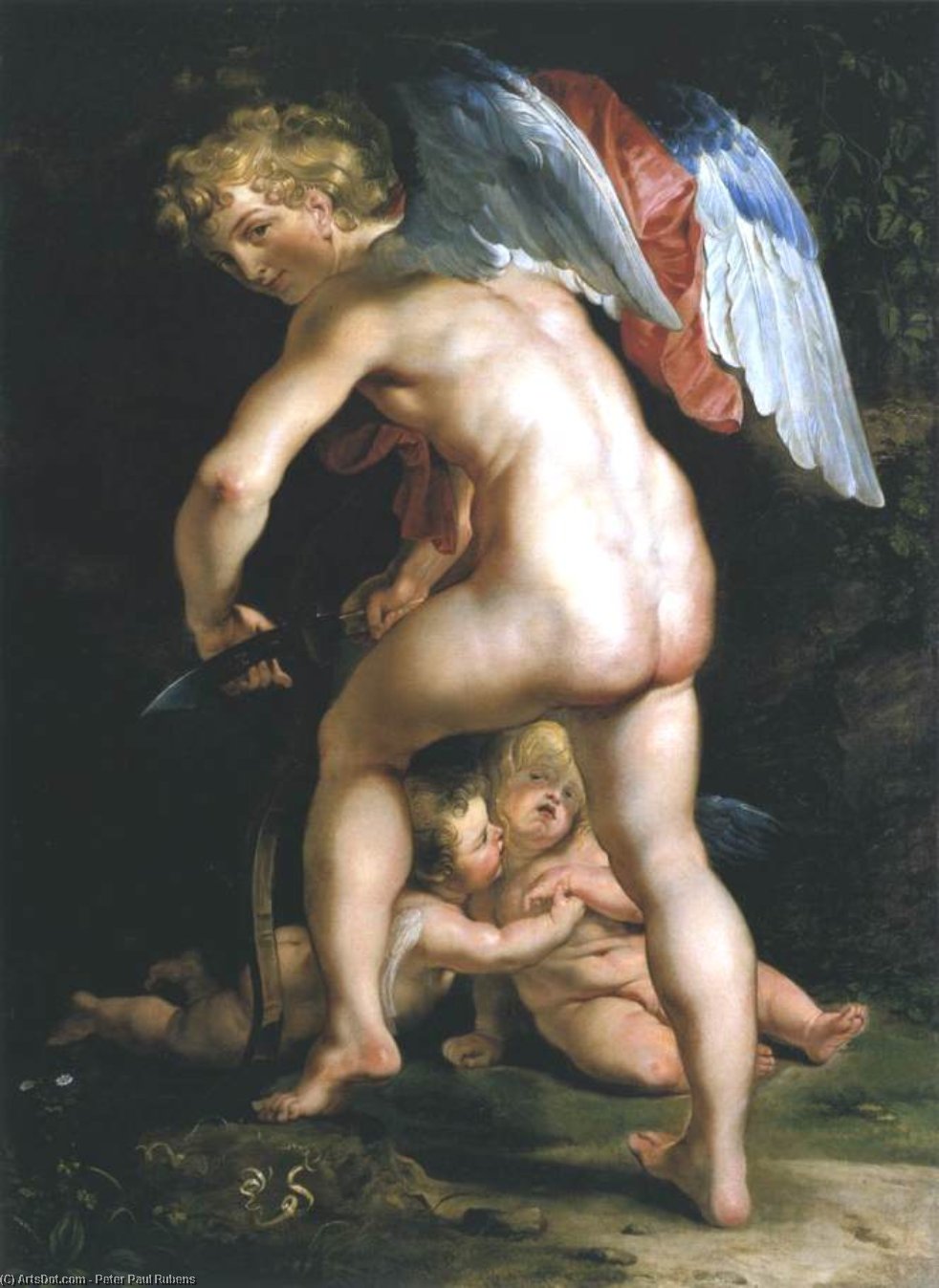
The painting “Cupido Que Fábrica De Su Mano Un Arco” by Parmigianino, created around 1533–1535, stands as a testament to the artistic fervor of the High Renaissance and embodies the dramatic aesthetic principles that would define the Baroque era. Currently residing in the Kunsthistorisches Museum in Vienna, Austria, this oil on panel artwork transcends mere visual representation; it’s an invitation into a world steeped in mythology, emotion, and masterful technique.
Parmigianino's genius lies in his ability to distill complex ideas into a deceptively simple composition. The scene depicts Cupid meticulously crafting his bow—a gesture laden with symbolic significance—amidst a serene forest setting. Two nude children playfully interact, mirroring the divine influence of angels who hover above, creating an atmosphere brimming with tenderness and wonder.
- Style: Parmigianino’s approach aligns perfectly with Mannerism, prioritizing elegance and stylized form over naturalistic representation. The artist deliberately elongates figures, exaggerates proportions, and employs subtle distortions to convey psychological states rather than literal accuracy.
- Technique: Employing *tenebrismo*, Parmigianino skillfully manipulates light and shadow—a hallmark of Baroque art—to heighten dramatic impact. Intense illumination focuses on Cupid’s face and bow, while the surrounding foliage recedes into darkness, emphasizing the central figure's importance and creating a palpable sense of tension.
- Historical Context: Produced during a period marked by intellectual curiosity and artistic experimentation, “Cupid Making His Bow” reflects the humanist ideals prevalent in Florence at the time. It’s considered part of Parmigianino’s broader exploration of mythological themes—particularly those relating to love and fertility—a tradition that would flourish throughout Europe during the Baroque.
The painting's emotional resonance stems from its portrayal of innocence and playful interaction. The children embody purity and joy, while Cupid embodies divine desire—a potent combination that speaks to fundamental human aspirations. Parmigianino’s masterful use of color contributes to this emotive effect, with muted hues dominating the forest backdrop and vibrant shades accentuating Cupid's face and bow.
“Cupido Que Fábrica De Su Mano Un Arco” continues to captivate viewers today because it embodies the Baroque spirit—a celebration of beauty, drama, and psychological depth. Its enduring appeal resides in its ability to evoke feelings of wonder and contemplation, reminding us of the transformative power of art.