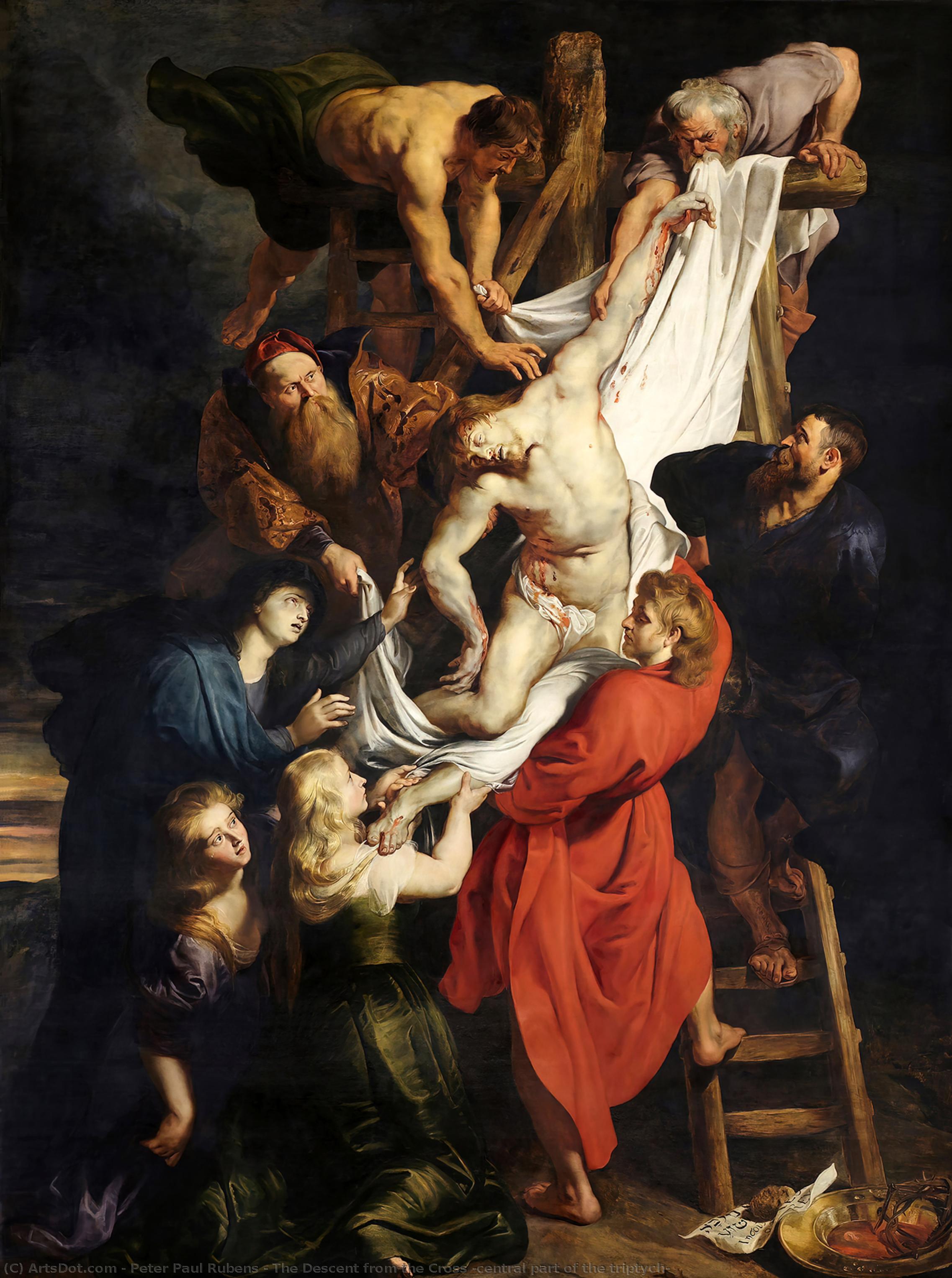
The Descent from the Cross (central part of the triptych)
“The Descent from the Cross,” a monumental triptych by Peter Paul Rubens, stands as one of the most enduring emblems of Baroque art and faith. Created between 1612 and 1614 for the Cathedral of Our Lady in Antwerp, Belgium—a commission borne out of devotion to Saint Christopher—this masterpiece transcends mere visual representation; it embodies a profound exploration of grief, sacrifice, and divine compassion.
Commission and Context
- The painting’s genesis lies in the fervent piety of the Confraternity of the Arquebusiers, Antwerp’s Civil Guard. Their patron saint, Saint Christopher—renowned for carrying Jesus Christ across a river—provided inspiration for this ambitious undertaking.
- Rubens' decision to depict this pivotal biblical scene wasn’t arbitrary; it reflected the broader artistic currents of the Counter-Reformation era, where dramatic emotion and opulent visual splendor served as tools to reaffirm Catholic dogma and inspire spiritual contemplation.
- Alongside “The Elevation of the Cross,” Rubens conceived a larger series of altarpieces for the Cathedral, cementing his reputation as Antwerp’s foremost artist and securing patronage from influential figures across Europe.
Artistic Significance
Rubens masterfully employed *chiaroscuro*, a technique characterized by stark contrasts between light and dark—a hallmark of Caravaggio—to sculpt the scene with breathtaking realism. The vibrant hues—deep reds, blues, and golds—pulsate with energy, drawing viewers into the immediacy of the moment depicted.
“The Descent from the Cross” isn’t simply a depiction of an event; it's a carefully orchestrated tableau designed to elicit empathy and reverence. Rubens meticulously rendered the figures—Jesus Christ, Mary Magdalene, Saint John Evangelist, and several other mourners—with anatomical precision and expressive gestures that convey palpable sorrow.
Historical Importance
Considered one of Rubens’s crowning achievements, “The Descent from the Cross” exemplifies the stylistic fervor of Flemish Baroque art. It stands as a testament to Rubens's workshop—renowned for producing exceptional artworks—which catered to discerning collectors and nobility throughout Europe.
The painting’s return to Antwerp Cathedral after tumultuous periods of exile underscores its significance not only as an artistic masterpiece but also as a symbol of faith and resilience. Today, visitors can experience the profound emotional impact of Rubens's vision firsthand – a testament to his enduring legacy in art history.
Relevance to ArtsDot
At ArtsDot, we honor Rubens’s artistic genius by offering meticulously crafted oil painting reproductions of his celebrated works. Our skilled artisans painstakingly recreate the original paintings, preserving every nuance and conveying the same emotive power.
For art enthusiasts eager to immerse themselves in Rubens's oeuvre, ArtsDot presents a curated selection of his masterpieces—including “The Elevation of the Cross” and “Landscape with a Watering Place”—allowing you to bring the beauty and grandeur of Baroque art into your home or workspace. Explore these reproductions at The Descent from the Cross (central part of the triptych) and Landscape with a Watering Place.