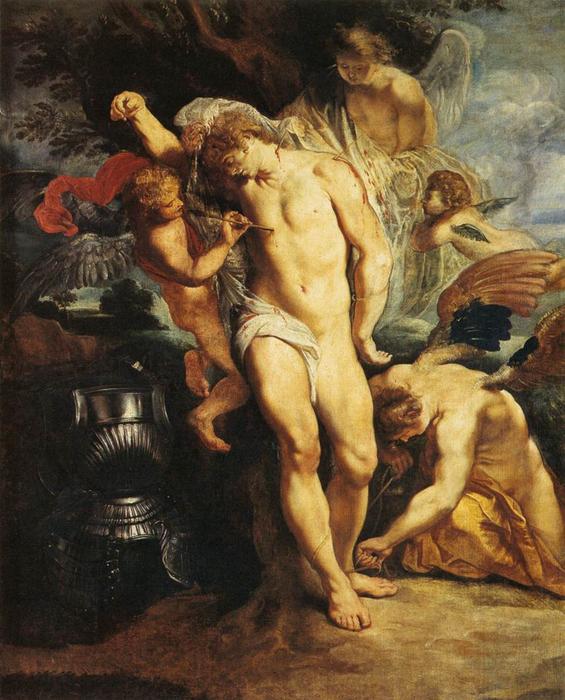
The Martyrdom of St. Sebastian
“The Martyrdom of St. Sebastian” by Peter Paul Rubens stands as an undeniable emblem of the Baroque artistic fervor that gripped Flanders in the early 17th century. More than just a depiction of religious iconography, it’s a masterful exploration of human suffering and divine compassion—a testament to Rubens' unparalleled ability to translate emotion onto canvas.
Created in 1608 during Rubens’ prolific period in Rome, this monumental oil painting measuring 153 x 118 cm transcends mere visual representation. It embodies the Baroque ethos of dramatic intensity and theatrical grandeur, reflecting the influence of Caravaggio's revolutionary tenebrism—a technique that plunges the scene into stark contrasts between light and darkness.
The Scene: The painting portrays St. Sebastian, a Roman martyr venerated for his unwavering faith during Diocletian’s persecution. Tied to a tree with ropes, he endures agonizing pain as Roman soldiers relentlessly shoot arrows at him. Yet, despite the physical torment, St. Sebastian maintains an expression of serene acceptance—a profound symbol of spiritual fortitude and submission to God’s will.
Artistic Style: Rubens' meticulous attention to detail is evident in every brushstroke. The artist skillfully employs chiaroscuro – a technique that manipulates light and shadow – creating a palpable sense of depth and dynamism. Vibrant hues dominate the composition, conveying both sorrowful beauty and heroic resilience. Rubens’ masterful use of texture adds another layer of realism, capturing the physicality of St. Sebastian's body and the rough bark of the tree.
Historical Context: The Baroque movement arose in response to the Protestant Reformation, fueled by a desire for emotional engagement and spiritual fervor. Rubens absorbed the lessons of Michelangelo and Raphael but infused his work with Caravaggio’s dramatic flair—a deliberate departure from Renaissance ideals favoring psychological realism over idealized beauty. This painting reflects the broader artistic climate of its time, demonstrating the Baroque preoccupation with portraying human experience in all its complexity.
Symbolism: Beyond its narrative depiction of martyrdom, “The Martyrdom of St. Sebastian” is laden with symbolic significance. The angels flanking St. Sebastian represent divine protection and compassion—a reassurance that even in moments of despair, God remains steadfastly supportive. The bird perched above symbolizes hope and resurrection—a visual reminder of eternal life amidst earthly suffering.
Other Works by Peter Paul Rubens: Rubens’ artistic legacy extends far beyond this iconic masterpiece. Notable pieces include “Adoration of the Magi,” “The Equestrian Portrait of the Duke of Lerma,” “Madonna with the Saints,” and “The Apotheosis of the Duke of Buckingham”—each showcasing his distinctive style and thematic concerns.
Artist’s Biography: Peter Paul Rubens (1577-1640) was born in Siegen, Germany, to a family fleeing religious persecution. He pursued his artistic education in Antwerp and Rome, immersing himself in the humanist traditions of Renaissance Italy while simultaneously embracing the dramatic innovations of Caravaggio. Rubens became one of the most celebrated painters of his era, leaving an indelible mark on European art history.
For more information about Peter Paul Rubens and his extraordinary oeuvre, visit Peter Paul Rubens at ArtsDot.