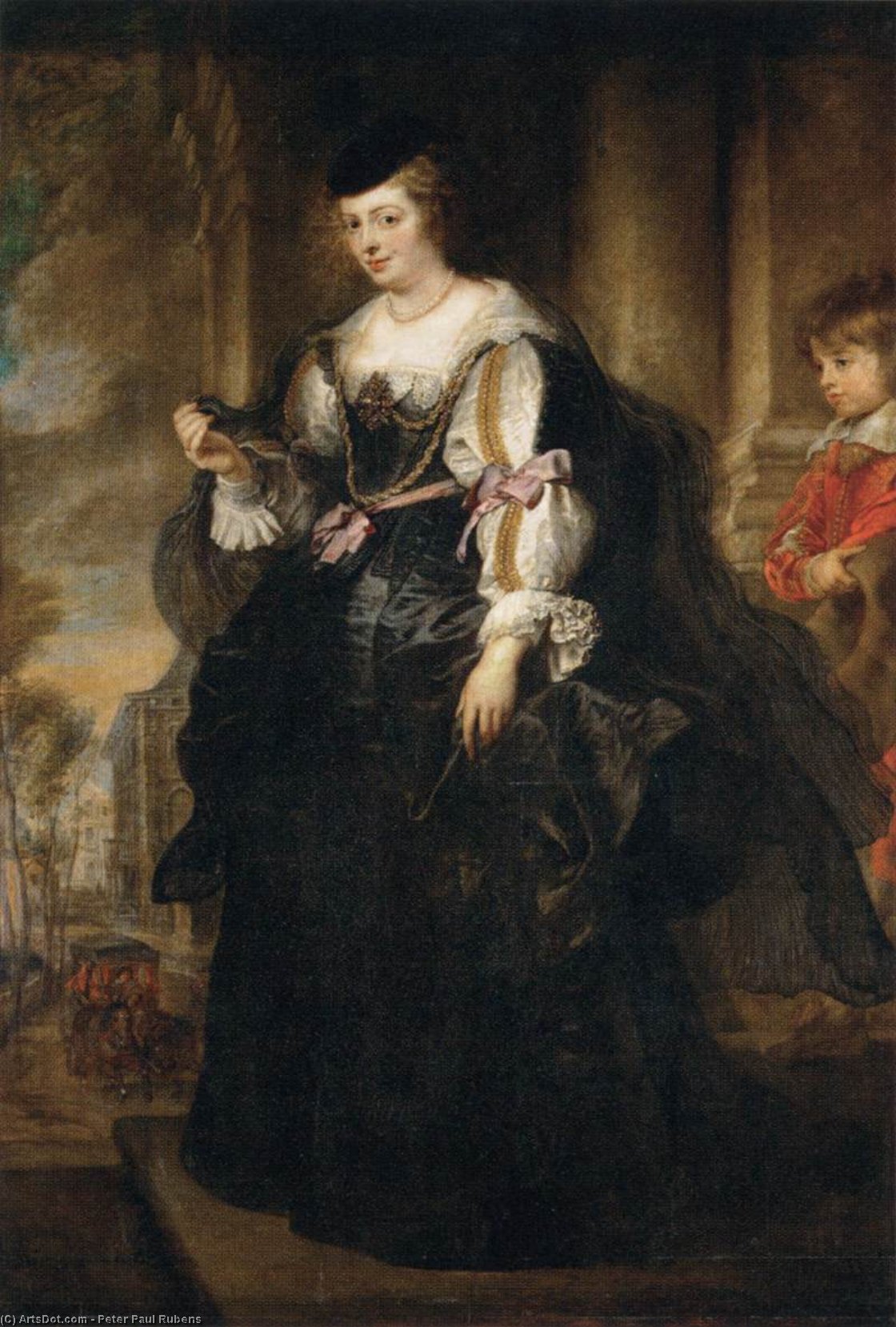
Portrait of Helene Fourment with a Coach
The
Portrait of Helene Fourment with a Coach, painted by the renowned Flemish artist
Peter Paul Rubens in 1639, stands as a cornerstone of Baroque art—a testament to Rubens’ mastery and an exquisite glimpse into the opulent tastes of his era. Measuring 195 x 132 cm, this oil on panel masterpiece currently resides within the
Kunstsammlungen Graf von Schönborn Pommersfelden, Germany—a private collection dedicated to preserving artistic treasures.
A Window into Baroque Grandeur
Rubens’ vision transcends mere representation; it embodies the spirit of the Baroque period—characterized by dramatic contrasts, exuberant color palettes, and a fervent belief in illusionistic depth. The painting captures Helene Fourment, Rubens' second wife, with remarkable sensitivity, portraying her as a woman of grace and composure amidst a richly adorned setting. This wasn’t simply about capturing likeness; it was about conveying status, virtue, and familial harmony—values paramount to aristocratic society at the time.
Compositional Brilliance: Light and Shadow
The artist skillfully employs *chiaroscuro*, manipulating light and shadow to sculpt form and heighten emotional impact. Rubens’ technique is evident in the meticulous layering of paint—creating a palpable sense of texture and volume that draws the viewer's eye into the scene. Notice how the diffused light illuminates Helene’s face, highlighting her features while casting shadows across her dress and surroundings—a masterful device for conveying both beauty and solemn dignity. The inclusion of two children adds to the composition’s complexity, symbolizing familial prosperity and reinforcing the overarching theme of stability.
Symbolism Beyond Appearance
Beyond its visual splendor, the portrait resonates with symbolic meaning. Helene's attire—a black dress adorned with a pink ribbon—represents mourning and piety, reflecting the prevailing religious sensibilities of the period. The carriage itself symbolizes power, prestige, and marital union—a deliberate choice by Rubens to communicate not only physical reality but also intangible ideals. Furthermore, the positioning of the children underscores the importance of lineage and heritage—elements crucial to establishing social standing and securing one’s legacy.
A Legacy Enduring Through Reproduction
Today, a high-quality reproduction of
Portrait of Helene Fourment with a Coach allows admirers worldwide to experience Rubens’ artistic genius—capturing the essence of Baroque art in stunning detail. Explore this iconic painting at
https://ArtsDot.com and immerse yourself in the splendor of a bygone era.
For more information on Peter Paul Rubens and his artistic achievements, visit
https://ArtsDot.com.