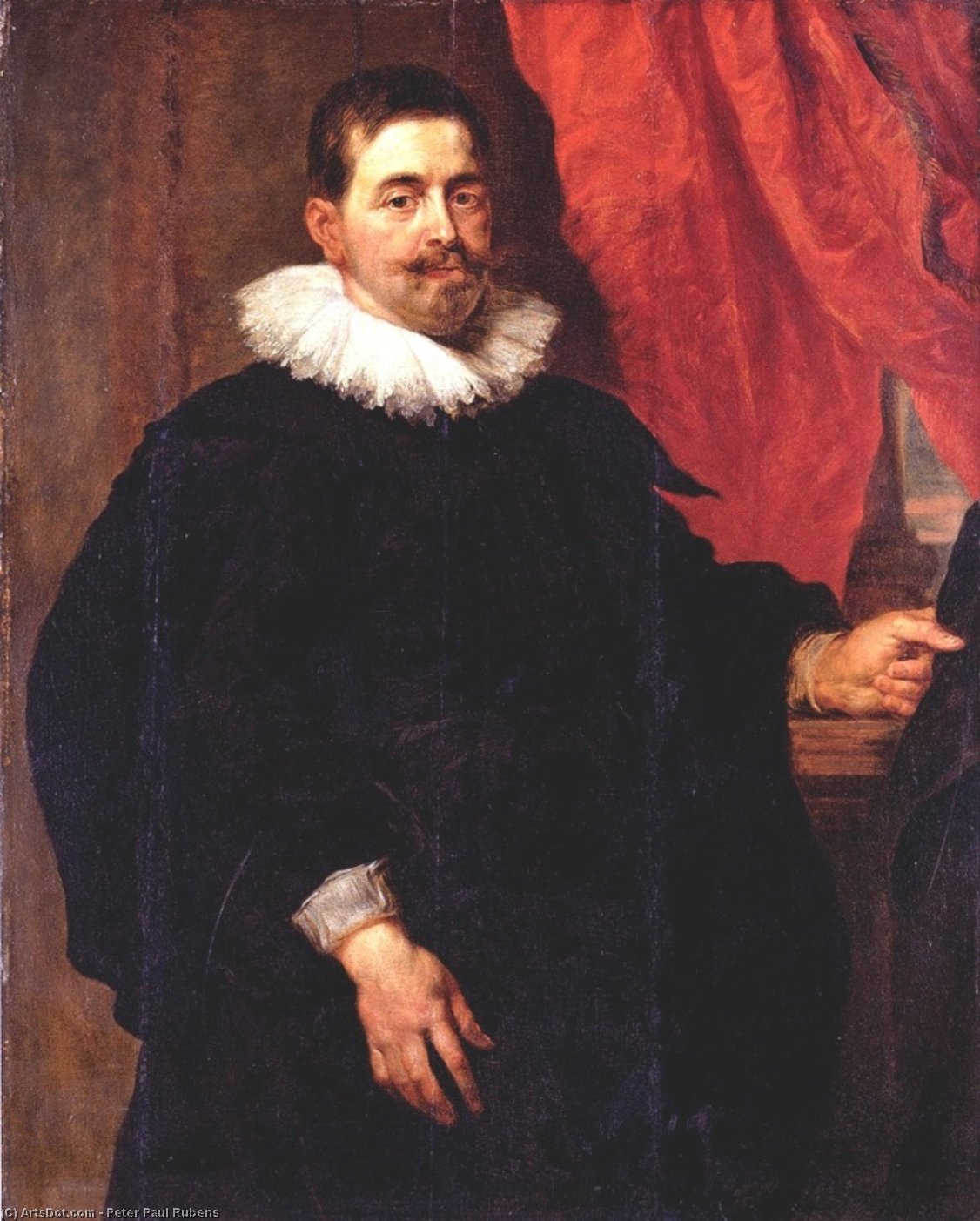
Admira este impresionante retrato barroco de Peter Van Hecke por Rubens, creado alrededor de 1630 y ahora en el Mauritshuis. Descubre la maestría artística y los detalles ricos en color.
Sir Peter Paul Rubens: Maestro del Barroco flamenco. Famoso por composiciones dinámicas, colores vibrantes y obras icónicas como 'La Masacre de los Inocentes'. Descubre su vida y arte.
Portrait of Peter Van Hecke: A Baroque Masterpiece Illuminated by Rubens’ Genius
The painting “Portrait of Peter Van Hecke,” created around 1630 by the Flemish maestro Peter Paul Rubens, stands as a testament to the grandeur and sophistication of the Baroque era. Measuring 90 x 114 cm, this oil on canvas masterpiece resides within the Mauritshuis museum in The Hague, Netherlands—a repository of artistic treasures reflecting the cultural dynamism of its time. Rubens’s signature style – characterized by dynamic compositions, vibrant colors, and masterful use of chiaroscuro – is vividly evident in every brushstroke, transporting viewers back to a period defined by opulent patronage and dramatic visual storytelling.
Stylistic Influences & Baroque Techniques
Rubens' artistic vision was profoundly shaped by the humanist ideals prevalent during his formative years and crucially influenced by his immersion in Italian Renaissance art. He meticulously studied the works of Leonardo da Vinci, Michelangelo, and Raphael, absorbing their techniques for portraying human anatomy with anatomical precision and capturing emotion through expressive gestures. However, Rubens’s true breakthrough came from encountering Caravaggio's revolutionary approach to painting—specifically *tenebrism*, a dramatic style that employs stark contrasts between light and dark to heighten emotional impact and create an illusion of depth. This technique is skillfully deployed in “Portrait of Peter Van Hecke,” where a single shaft of light illuminates the man’s face, highlighting his gaze and conveying a sense of solemn contemplation. The artist expertly blends colors—primarily reds, blacks, and whites—to achieve a harmonious balance that underscores the subject's nobility and dignity.
Subject Matter & Symbolism
The portrait depicts Peter Van Hecke, a prominent figure in Antwerp society during Rubens’s time. Dressed impeccably in black clothing adorned with a voluminous white ruff collar – a symbol of wealth and social status—the man exudes confidence and composure. His gaze is directed straight at the viewer, establishing an intimate connection between artist and subject. The inclusion of a draped red curtain serves as a visual anchor, providing a rich textural element and subtly enhancing the dramatic lighting effects. This backdrop contributes to the overall atmosphere of grandeur and reinforces the portrait’s symbolic representation of power and prestige. Rubens' meticulous attention to detail—from the rendering of facial features to the subtle nuances of drapery folds—demonstrates his unparalleled skill in capturing human likeness and conveying psychological depth.
A Legacy Enduring Through Reproduction
For art enthusiasts seeking to experience the beauty and artistry of “Portrait of Peter Van Hecke” firsthand, high-quality reproductions offer an accessible pathway to appreciating Rubens’s genius. Available at ArtsDot.com, these meticulously crafted prints allow collectors and interior designers alike to bring a piece of Baroque history into their homes—capturing not only the visual splendor of the original but also its profound emotional resonance. Explore more about Peter Paul Rubens and his enduring influence on Western art: /art/list/?Filter=peter+paul+rubens