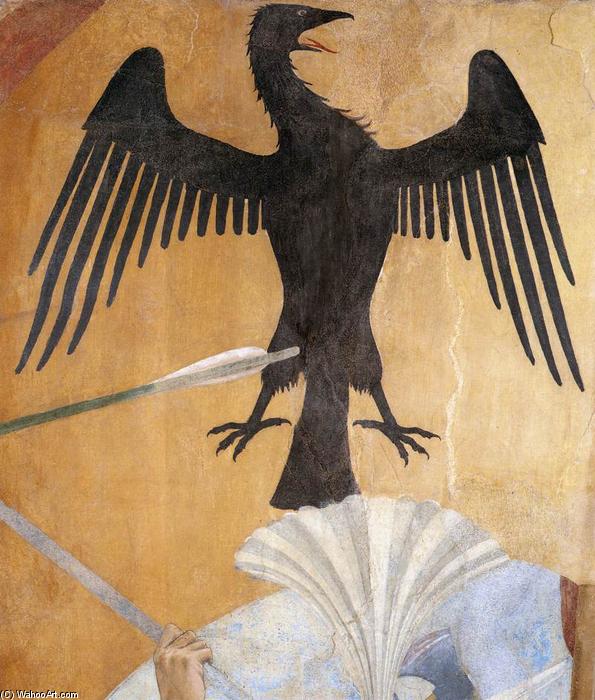
8. Battle between Heraclius and Chosroes (detail) (12)
The “Battle between Heraclius and Chosroes” is a breathtaking fresco by the renowned Italian artist Piero della Francesca, created in 1452. This masterpiece adorns the walls of the Basilica of San Francesco in Arezzo, Italy, representing one of the most significant achievements of Early Renaissance art. It’s more than just a depiction of historical conflict; it's an exploration of faith, power, and human dignity—themes that resonate powerfully even today.
The Historical Context
This fresco recounts a pivotal moment in Byzantine history: the clash between Emperor Heraclius and King Chosroes I Parviz of Persia. The battle unfolded in 627 AD, marking a decisive victory for Byzantium against the formidable Sassanian Empire—a triumph that secured Christendom’s survival during a perilous period. Piero della Francesca meticulously researched the event, incorporating details from contemporary chronicles to convey an accurate portrayal of the siege and its aftermath. The fresco isn't merely illustrating history; it’s capturing the spirit of its time – a testament to imperial ambition and religious conviction.
Artistic Techniques
Piero della Francesca employed masterful artistic techniques that exemplify the ideals of the Renaissance. He utilized a muted color palette—primarily ochre, umber, and crimson—creating an atmosphere of solemn grandeur. However, it’s his groundbreaking use of linear perspective that truly distinguishes this work. The fresco achieves remarkable spatial realism, with figures appearing to exist in three dimensions despite being painted on a flat surface. This technique, perfected by Masaccio years earlier, revolutionized painting and established Piero as a pioneer of artistic innovation. Notice how the architectural elements—the walls, arches, and columns—converge at vanishing points, drawing the viewer’s eye into the scene and enhancing its depth.
Key Elements
The composition is dominated by two central figures: Heraclius and Chosroes, positioned on opposite sides of a monumental sarcophagus. The sarcophagus serves as a symbolic representation of death—a reminder of mortality—but also embodies resurrection through its upward-reaching form. Surrounding them are four sleeping soldiers, embodying the triumph of divine grace over earthly decay. Their postures convey serenity and contemplation, reflecting the Basilica’s spiritual purpose. Furthermore, observe the meticulous detail in portraying the weaponry and armor of the warriors – a testament to Piero's anatomical precision and his dedication to capturing realistic textures. The subtle interplay of light and shadow contributes to the fresco’s dramatic effect, emphasizing the solemnity of the occasion.
Relevance in Art History
“The Battle between Heraclius and Chosroes” stands as an unparalleled exemplar of Renaissance artistic achievement. It embodies the humanist ideals prevalent during the period—a focus on human experience and emotion alongside intellectual rigor. Piero della Francesca’s fresco profoundly influenced subsequent artists, establishing a new standard for spatial illusionism and compositional balance. Its enduring appeal lies in its ability to convey complex theological concepts through visual imagery—a feat of artistic storytelling that continues to inspire awe and admiration centuries later. For more information on Piero Della Francesca and his works, visit
https://ArtsDot.com. To explore other masterpieces by this artist, see: -
Piero Della Francesca: 8. Battle between Heraclius and Chosroes (detail) (9) -
Piero Della Francesca: 7b. Recognition of the True Cross (detail) To learn more about the historical context and significance of “The Legend of the True Cross,” refer to
Wikipedia: The Legend of the True Cross.