The Echoes of Empire: A Journey Through Ruined Grandeur
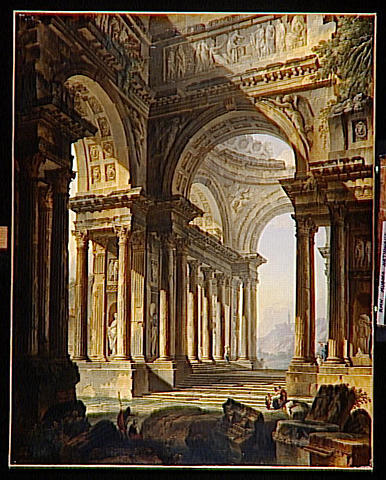
To stand before this depiction of an ancient temple in ruins is to step across the threshold of time itself. The air seems thick with the dust of forgotten centuries, and the overwhelming sense of scale—the monumental columns marching into a hazy distance—draws the viewer deep into the composition's heart. This scene is not merely a rendering of stone; it is an elegy whispered by the passage of ages. The artist masterfully employs linear perspective, guiding the eye along receding arches and colonnades until the structure dissolves into the soft light of a distant landscape. It speaks to the enduring human fascination with what was once magnificent, now surrendered to the slow, inevitable embrace of nature.
A Study in Light, Shadow, and Classical Form
Technically, the painting is a breathtaking exercise in chiaroscuro. The dramatic lighting is perhaps its most captivating element; strong highlights catch the edges of weathered stone, suggesting moments where divine or human attention once rested. These luminous accents play against deep, velvety shadows cast by the massive architectural forms. The palette itself—a rich tapestry of ochres, warm beiges, and earthy browns, punctuated by cooler greens glimpsed through openings—evokes the sun-drenched decay of Mediterranean antiquity. While straight lines define the rigid geometry of the columns and arches, the scattered rubble in the foreground introduces necessary irregularity, grounding the sublime architecture with tangible weight.
Historical Resonance and Artistic Lineage
The style immediately recalls the grand traditions of 18th-century academic painting, particularly those works inspired by archaeological discoveries. The subject matter—the classical ruin—was a profound obsession for artists during this period, linking art directly to the perceived glories of Greece and Rome. While the specific hand guiding this vision may echo the celebrated antiquarian painters who journeyed through Italy, the overall effect is one of sophisticated Neoclassicism filtered through an almost theatrical lens. It suggests a deep scholarly appreciation for classical motifs, making it a piece that speaks equally to the historian and the aesthete.
Symbolism: The Transience of Glory
Beyond its technical brilliance, this artwork resonates with profound symbolism. The ruined temple stands as a potent metaphor for the transience of human endeavor—the ultimate reminder that even the most powerful empires eventually yield to time. Yet, within this decay lies a strange beauty; it is a contemplation on endurance. The figures subtly placed in the foreground seem caught in a moment of quiet reflection, inviting the viewer not just to look at the ruins, but to ponder their own place within the grand sweep of history. It offers a melancholic yet deeply inspiring meditation on memory and permanence.
Bringing Antiquity Home: For Interior Design
For those seeking art that elevates a space beyond mere decoration, this reproduction offers unparalleled depth. Imagine its presence in a library with dark wood paneling, or within an atrium designed to evoke classical grandeur. The warm, muted tones harmonize beautifully with natural materials—stone, aged metals, and rich textiles. It functions as a visual anchor, lending an immediate sense of cultivated history and sophisticated drama to any room. Owning this piece is acquiring not just paint on canvas, but a curated atmosphere of timeless contemplation.