A Vision of Serenity: Renoir’s August Madame Claude Monet
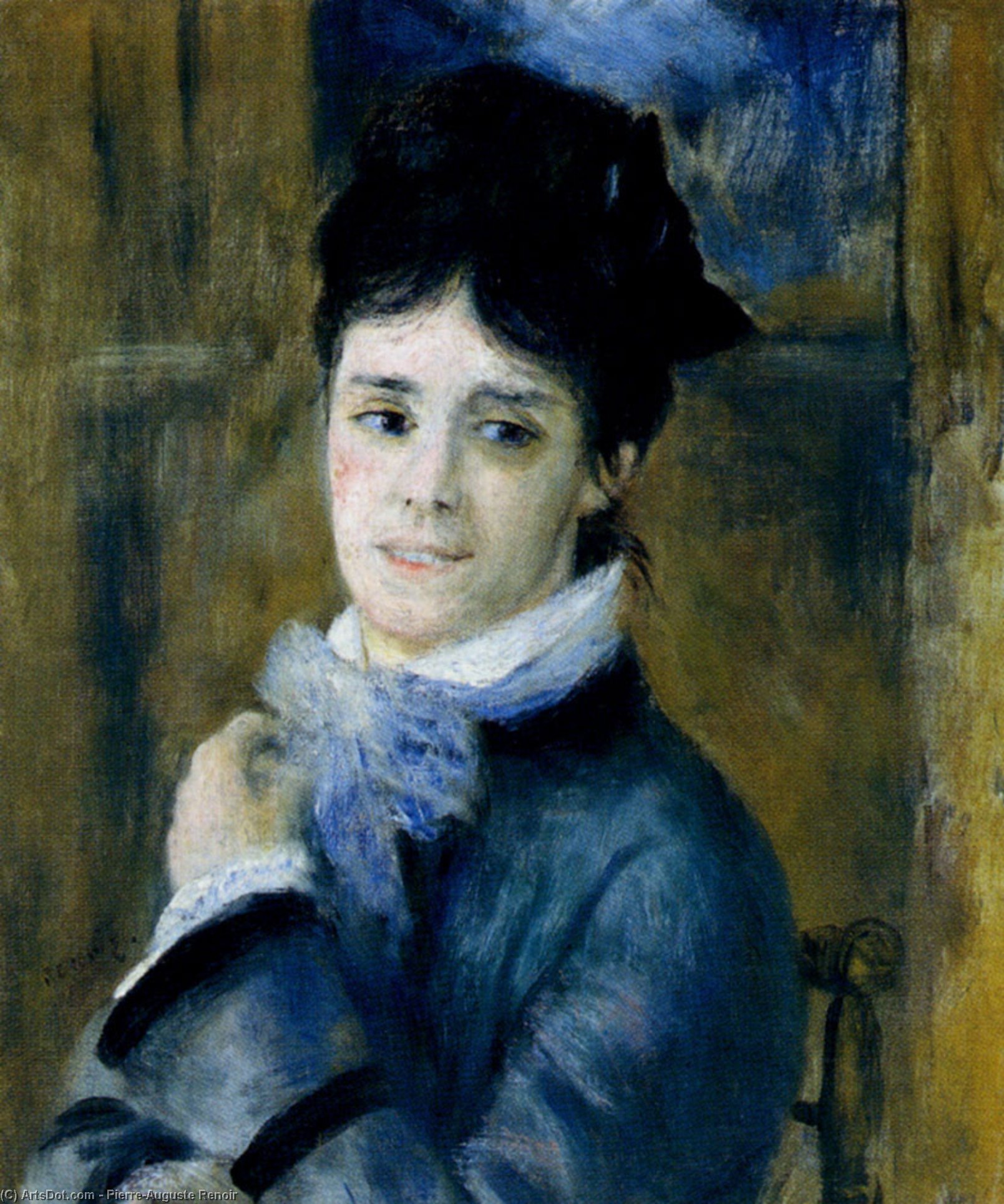
In the soft, dappled light of 1872, Pierre-Auguste Renoir captured more than just a likeness; he bottled a moment of profound domestic peace. “August madame Claude Monet” serves as an exquisite window into the intimate world of the Impressionist circle, presenting us with Camille Morisot—Claude Monet’s beloved muse and a formidable artist in her own right. As one gazes upon this portrait, there is an immediate sense of being invited into a private, quiet sanctuary. The subject’s serene gaze directs the viewer toward a state of calm contemplation, pulling us away from the frantic pace of modern life and into a realm where time seems to slow under the gentle weight of summer afternoon light.
Renoir’s mastery is most evident in his signature Impressionistic technique, where the boundaries between subject and atmosphere begin to blur. Eschewing the rigid, meticulous lines of academic tradition, he employs loose, fluid brushstrokes that prioritize the sensory experience of color and luminosity. The palette is a delicate dance of soft pastels, creating an ethereal quality that mirrors the diffused sunlight often found in Monet’s own landscapes. One cannot help but be captivated by the treatment of Camille’s blue dress; Renoir uses rhythmic, shimmering strokes to render the fabric so that it appears to catch and reflect the light, lending a tactile richness to the canvas that feels both weightless and deeply textured.
The Essence of an Era
To understand this painting is to understand the very heartbeat of the Impressionist movement. Created during a transformative period in art history, this work embodies the revolutionary spirit that challenged the stifling conventions of the French Academy. Renoir and his contemporaries sought to capture the fleeting—the way light shifts across a surface or how a mood settles over a room. In this portrait, we see the rejection of idealized, static representations in favor of subjective, emotional truth. The presence of subtle details, such as the soft scarf around Camille’s neck and the quiet arrangement of chairs in the background, grounds the ethereal beauty of the painting in a tangible, lived reality.
For the discerning collector or interior designer, this piece offers much more than mere decoration; it provides an emotional anchor. The composition, with its balanced interplay of light and shadow, possesses a timeless elegance that complements both classical and contemporary spaces. It is a work that invites conversation, acting as a focal point of sophistication and grace. Whether placed in a sun-drenched morning room or a quiet study, the painting radiates a sense of tranquility and enduring beauty, making it an incomparable choice for those looking to infuse their surroundings with the luminous spirit of 19th-century France.