Pierre Auguste Renoir: A Celebration of Light and Feminine Beauty
Pierre Auguste Renoir (1841–1919) stands as a cornerstone of Impressionism, an artistic movement that irrevocably transformed the landscape of European painting. His canvases shimmer with vibrant hues and delicate brushstrokes—a testament to his unwavering devotion to capturing fleeting moments of beauty and emotion. More than just depicting subjects; Renoir sought to distill their essence into luminous impressions, mirroring the very nature of perception itself. This approach distinguishes him from earlier academic traditions, prioritizing atmosphere and color over meticulous detail.
The Delicate Dance of Color: Impressionist Technique
Renoir’s distinctive style is characterized by a masterful manipulation of pigment—a technique that would become synonymous with Impressionism. Unlike his predecessors who favored chiaroscuro (the dramatic interplay of light and shadow), Renoir embraced the brilliance of daylight, striving to reproduce its subtle variations on canvas. He achieved this remarkable feat through layering thin glazes of color upon each other, allowing them to blend optically—creating an illusion of depth and luminosity that defies conventional representation. This method demanded patience and precision, reflecting Renoir’s meticulous attention to observation and artistic experimentation.
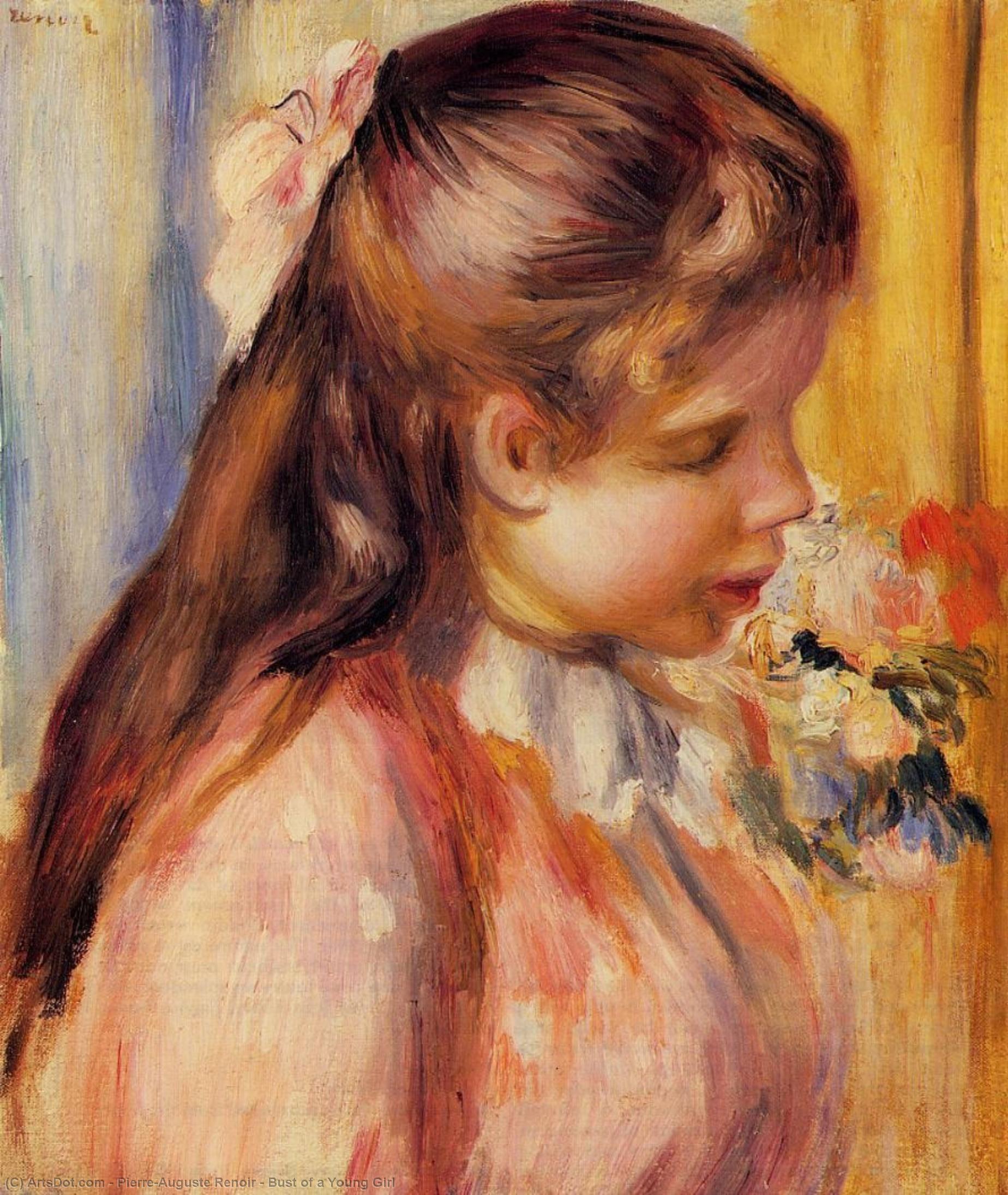
A Portrait Steeped in Symbolism: Bust of a Young Girl
- Subject Matter: The painting portrays a young girl—a motif frequently explored by Impressionists as a symbol of innocence, purity, and femininity.
- Composition: Renoir skillfully balances visual elements—a vase on the right side serving as a decorative focal point alongside a potted plant in the background—to establish a harmonious scene.
- Expression: The girl’s contemplative gaze invites viewers to contemplate her inner thoughts, conveying a profound sense of serenity and introspection.
Echoes of Rubens and Watteau: Artistic Influences
Renoir's artistic vision drew inspiration from the grandeur of Baroque masters like Rubens—particularly his masterful use of color and drapery—and the aristocratic elegance of Flemish painter Peter Paul Rubens. Simultaneously, he absorbed elements of Watteau’s fêtes galantes—elegant outdoor gatherings depicting aristocratic life—capturing a similar spirit of refined leisure and social grace. These influences shaped Renoir's aesthetic sensibilities, guiding him toward portraying idealized figures within picturesque settings.
Beyond Reproduction: Experiencing Renoir's Legacy
Today, art enthusiasts can immerse themselves in the splendor of Renoir’s oeuvre through high-quality reproductions available at ArtsDot.com. For instance, Jean Renoir in a Chair (also known as Child with a Biscuit) and Treboul—remarkable works showcasing Renoir’s ability to convey emotion and atmosphere—are captivating pieces that exemplify the enduring power of Impressionist art. Explore these masterpieces and discover the beauty of timeless artistry!