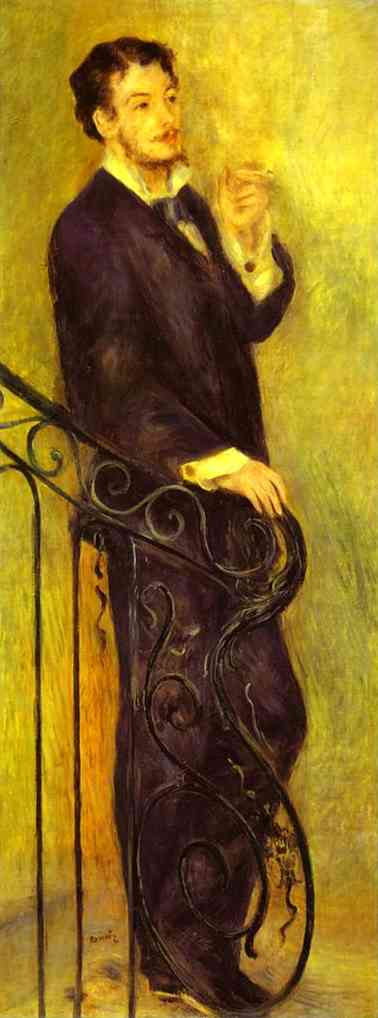
Man on a Staircase (L'Homme sur un escalier): A Study in Light and Movement
Pierre-Auguste Renoir’s “Man on a Staircase,” painted circa 1876, stands as an emblem of Impressionism’s fascination with capturing fleeting moments and the transformative effects of natural light. Currently residing at the Musee des Collettes in Cagnes-sur-Mer – Renoir's former home – this unassuming portrait transcends its simple subject matter to deliver a profound meditation on perception and atmosphere.
Background & Context: The painting emerged during a pivotal period in Impressionist art history, coinciding with the burgeoning movement’s exploration of plein air painting and its rejection of academic conventions. Renoir's decision to depict his subject within this environment underscores the artists’ commitment to observing and representing the world as it appeared directly before their eyes.
Artistic Style & Technique: Renoir employed a characteristic Impressionist approach, prioritizing color and brushstrokes over meticulous detail. Loose, visible strokes of pigment—primarily muted yellows and browns—create an illusion of shimmering light reflecting off surfaces. The artist skillfully utilizes chiaroscuro – the interplay between light and shadow – to sculpt form and imbue the scene with depth. Notice how Renoir’s technique subtly emphasizes the contours of the staircase and the figure, guiding the viewer's gaze.
Interpretation & Symbolism: “Man on a Staircase” isn’t merely a depiction of a man ascending steps; it embodies the broader Impressionist preoccupation with capturing movement and emotion. The posture of the subject—relaxed yet purposeful—suggests contemplation and perhaps even an awareness of passing time. Renoir's masterful use of color contributes to this emotional resonance, conveying a sense of serenity and understated beauty.
Connections & Significance: This painting resonates with other works by Renoir, notably “Dance at Bougival,” which similarly captures the vibrancy of outdoor gatherings and the ephemeral nature of experience. Exploring these connections illuminates Renoir’s broader artistic vision—a desire to portray life as it unfolds organically, bathed in the radiant glow of sunlight. To delve deeper into Renoir's oeuvre and its enduring influence on art history, visit ArtsDot.com for exceptional reproductions.
Notable Works by Pierre-Auguste Renoir:
Explore More: Man on a Staircase WikiArt