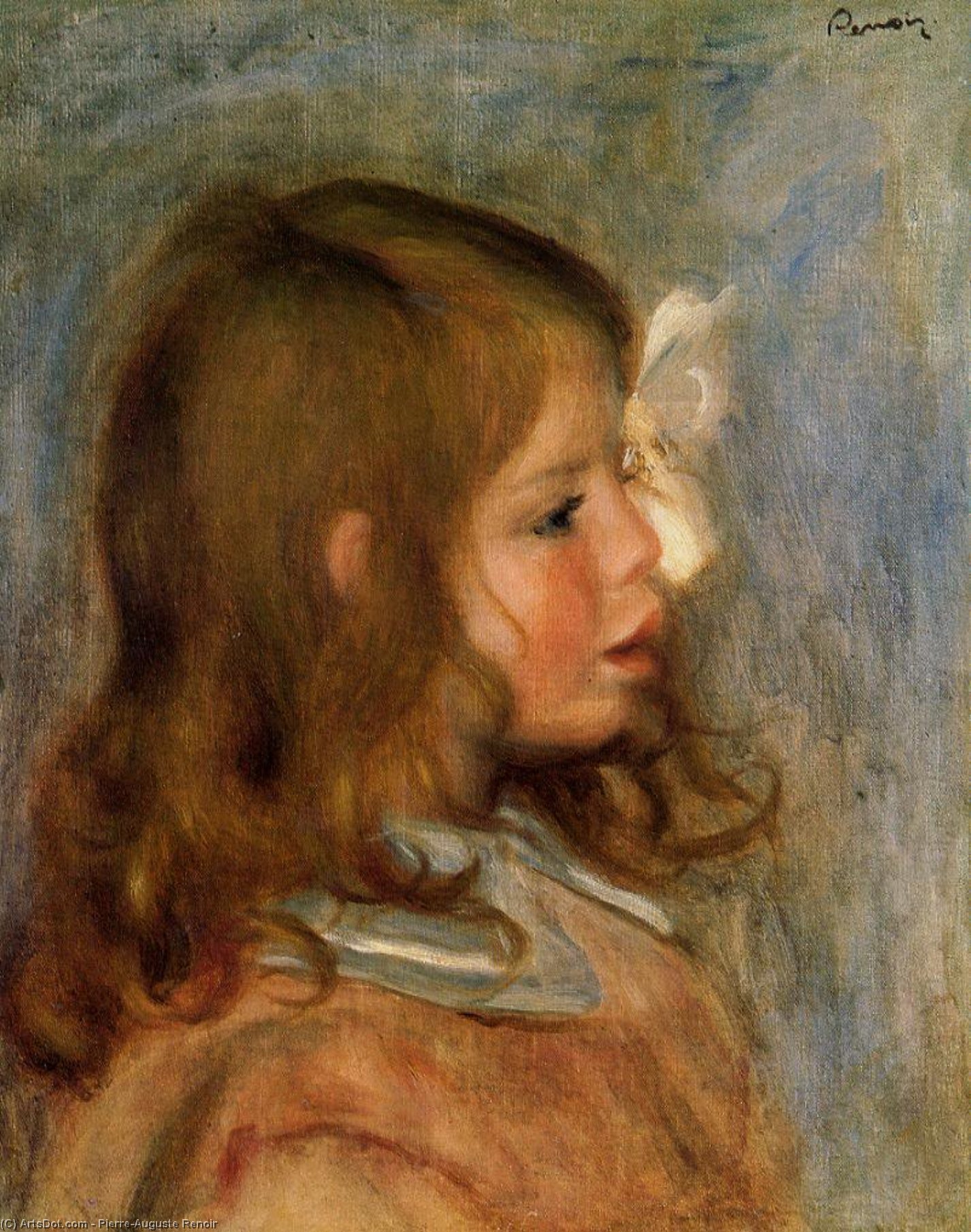
"Jean Renoir": Un impresionante retrato impresionista de Pierre-Auguste Renoir capturado en 1899, donde el artista hijo celebra la belleza cotidiana con colores vibrantes y pinceladas suaves. Descubre esta obra maestra!
Explore el vibrante mundo de Pierre-Auguste Renoir (1841-1919), un destacado pintor impresionista celebrado por sus luminosas retratos, escenas de la vida parisina y la belleza femenina. Descubre su legado y las contribuciones artísticas de su familia.
Jean Renoir: Capturing Innocence in Light
Jean Renoir’s “Jean Renoir,” painted in 1899, stands as an emblem of Impressionism's quest to transcend mere representation and delve into the realm of feeling. More than just a portrait of Pierre-Auguste Renoir’s son, Jean II Maritz, this artwork embodies the movement’s core principles—a fascination with fleeting moments of light and color—resulting in a serene depiction that continues to resonate with viewers today. Located within MuMa Le Havre's impressive Impressionist collection, it offers an unparalleled opportunity to experience Renoir’s artistic vision firsthand.
The Impressionist Style: A Dance With Light
Renoir’s approach to painting was revolutionary for his time. Rejecting the academic tradition of meticulous detail and tonal gradation favored by artists like Rubens and Watteau, he embraced a looser brushstroke technique—a deliberate departure from convention—that prioritized capturing the ephemeral qualities of light as it interacted with surfaces. This method is brilliantly executed in “Jean Renoir,” where soft, blended strokes illuminate Jean II Maritz’s face and clothing against a subtle azure backdrop. The artist skillfully renders the luminescence of natural light, mirroring the Impressionists' belief that color itself possesses inherent luminosity.
A Portrait Steeped in Symbolism
The painting transcends its surface appearance; it speaks volumes about Renoir’s artistic philosophy and his profound appreciation for beauty. Jean II Maritz, depicted with youthful exuberance—long hair framing his face—is positioned thoughtfully, gazing intently at an object held in his hand. This gesture conveys curiosity and contemplation, reflecting Renoir's desire to portray not just physical likeness but also the inner life of his subjects. The inclusion of a necklace adds a touch of elegance and sophistication, subtly hinting at the artist’s fascination with feminine grace—a recurring theme throughout Renoir’s oeuvre.
Technique and Detail: Mastering Impressionistic Nuance
Renoir's mastery lies in his ability to achieve remarkable subtlety through seemingly simple brushstrokes. Observe how he builds up color gradually, layering hues upon hues to create a rich tapestry of tonal variations. The careful blending ensures that no harsh lines disrupt the harmonious flow of light and shadow—a hallmark of Impressionistic painting. Furthermore, Renoir’s meticulous attention to texture contributes to the artwork's tactile quality, inviting viewers to imagine the softness of fabric and the warmth of skin.
A Legacy Enduring Through Reproduction
“Jean Renoir” exemplifies Renoir’s enduring legacy as a pioneer of Impressionism—a movement that irrevocably altered the course of art history. Its tranquil beauty and masterful technique continue to inspire artists and collectors alike. Fortunately, ArtsDot.com offers high-quality reproductions of this iconic masterpiece, allowing enthusiasts worldwide to appreciate its splendor in their own homes. Explore Jean Renoir Writing and Gabrielle Seated for a deeper understanding of Renoir’s artistic exploration.