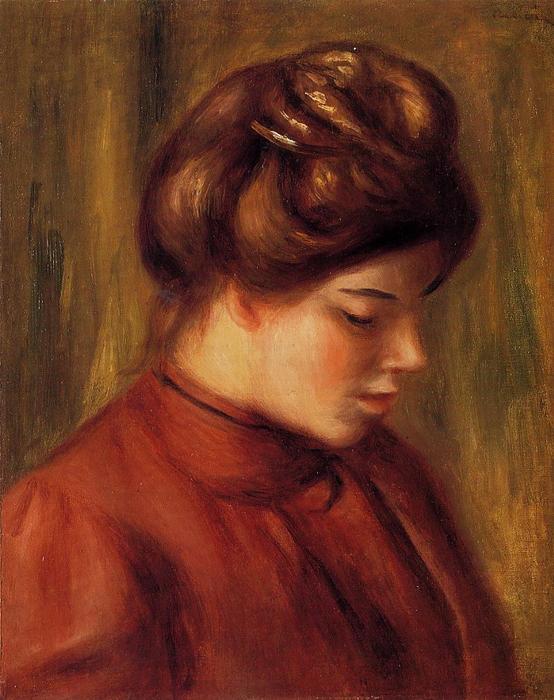
Mlle. Christine Lerolle: A Moment Frozen in Impressionist Light
Pierre-Auguste Renoir’s
Mlle. Christine Lerolle is more than just a portrait; it’s an exquisite distillation of Impressionist philosophy—a celebration of fleeting beauty and the transformative power of light. Painted in 1895 during Renoir's peak creative period, this canvas captures a serene scene: Mlle. Christine Lerolle, delicately embroidered, sits poised on a chaise lounge bathed in dappled sunlight filtering through foliage. The painting isn’t merely visually pleasing; it embodies the spirit of its time—a reaction against academic rigidity and an embrace of sensory experience.
Composition and Technique – Capturing Atmosphere
Renoir meticulously crafted this composition to convey not just likeness but also feeling. He employs his signature technique of *plein air* painting, working directly outdoors to capture the immediacy of natural light. Notice how Renoir blends colors with remarkable subtlety—strokes of ochre, crimson, and emerald intertwine seamlessly, creating a luminous haze that envelops Mlle. Lerolle’s figure and surroundings. The artist's brushwork is loose and expressive, prioritizing texture and tonal variation over precise detail. This deliberate disregard for photographic accuracy aligns perfectly with the Impressionist movement’s goal of representing visual perception rather than objective reality.
Historical Context – Impressionism at Its Finest
The late 19th century witnessed a profound shift in artistic sensibilities—the rise of Impressionism challenged established conventions and championed a new aesthetic vision. Influenced by artists like Monet, Sisley, and Degas, Renoir sought to depict the world as perceived by the eye, prioritizing color and light over traditional form and perspective.
Alice Pike Barney's Self-Portrait in Repose exemplifies this trend—focusing on capturing the essence of the subject rather than adhering to idealized representations. Similarly,
Edvard Munch's Military music on Karl Johan Gate demonstrates a fascination with psychological depth and emotional resonance—themes that resonate powerfully within Renoir’s oeuvre.
Symbolism – Feminine Grace and Tranquility
Beyond its technical brilliance,
Mlle. Christine Lerolle speaks to broader symbolic ideas. The woman’s posture—relaxed yet attentive—suggests serenity and contemplation. Her gaze downward conveys introspection, hinting at a quiet inner life. The gold headband adorning her hair symbolizes elegance and refinement, reflecting the prevailing social values of the era. Furthermore, the lush foliage serves as a backdrop for Mlle Lerolle's figure, representing vitality and connection to nature—elements that underscore Renoir’s humanist perspective.
Museum Presence – A Legacy of Impressionist Beauty
The Victoria Art Gallery in Bath, Somerset, proudly houses a remarkable collection of artworks spanning centuries. Among its treasures is
Arthur Streeton's Rain over Sydney Harbour—another masterpiece capturing the sublime beauty of Australian landscapes—and
Paul Cézanne's Still life, Delft vase with flowers—a testament to Cézanne’s groundbreaking exploration of form and color. These paintings stand alongside Renoir’s
Mlle. Christine Lerolle, cementing its place as a cornerstone of Impressionist art history and an enduring symbol of artistic excellence.
For more information on Pierre-Auguste Renoir and his captivating artworks, visit
ArtsDot.com.