A Glimpse into Sacred Serenity: The Vision of St Bernard
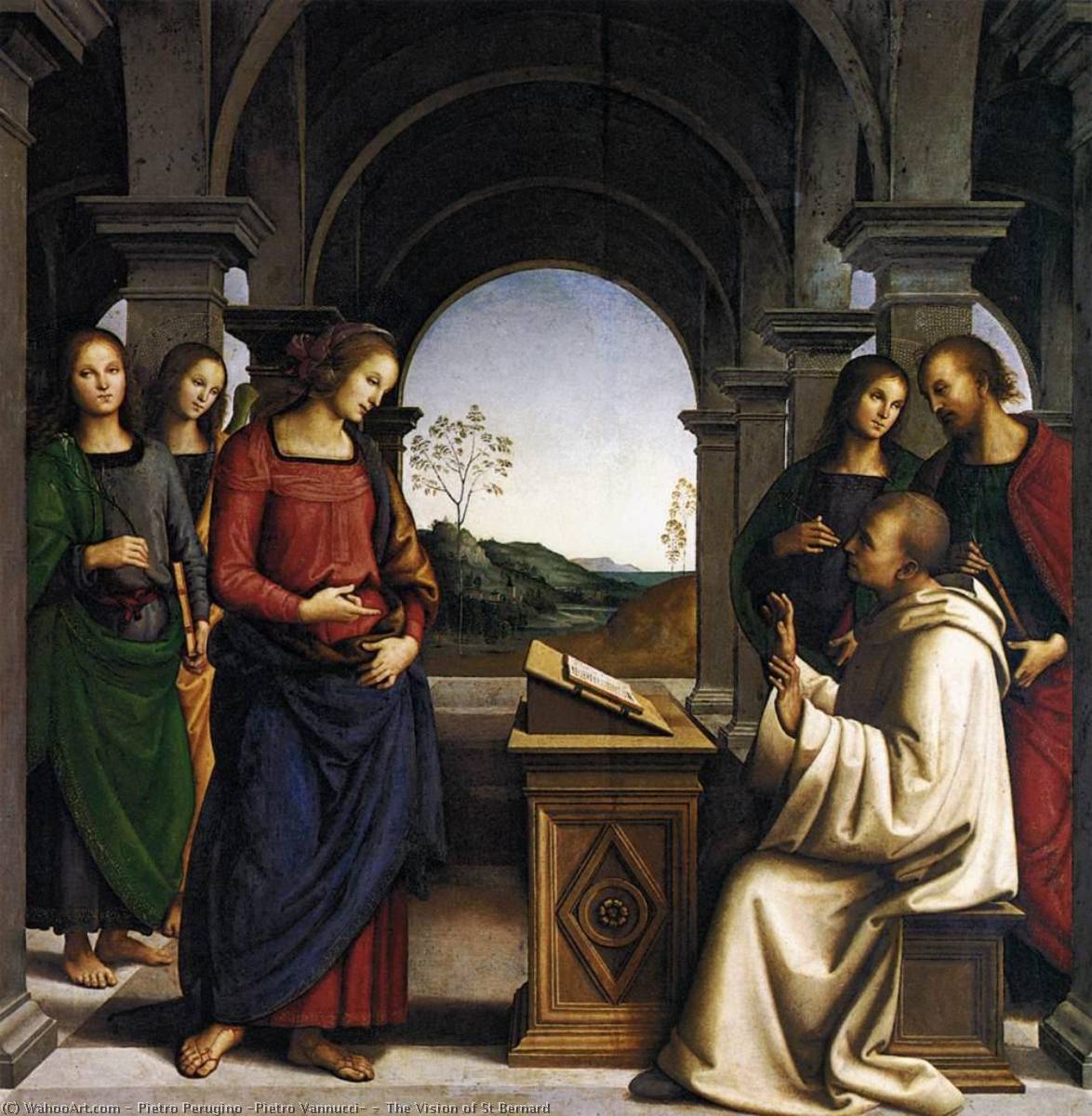
To stand before The Vision of St Bernard is to step across the threshold of time and into an atmosphere of profound, luminous contemplation. This masterpiece by Pietro Perugino captures not merely a scene, but a moment suspended between earthly discourse and divine revelation. The composition immediately draws the eye to the central figures gathered around the open book—a tangible nexus point for shared knowledge and spiritual inquiry. One senses the hushed reverence that permeates the air; it is a gathering of minds illuminated by scripture or profound wisdom. Perugino, ever the master of gentle grandeur, has orchestrated this assembly with an almost breathtaking clarity, allowing each individual to contribute to a tapestry woven from devotion and intellect.
The Umbrian Touch: Style and Technique
Pietro Perugino’s signature style is unmistakable, earning him the moniker of the "Quiet Maestro." Unlike the dramatic flourishes favored by some of his contemporaries, Perugino gifts us with an aesthetic characterized by serene compositions and a luminous palette. His technique achieves a remarkable balance: the figures possess a sculptural solidity, lending them weight and presence, yet their drapery flows with an ethereal grace. Observe how the light seems to emanate not just from an external source, but from within the very spirit of the scene itself. The colors are rendered with unparalleled clarity—soft blues meeting warm ochres—creating an optical harmony that speaks volumes about the Renaissance pursuit of idealized beauty and divine order.
Historical Echoes: Context in the Quattrocento
Painted around 1493, this work anchors us firmly within the vibrant intellectual currents of the Umbrian Renaissance. This period was a time when art served as both a devotional guide and an intellectual pursuit. Perugino’s ability to imbue religious subjects with such palpable humanism is key here. The gathering feels academic yet deeply spiritual; it suggests that true enlightenment comes not from isolation, but through shared study and communal devotion. For the modern collector or designer, this piece offers a window into an era where piety and humanist thought walked hand-in-hand, creating art that was both intellectually stimulating and emotionally soothing.
Symbolism of Study and Illumination
The open book at the heart of the narrative is more than just an object; it is the primary symbol. It represents revealed truth, the continuity of sacred knowledge, and the power of shared learning to elevate the soul. The various gazes directed toward this source—some rapt, some contemplative—guide our understanding of the piece’s emotional core: the journey from ignorance to understanding. When considering a reproduction for your space, know that you are acquiring more than just decoration; you are inviting a focal point of quiet contemplation into your home or gallery, a visual meditation on wisdom.
An Enduring Emotional Resonance
What lingers most powerfully after viewing The Vision of St Bernard is its profound sense of peace. It is an antidote to the clamor of modern life. The painting whispers of enduring truths—the value of study, the comfort of community, and the steady light of faith. Owning a reproduction allows one to curate an environment steeped in this gentle majesty. It serves as a timeless anchor, reminding all who pass before it that profound beauty often resides in clarity, serenity, and the quiet turning of a sacred page.